
Ancient Carthage
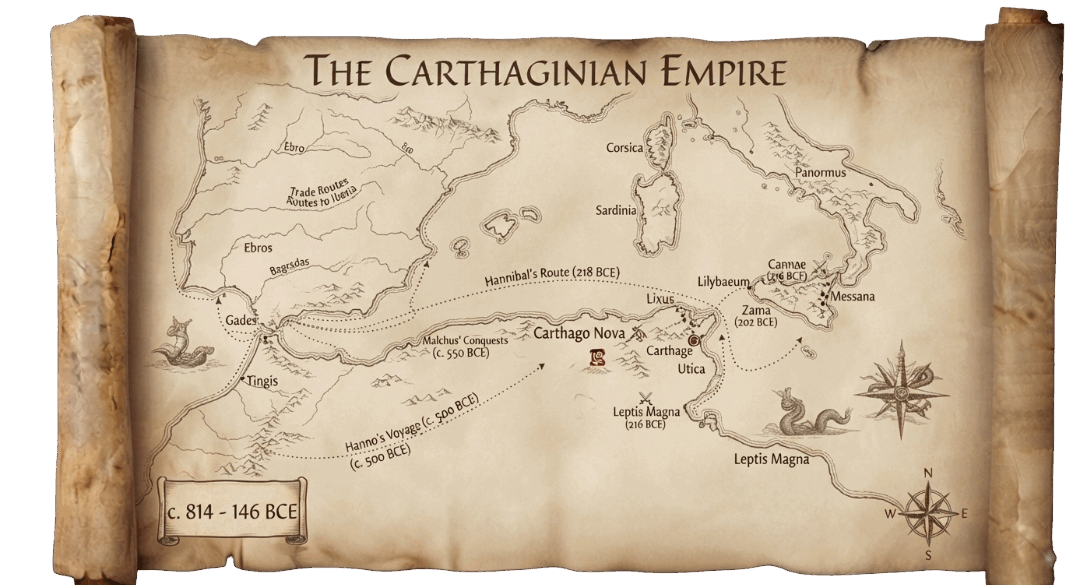
Ancient Carthage built its wealth on Mediterranean trade, and its table reflected that reach—olive oil, wine, grain, and garum-style fish sauce moved through Carthaginian ports alongside silver and purple dye. Punic farmers were renowned agriculturalists; Carthaginian writer Mago's treatise on farming was so respected that the Romans translated it after the city's fall, preserving techniques for growing olives, grapes, and grain across North Africa's fertile coastline.
Fish and seafood featured heavily given Carthage's position as a naval and trading power, alongside dates, pomegranates, and almonds grown in the surrounding countryside. Much of what we know about Carthaginian cuisine comes filtered through Roman and Greek accounts, since so little Punic material survived Rome's destruction of the city, but the agricultural know-how Carthage left behind quietly shaped Mediterranean farming for centuries after.