
Appetizers
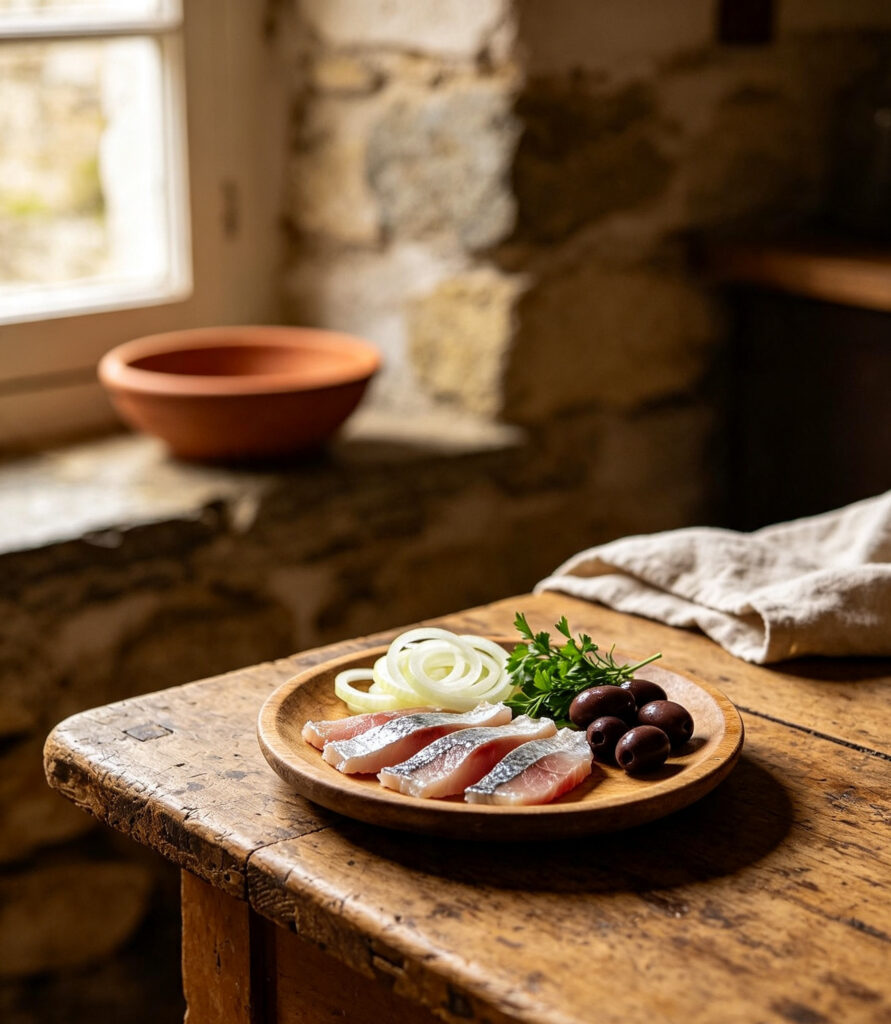
Salted Fish Appetizer (Dag Maluach)
sjfegan
Ingredients
- 400g Firm fish fillets, salted and dried (or substitute lightly salt-cured fish)
- 60ml (1/4 cup) Olive oil
- 2 cloves garlic, thinly sliced
- 1 tbsp vinegar
- Fresh herbs, to garnish
Method
- If using heavily salted fish, soak briefly in water to reduce saltiness, then pat dry.
- Slice the fish thinly and arrange on a serving platter.
- Drizzle with olive oil and vinegar.
- Scatter with sliced garlic and fresh herbs before serving.
Introduction: Salt-cured fish served simply with olive oil, showcasing Carthage’s renowned fish-salting industry that supplied preserved fish across the ancient Mediterranean.
Cultural Background: Carthage built enormous wealth partly through its sophisticated fish-salting and garum (fermented fish sauce) production, archaeological evidence revealing extensive salting facilities along the coast that exported preserved fish throughout the Mediterranean world.
Tips: Taste the fish before serving and soak longer if it’s still very salty. Slice thinly for the most elegant presentation.
Variations: Serve alongside olives and bread for a fuller starter spread. Adjust the garlic quantity to taste.
Storage: Store covered in the refrigerator for up to 3 days.
Reheating: This dish is served cold or at room temperature and is not reheated.
Nutrition: Per serving (approx.): 180 kcal, 20 g protein, 10 g fat, 1 g carbohydrate.
FAQs:
Q: How important was fish salting to the Carthaginian economy?
A: Extremely — archaeological remains of large-scale salting facilities along the North African coast demonstrate that Carthage built substantial trade wealth exporting preserved fish and fish sauce throughout the Mediterranean.
Q: What was garum’s connection to Carthage?
A: Carthaginian and wider Phoenician expertise in fish fermentation techniques significantly influenced garum production that later became closely associated with Roman cuisine.
Please log in to leave a comment.