
Lunches
Pomegranate-Glazed Lamb (Keves im Rimon)
sjfegan
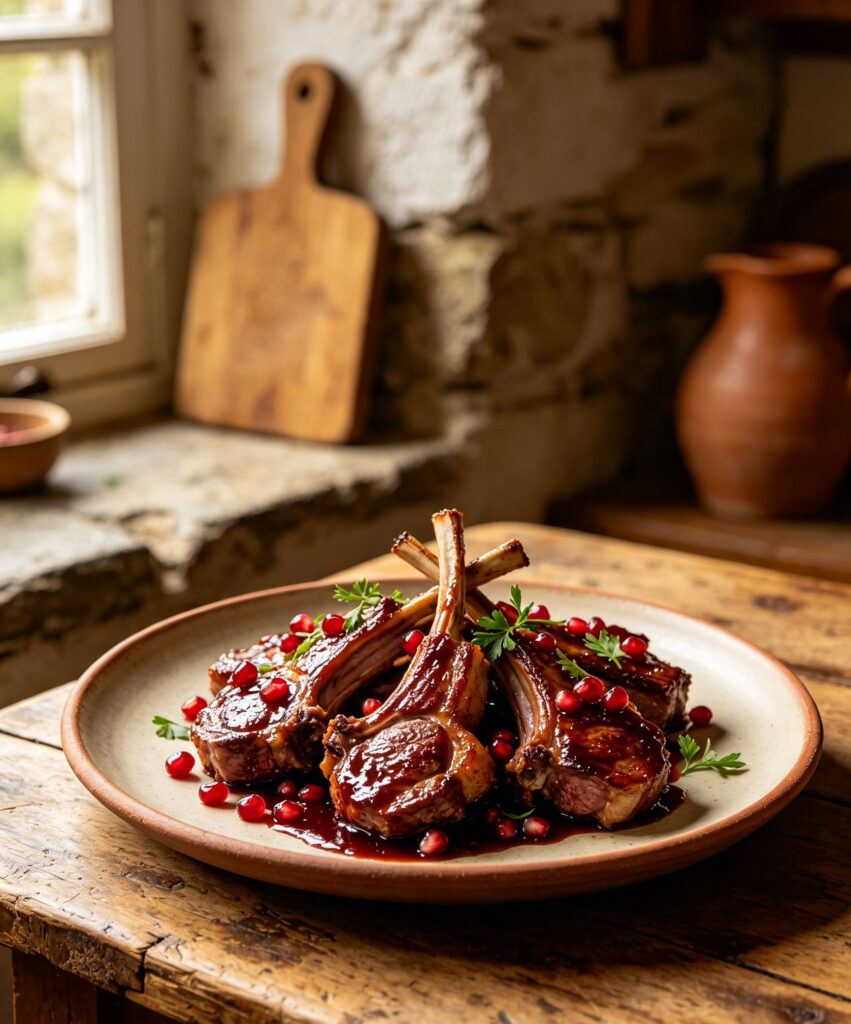
Ingredients
- 800g Lamb shoulder, cubed
- 1 onion, chopped
- 2 tbsp olive oil
- 240ml (1 cup) Pomegranate juice
- 1 tbsp honey
- 240ml (1 cup) Water
- Pomegranate seeds, to garnish
- Salt to taste
Method
- Heat the olive oil in a large pot and brown the lamb on all sides.
- Add the onion and sauté until softened.
- Add the pomegranate juice, honey and water, and bring to a simmer.
- Cover and cook over low heat for 1.5–2 hours until the lamb is very tender and the sauce has reduced and thickened.
- Season with salt.
- Garnish with fresh pomegranate seeds before serving hot.
Introduction: Lamb braised with pomegranate for a rich, tangy sauce, a substantial main dish reflecting Carthage’s fertile agricultural land and Phoenician culinary heritage.
Cultural Background: Pomegranates thrived in Carthaginian orchards, the fruit even carrying the Latin name ‘malum punicum’ (Punic apple) in tribute to its strong association with Carthage, and pairing it with lamb reflects the sophisticated cooking of this prosperous trading civilization.
Tips: Simmer low and slow for the lamb to become properly tender and absorb the tangy pomegranate flavour. Reduce the sauce at the end if it’s too thin, simmering uncovered for a few extra minutes.
Variations: Add a few chopped dried apricots for extra sweetness. Serve over barley or flatbread.
Storage: Refrigerate in an airtight container for up to 3 days.
Reheating: Reheat gently on the stovetop over low heat, stirring occasionally, until hot throughout.
Nutrition: Per serving (approx.): 420 kcal, 30 g protein, 24 g fat, 16 g carbohydrate.
FAQs:
Q: Why is the pomegranate associated with Carthage specifically?
A: The fruit’s Latin botanical name, malum punicum (‘Punic apple’), directly references Carthage, reflecting how strongly the Romans associated this fruit with Carthaginian agriculture and trade.
Q: Was lamb commonly eaten in ancient Carthage?
A: Yes, sheep and goat herding was well established in North African Phoenician settlements, making lamb and mutton important meats in the Carthaginian diet.
Please log in to leave a comment.