
Salads
Grape and Nut Salad (Salat Anavim)
sjfegan
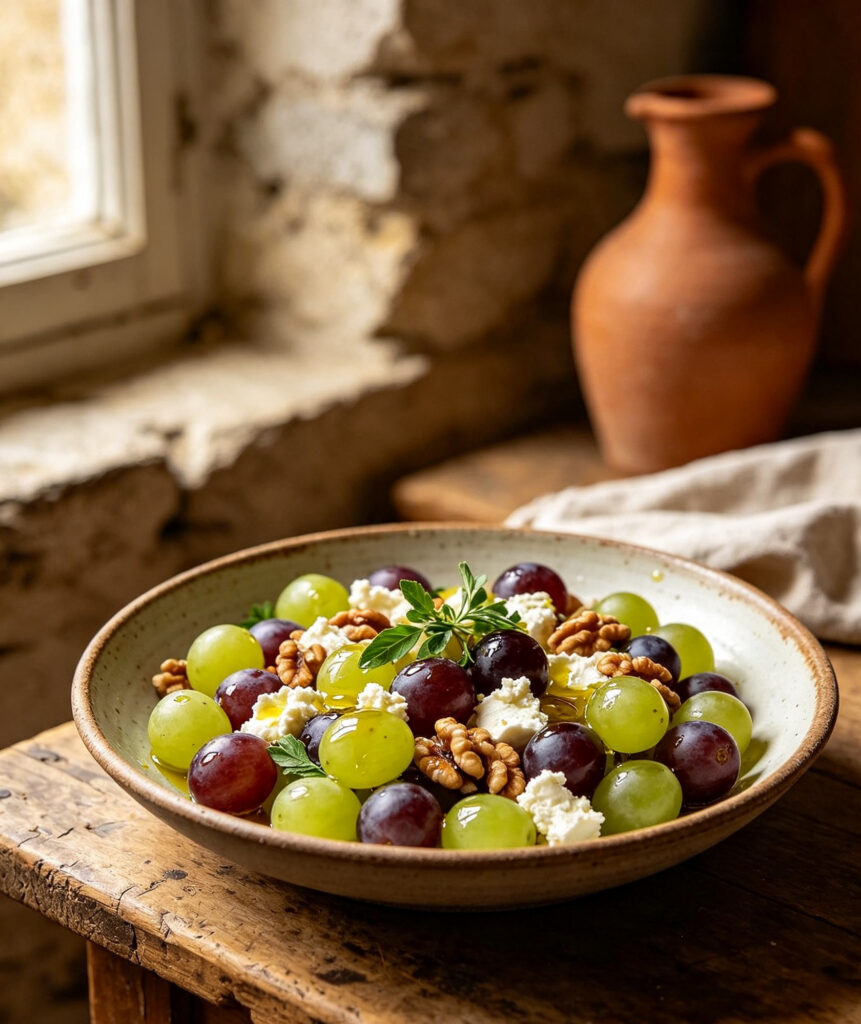
Ingredients
- 450g (3 cups) Seedless grapes, halved
- 70g (1/2 cup) Toasted almonds, chopped
- 2 tbsp olive oil
- 1 tbsp vinegar
- 1 tbsp honey
- Fresh mint, to garnish
Method
- Combine the halved grapes and toasted almonds in a bowl.
- Whisk together the olive oil, vinegar and honey.
- Pour the dressing over the salad and toss gently.
- Garnish with fresh mint before serving.
Introduction: Fresh grapes tossed with toasted nuts and a light dressing, a sweet and satisfying salad showcasing Carthage’s celebrated viticulture.
Cultural Background: Grape cultivation flourished across Carthaginian territory, the region’s winemaking tradition documented as sophisticated enough that Carthaginian agricultural expertise was later studied and adapted by Roman writers.
Tips: Toast the almonds lightly beforehand, as this deepens their flavour. Toss gently to avoid crushing the grapes.
Variations: Add a little crumbled cheese for extra richness. Adjust the honey for a more or less sweet dressing.
Storage: Best eaten fresh; store covered in the refrigerator for a few hours only.
Reheating: This is a cold salad and is not reheated.
Nutrition: Per serving (approx.): 220 kcal, 4 g protein, 12 g fat, 26 g carbohydrate.
FAQs:
Q: Was Carthage known for winemaking?
A: Yes, Carthaginian viticulture was well developed, and the agricultural expertise of Carthaginian writers, particularly Mago, was highly regarded and studied even by the Romans after Carthage’s fall.
Q: What role did grapes play beyond wine?
A: Fresh grapes were also enjoyed as a table fruit, part of the broader agricultural abundance that made Carthaginian territory so productive.
Please log in to leave a comment.