
Holidays & Special Occasions
Nama e Halikiloeng (Feast-Day Roasted Mutton)
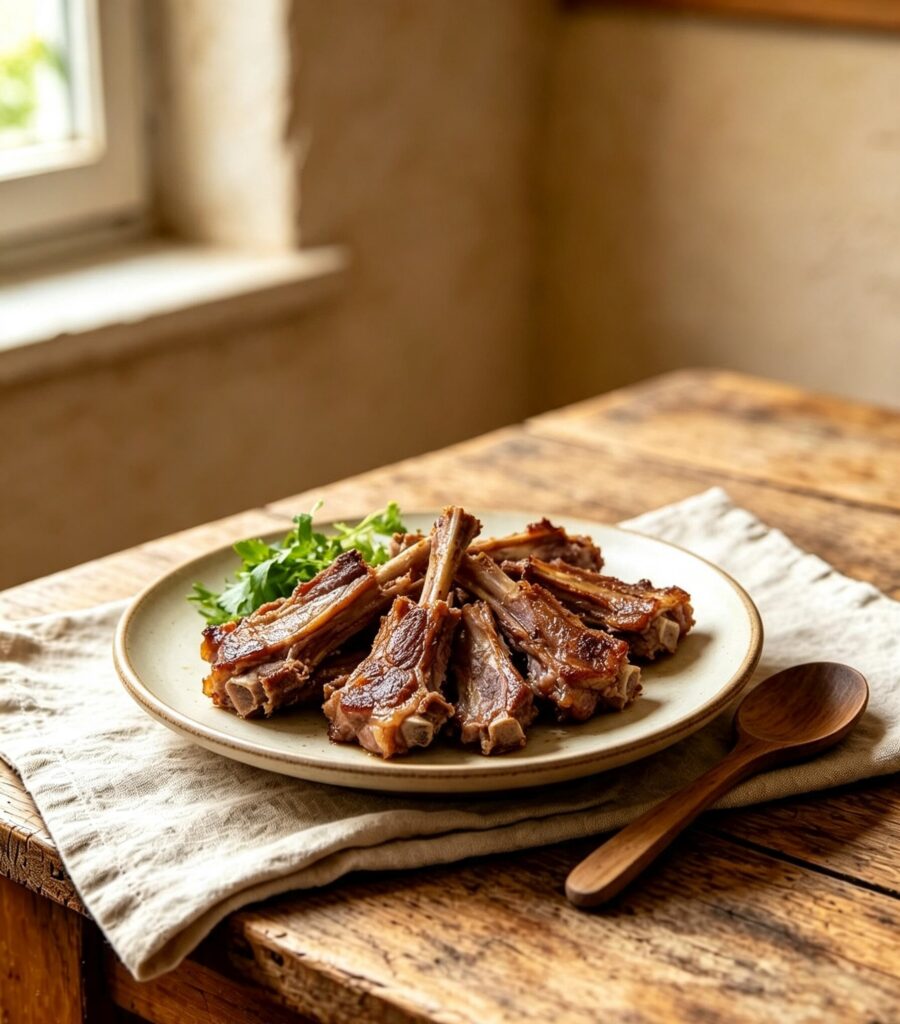
Ingredients
- 2 kg leg or shoulder of mutton or lamb, bone-in
- 4 garlic cloves, crushed
- 2 tbsp sunflower oil
- 1 tbsp coarse salt
- 1 tsp black pepper
- 1 tsp dried thyme or rosemary
- 2 onions, quartered
- 250 ml (1 cup) water or stock, for basting
Method
- Rub the mutton all over with crushed garlic, oil, salt, pepper and dried herbs, working the seasoning into the meat.
- Let it marinate at room temperature for at least 1 hour, or refrigerated overnight for deeper flavour.
- Prepare a bed of glowing coals or preheat an oven to 160°C (325°F).
- Scatter the onion quarters in the roasting tray or beneath the meat on the grate, and place the mutton on top.
- Roast slowly, basting every 30–40 minutes with the water or stock and pan juices, for 3–3 1/2 hours until the meat is deeply browned and falls easily from the bone.
- Rest the roasted mutton for 15–20 minutes before carving.
- Carve into generous portions and serve to the gathered guests alongside papa, samp and beans, and salads.
Introduction: Roasted mutton or lamb is the centrepiece of major Basotho celebrations — weddings, initiation ceremony feasts (mophato) and thanksgiving gatherings — reflecting the deep cultural and economic importance of livestock and herding in Lesotho's pastoral highland society.
Cultural Background: Roasted mutton or lamb is the centrepiece of major Basotho celebrations — weddings, initiation ceremony feasts (mophato) and thanksgiving gatherings — reflecting the deep cultural and economic importance of livestock and herding in Lesotho's pastoral highland society. A sheep is traditionally slaughtered for the occasion and roasted whole or in large joints over an open fire to feed the assembled community.
Tips: Slow, low roasting with regular basting is what gives the meat its tender, fall-off-the-bone texture typical of feast-day mutton. Resting the meat before carving keeps the juices in rather than letting them run out onto the board.
Variations: Whole sheep are spit-roasted over an open fire for very large gatherings, with the same basic seasoning. A simple gravy is made from the pan juices and served alongside for extra moisture.
Storage: Refrigerate leftovers up to 3 days in an airtight container; freezes well for up to 3 months.
Reheating: Reheat covered in a low oven (150°C/300°F) with a splash of stock to keep it moist, for about 20 minutes.
FAQs:
Q: Why is mutton so significant in Basotho celebrations?
A: Livestock, especially sheep, are central to Basotho pastoral life and wealth, so slaughtering and sharing a sheep is a mark of respect and celebration at major life events.
Q: Can this be made with a smaller cut of meat?
A: Yes, a smaller shoulder joint works well for smaller family gatherings; reduce the roasting time accordingly.
Please log in to leave a comment.