
Europe & Mediterranean
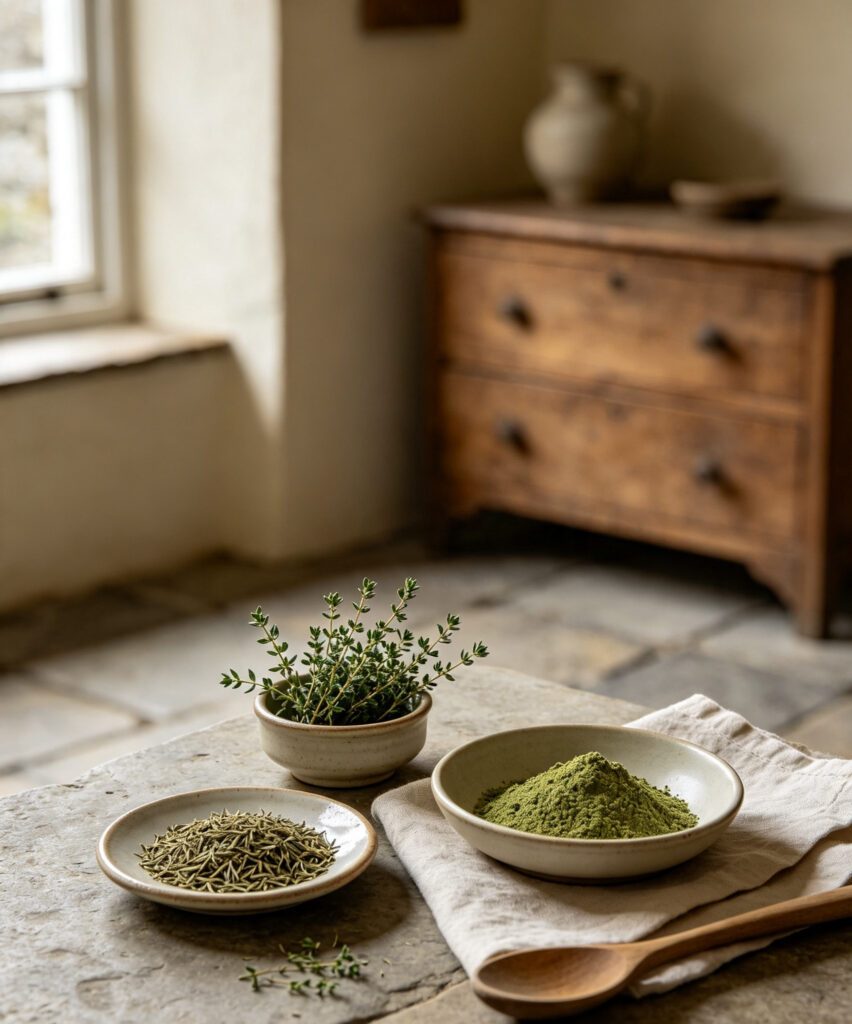
Thyme
Thymus vulgaris.
Local / Regional Names
Thym (French); tomillo (Spanish).
Countries / Cuisines
Widespread across the Mediterranean and broader Europe, especially central to French cooking.
Flavor & Aroma
Earthy, slightly minty, warm, with a subtle pepperiness.
Culinary Uses
One of the most foundational herbs in European cooking, particularly French.
Classic Dishes
Bouquet garni; herbes de Provence; countless braises, stocks, and roasted dishes.
Pairings
Bay leaf, parsley, garlic, roasted meats.
Timing
Add whole sprigs early in a long braise or stock; strip fresh leaves and add near the end for lighter dishes.
Storage
Dried keeps a year or more sealed and dark; fresh keeps 1-2 weeks refrigerated.
Substitutions
Oregano or marjoram, in a pinch, though the flavor profile shifts notably.
Cultural / History Notes
One of the three core herbs (alongside bay leaf and parsley) that make up a classic French bouquet garni – arguably the most universally foundational herb across European cuisine as a whole.
Blend Cross-References
Bouquet garni; herbes de Provence; Italian mixed herbs; Italian seasoning.
Please log in to leave a comment.