
Europe & Mediterranean
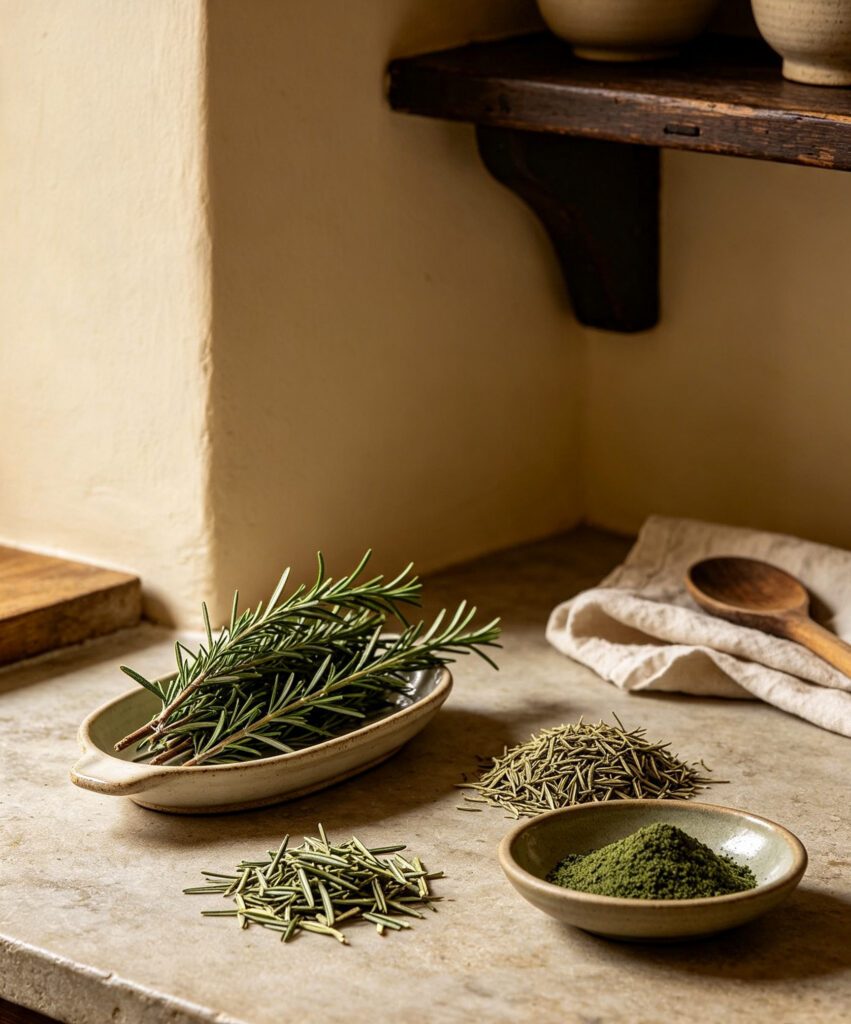
Rosemary
Salvia rosmarinus (formerly classified as Rosmarinus officinalis).
Local / Regional Names
Romarin (French); rosmarino (Italian).
Countries / Cuisines
Widespread across the Mediterranean, especially Italy, France, and Spain.
Flavor & Aroma
Piney, resinous, slightly bitter, intensely aromatic.
Culinary Uses
A robust, assertive herb suited to slow-roasted and grilled meats.
Classic Dishes
Roasted lamb and potatoes; focaccia; various Italian and French roasts.
Pairings
Garlic, olive oil, lamb, potatoes.
Timing
Add whole sprigs early in a roast or braise, as its sturdy needles hold up well to prolonged heat.
Storage
Dried keeps well over a year sealed and dark; fresh keeps 2+ weeks refrigerated.
Substitutions
No very close substitute given its distinctive piney intensity; a smaller amount of thyme in a pinch.
Cultural / History Notes
Was reclassified botanically from its own genus (Rosmarinus) into the sage genus (Salvia) in recent taxonomic revisions – a relatively recent scientific reclassification worth noting for readers who may know it under the older genus name.
Blend Cross-References
Herbes de Provence; Italian mixed herbs.
Please log in to leave a comment.