
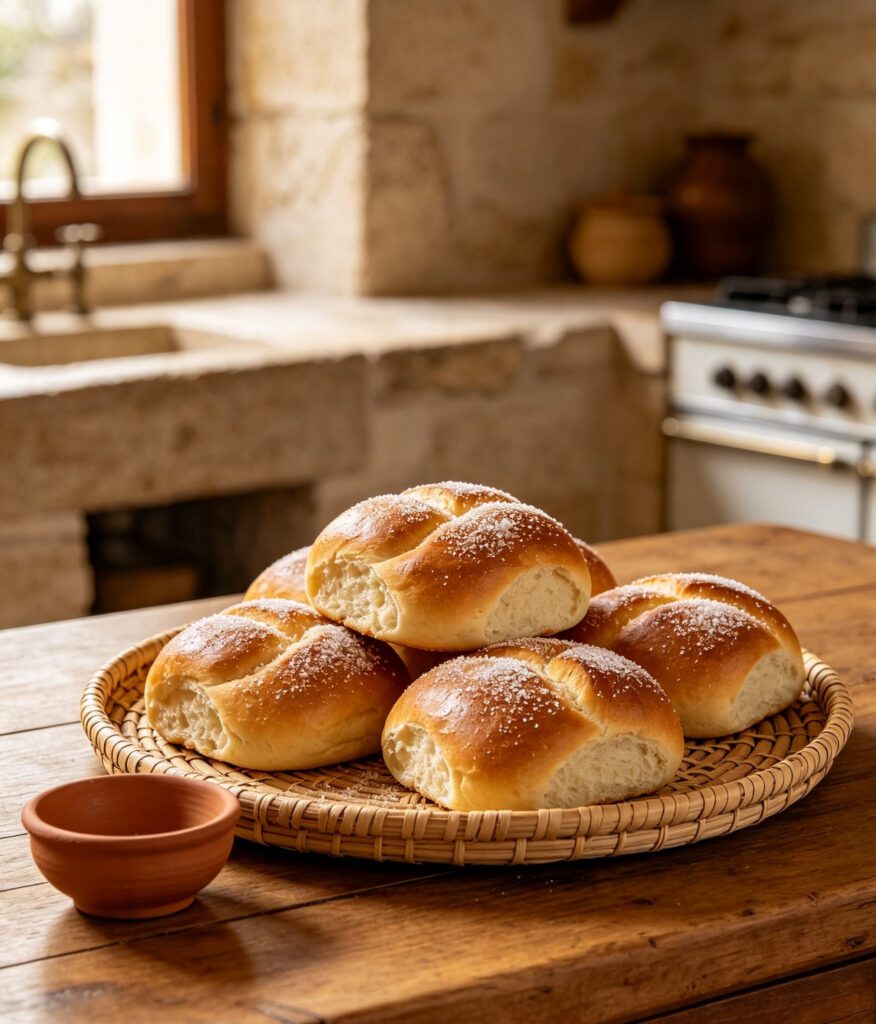
Sweet Anise Bread Rolls
The Quirky Foodster Team
Ingredients
- Wheat flour — 500 g (1.1 lb)
- Sugar — 60 g (2.1 oz)
- Salt — 1 tsp
- Dried yeast — 1 tsp
- Butter, softened — 80 g (2.8 oz)
- Warm milk — 250 ml (1 cup)
- Egg — 1
- Anise seed — 1 tbsp
Method
- Combine the flour, sugar, and salt in a bowl.
- Dissolve the yeast in the warm milk and add to the flour with the butter, egg, and anise seed.
- Knead into a smooth, soft dough, about 10 minutes.
- Cover and let rise for about 1 hour, until doubled.
- Divide into small rolls, place on a baking tray, and let rise a further 20 minutes.
- Bake at a moderate heat (around 190°C) for 20-25 minutes, until golden.
Introduction: Soft, lightly sweetened bread rolls flavoured with anise seed, a favoured bake brought from Spain and adapted in colonial bakeries.
Cultural Background: Wheat bread, introduced by Spanish colonisers, was baked in colonial towns following Iberian methods and flavourings, with anise seed being a well-established Spanish flavouring carried across the Atlantic into New World baking traditions.
Tips: Toast the anise seed briefly in a dry pan before adding to the dough for a more pronounced flavour.
Variations: A light sugar glaze brushed on after baking gives a shinier, sweeter finish.
Nutrition: Approx. 220 kcal per roll.
FAQs:
Q: Was wheat grown in the colonies?
A: Wheat cultivation was introduced and expanded in regions with suitable climates, though it remained more costly and prestigious than maize in many areas.
Q: Was anise a common Spanish flavouring?
A: Yes, anise seed had a long-established place in Spanish baking traditions well before colonisation.
- Wheat flour — 500 g (1.1 lb)
- Sugar — 60 g (2.1 oz)
- Salt — 1 tsp
- Dried yeast — 1 tsp
- Butter, softened — 80 g (2.8 oz)
- Warm milk — 250 ml (1 cup)
- Egg — 1
- Anise seed — 1 tbsp
Please log in to leave a comment.