
Europe & Mediterranean
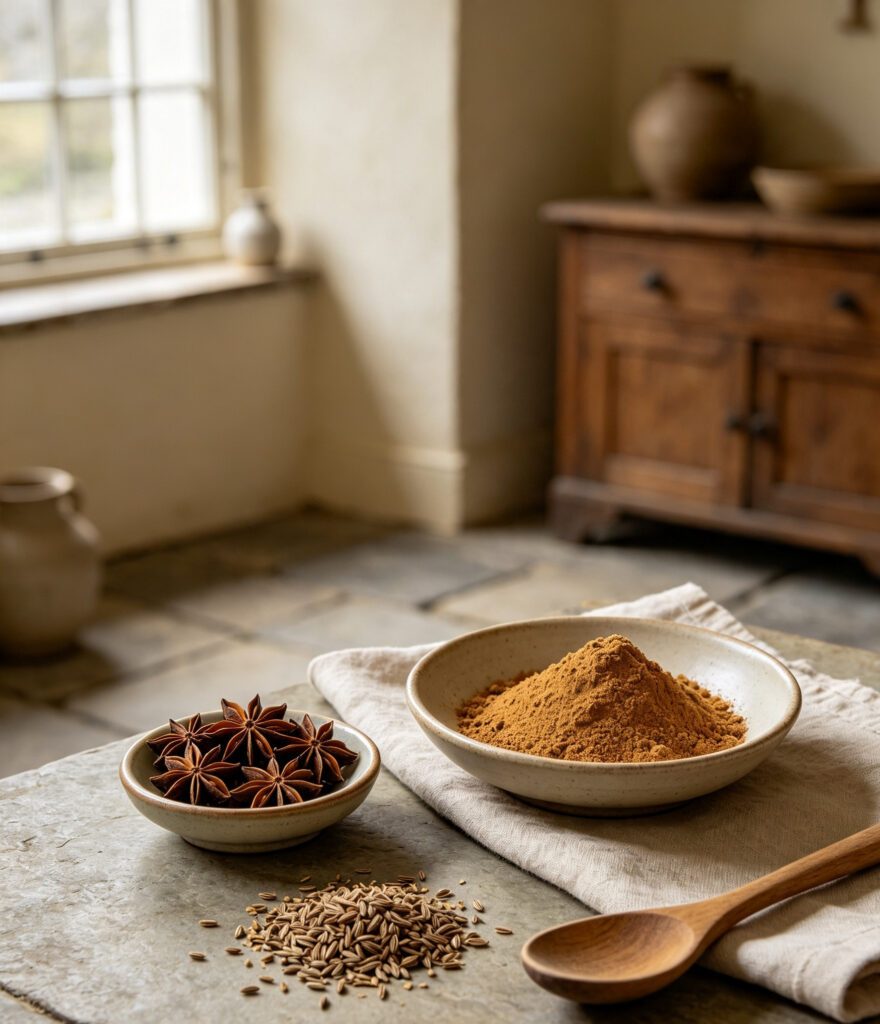
Anise
Pimpinella anisum.
Local / Regional Names
Anis (French/Spanish/Italian) – also known as green anise.
Countries / Cuisines
Widespread across the Mediterranean, particularly Spain, Italy, Greece.
Flavor & Aroma
Sweet, licorice-forward, lighter and more floral than fennel seed.
Culinary Uses
Flavoring for breads, pastries, and, very significantly, anise-flavored Mediterranean spirits.
Classic Dishes
Anise biscuits and breads across the Mediterranean; the flavor base of ouzo (Greece), pastis (France), and sambuca (Italy).
Pairings
Orange zest, honey, coffee (a classic anise-coffee pairing in several Mediterranean traditions).
Timing
Add early to doughs; whole seeds can also be chewed as a digestive after meals in some traditions.
Storage
Whole seed keeps well over a year sealed and dark.
Substitutions
Fennel seed as the closest substitute, though sweeter, less overtly licorice-forward.
Cultural / History Notes
Its role as the flavour base for an entire family of Mediterranean anise spirits (ouzo, pastis, raki, sambuca) is arguably as culturally significant as its more modest role in baking.
Blend Cross-References
Not typically part of a standardized dry blend; used standalone in baking and spirit production.
Please log in to leave a comment.