
Lunches
Sambar Rice
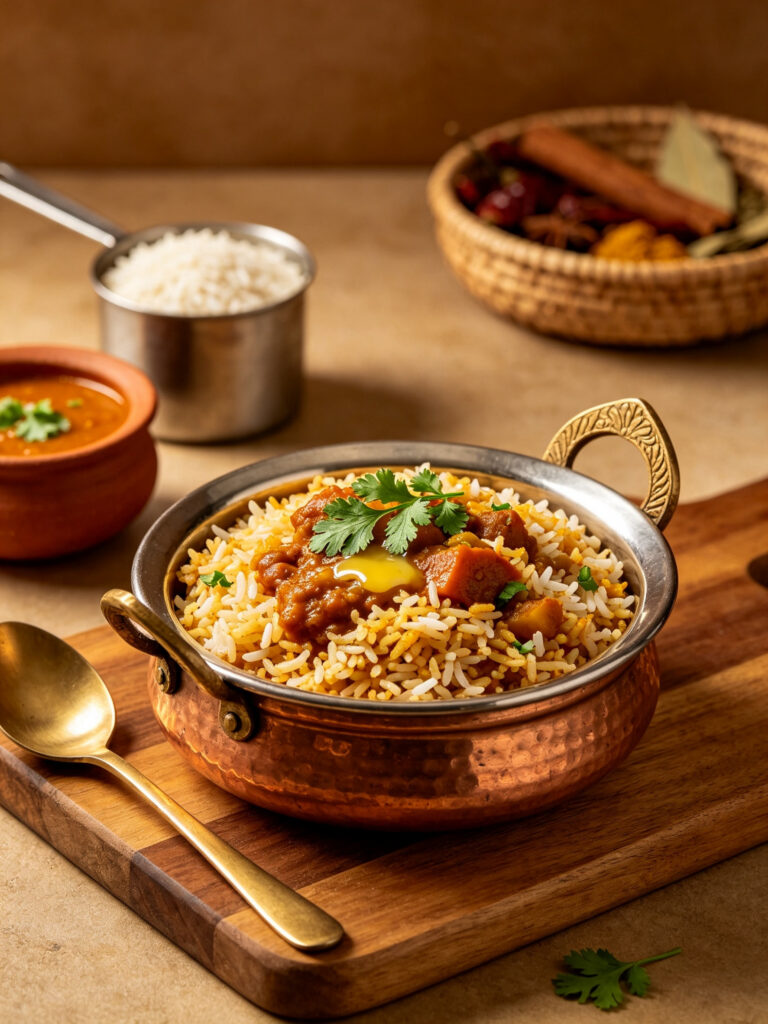
Ingredients
- Toor dal (split pigeon peas): 150 g (0.75 cup)
- Rice, cooked: 300 g (1.5 cups (cooked))
- Mixed vegetables (carrot, drumstick, pumpkin): 300 g (2 cups)
- Tamarind pulp: 30 g (2 tbsp)
- Sambar powder: 20 g (2 tbsp)
- Turmeric powder: 3 g (0.5 tsp)
- Mustard seeds: 5 g (1 tsp)
- Curry leaves: 8 g (1 sprig)
- Asafoetida: 2 g (0.25 tsp)
- Ghee: 20 ml (1.5 tbsp)
Method
- Pressure-cook toor dal with turmeric until soft and mushy.
- Separately boil the mixed vegetables until just tender.
- In a saucepan, combine tamarind pulp, sambar powder and 500 ml water; simmer 10 minutes.
- Add the cooked vegetables and mashed dal, simmer together for 10-15 minutes until thickened.
- In a small pan, heat ghee, add mustard seeds, asafoetida and curry leaves; pour this tempering over the sambar.
- Mix a portion of sambar directly into cooked rice, or serve rice with sambar ladled generously on top.
Introduction: Sambar rice is a South Indian one-pot meal combining lentils, vegetables and rice in a tangy, tamarind-spiced stew, traditionally served in Tamil Nadu and Karnataka homes and temples.
Cultural Background: Sambar rice is a South Indian one-pot meal combining lentils, vegetables and rice in a tangy, tamarind-spiced stew, traditionally served in Tamil Nadu and Karnataka homes and temples.
Tips: Toast the sambar powder briefly in a dry pan before use to deepen its flavour.
Variations: Drumstick and shallots give an especially traditional version; some regions add coconut for a milder sambar.
Storage: Refrigerate sambar and rice separately for up to 3 days.
Reheating: Reheat on the stovetop, adding water as needed to loosen the consistency.
FAQs:
Q: What vegetables work best in sambar?
A: Drumstick, pumpkin, carrot, brinjal and okra are all traditional choices.
Please log in to leave a comment.