
South Asia
Tamarind
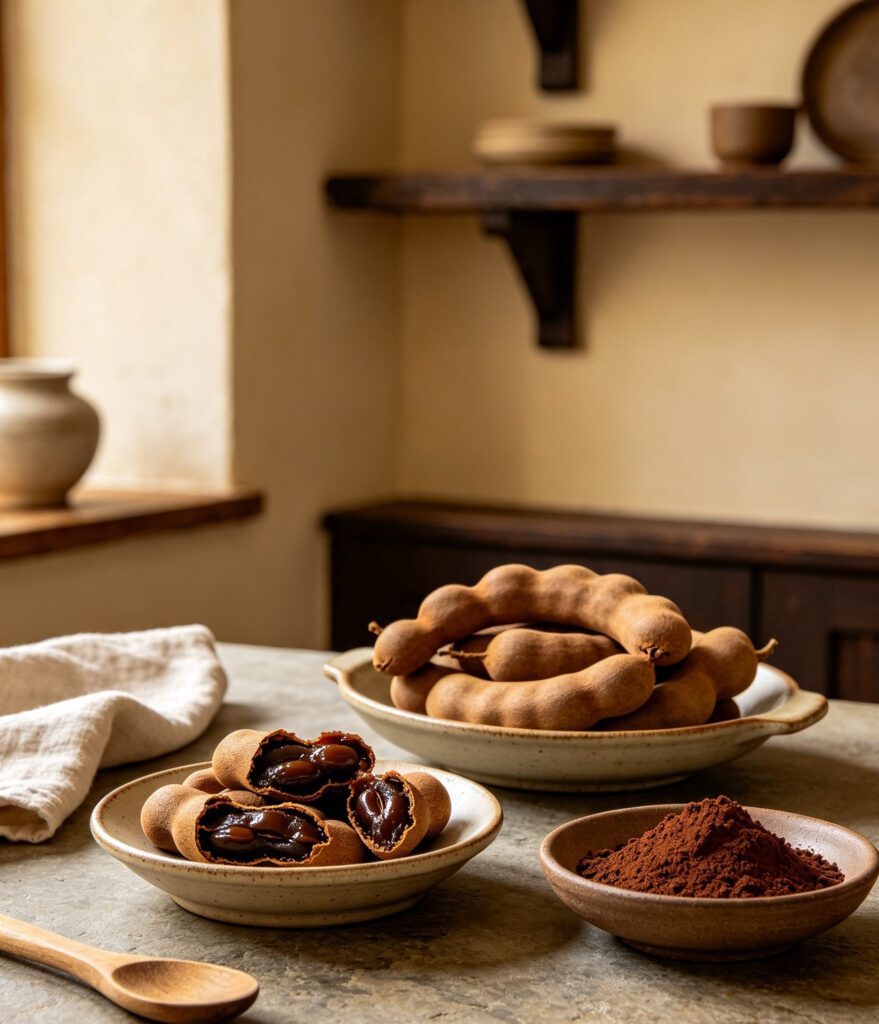
Tamarindus indica, pod pulp.
Local / Regional Names
Imli (Hindi); puli (Tamil).
Countries / Cuisines
India (widespread, especially South India), broader South Asia; also used across Southeast Asia, Africa and the Caribbean given its pan-tropical culinary spread.
Flavor & Aroma
Deeply sour, fruity, with a mild sweetness balancing the tartness.
Culinary Uses
The primary souring agent across most of South Indian cooking.
Classic Dishes
Sambar; rasam; tamarind rice (puliyodarai); countless chutneys.
Pairings
Jaggery, chile, curry leaves.
Timing
Soak pulp in warm water, strain out fibers and seeds, and add the extracted liquid during cooking.
Storage
Compressed pulp blocks keep a year or more in a sealed container; paste/concentrate keeps months refrigerated once opened.
Substitutions
Kokum or amchur as regional alternatives, each with a distinct flavor profile.
Cultural / History Notes
One of the most globally distributed souring agents in this entire reference, appearing independently and centrally across South Asian, Southeast Asian, African, and Caribbean cooking traditions.
Blend Cross-References
Sambar powder; rasam powder; tamarind rice spice mix.
Please log in to leave a comment.