
Lunches
Saltah
Ingredients
- 500 g (1 lb) beef or lamb, cut into small cubes
- 3 tbsp vegetable oil
- 1 onion, chopped
- 3 garlic cloves, minced
- 2 tomatoes, chopped
- 1 potato, diced
- 1 tsp ground cumin
- 1/2 tsp ground turmeric
- 750 ml (3 cups) water or stock
- 2 tbsp fenugreek seeds, soaked overnight, for the hilbeh topping
- 1 green chilli, chopped (for hilbeh)
- 2 garlic cloves (for hilbeh)
- Fresh coriander, chopped (for hilbeh)
- Salt and pepper, to taste
Method
- Heat the oil in a large pot over medium-high heat and brown the meat on all sides, about 8 minutes.
- Add the onion and garlic, and sauté until softened, about 4 minutes.
- Add the tomatoes, cumin and turmeric, cooking until the tomatoes break down, about 6 minutes.
- Add the potato and water or stock, and bring to a simmer. Cover and cook over low heat for 45-50 minutes, until the meat is tender and the potato is cooked through.
- Meanwhile, prepare the hilbeh: drain the soaked fenugreek seeds and blend with the chilli, garlic, coriander and a splash of water until frothy and pale, about 2-3 minutes.
- Season the stew with salt and pepper, then ladle into individual bowls.
- Top each bowl generously with the frothy hilbeh just before serving, ideally while the stew is still bubbling hot.
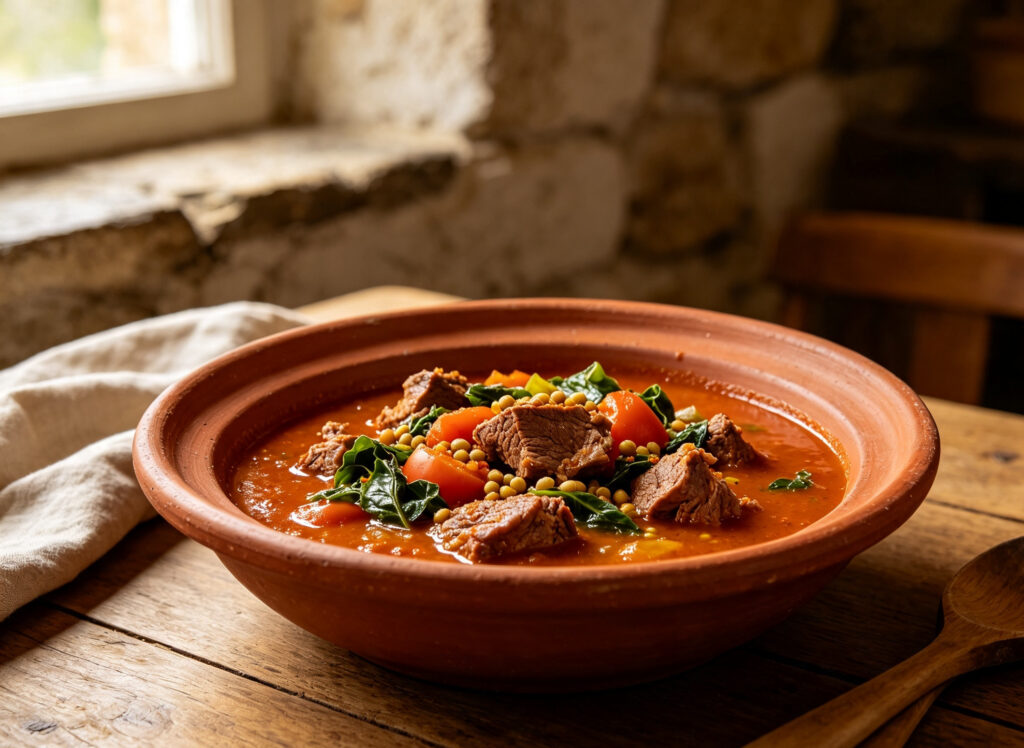
Introduction: Widely regarded as Yemen’s national dish, saltah is a bubbling, hearty stew combining a meat and vegetable base (maraq) with a layer of fenugreek froth (hilbeh) on top, often served in the same hot stone pot it was cooked in.
Cultural Background: Widely regarded as Yemen’s national dish, saltah is a bubbling, hearty stew combining a meat and vegetable base (maraq) with a layer of fenugreek froth (hilbeh) on top, often served in the same hot stone pot it was cooked in. It’s a daily fixture on Yemeni tables and a proud symbol of national identity.
Tips: The hilbeh topping should be light and frothy — blend it thoroughly for the right texture. Serve saltah piping hot, traditionally in the pot it was cooked in, for the most authentic experience. Have warm flatbread ready for scooping.
Variations: Add sahawiq (a fresh tomato-chilli relish) alongside the hilbeh for extra flavour layers. Use chicken in place of beef or lamb for a lighter version. Add a handful of chopped okra to the stew for extra texture. A vegetarian version can use mixed vegetables and chickpeas in place of meat, though this departs from the traditional recipe.
Storage: Refrigerate the base stew in an airtight container for up to 3 days; hilbeh is best made fresh just before serving.
Reheating: Reheat the stew gently on the stovetop; prepare a fresh batch of hilbeh to top just before serving.
Nutrition: Per serving (approx.): 380 kcal, 28 g protein, 20 g carbohydrates, 20 g fat, 4 g fibre.
FAQs:
Q: What is hilbeh?
A: Hilbeh is a frothy, tangy paste made from soaked and blended fenugreek seeds, traditionally used as the defining topping for saltah.
Q: Why is saltah served bubbling hot?
A: It’s traditionally served straight from the hot stone pot it was cooked in, keeping the dish piping hot at the table.
Q: Can I make hilbeh ahead of time?
A: It’s best made fresh, as its distinctive frothy texture is best right after blending.
Please log in to leave a comment.