
Holidays & Special Occasions
Rieslingspaschtéit
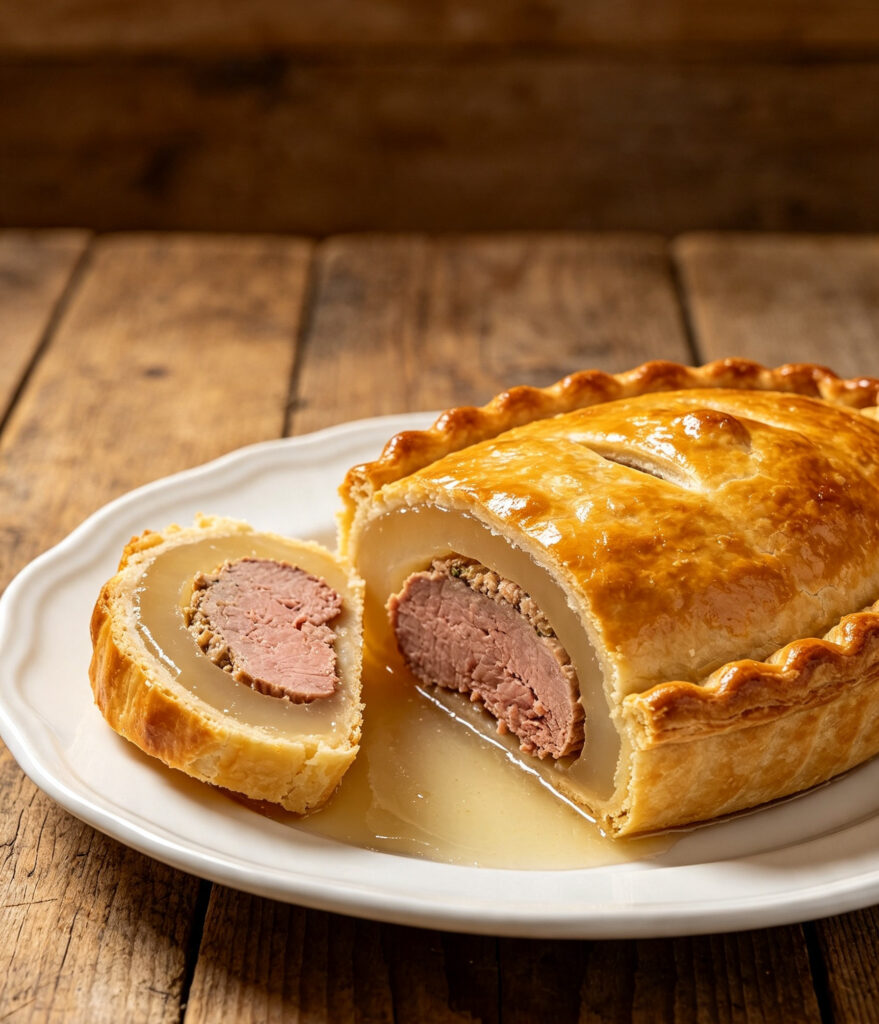
Ingredients
- 500g (1 lb) Pork shoulder, cubed
- 300g (10.6 oz) Veal, cubed
- 150ml (1/2 cup) Riesling wine
- 1 Onion, diced
- 2 tbsp (28g) Butter
- 2 tbsp (15g) Flour
- 200ml (3/4 cup) Stock
- Salt, pepper, and thyme, to taste
- 500g (1 lb) Shortcrust pastry (store-bought or homemade)
- 1 Egg, beaten, for glazing
Method
- Marinate the pork and veal in the Riesling wine for at least 2 hours, or overnight if possible.
- Drain the meat, reserving the marinade, and pat dry.
- Melt the butter in a pan and brown the meat in batches; set aside.
- Sauté the onion in the same pan, then stir in the flour to make a roux.
- Gradually whisk in the reserved marinade and stock, then return the meat to the pan and simmer for 30-40 minutes until tender; season with salt, pepper, and thyme.
- Cool the filling, then transfer to a pastry-lined pie dish and top with a pastry lid, sealing the edges well.
- Brush with beaten egg and bake at 200°C (400°F) for 40-45 minutes until the pastry is deep golden brown.
Introduction: Rieslingspaschtéit is a festive Luxembourgish pie traditionally served around Easter, marrying the country's Moselle Riesling wine with a rich, slow-cooked meat filling wrapped in golden pastry.
Cultural Background: Rieslingspaschtéit is a festive Luxembourgish pie traditionally served around Easter, marrying the country's Moselle Riesling wine with a rich, slow-cooked meat filling wrapped in golden pastry.
Tips: Cool the meat filling before assembling the pie — hot filling can make the pastry base soggy and harder to seal properly.
Variations: A version using only pork, or adding a handful of mushrooms to the filling, is common depending on the household.
Nutrition: Approx. 480 kcal, 24g protein, 26g fat, 34g carbohydrates per serving.
FAQs:
Q: When is this pie traditionally eaten?
A: It's especially associated with Easter Monday (Éimaischen) in Luxembourg, when families gather for a festive meal.
Q: Can the filling be made a day ahead?
A: Yes, and it actually benefits from resting overnight in the fridge before the pie is assembled and baked.
Please log in to leave a comment.