
Sides
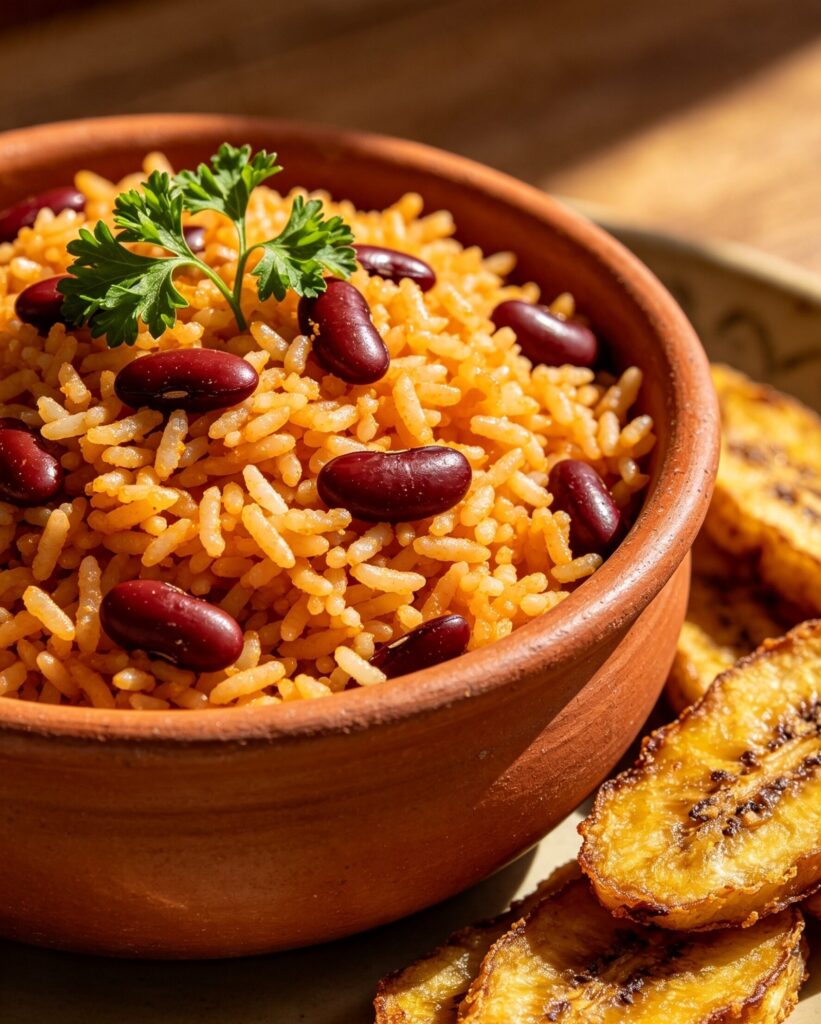
Rice and Beans (Diri Kole ak Pwa)
The Quirky Foodster Team
Ingredients
- 200 g (1 cup) dried red kidney beans, soaked overnight
- 1 litre (4 cups) water
- 1 sprig fresh thyme
- 2 cloves garlic, minced
- 1 small onion, chopped
- 2 tbsp vegetable oil
- 1 whole Scotch bonnet pepper
- 400 g (2 cups) long-grain rice, rinsed
- 1 tsp salt
Method
- Drain the soaked beans and simmer in the water with the thyme until tender, about 45-60 minutes. Reserve the beans and their cooking liquid separately.
- Heat oil in a large pot and sauté onion and garlic until fragrant, about 3 minutes.
- Add the cooked beans and about 500 ml (2 cups) of their reserved cooking liquid (topping up with water if needed).
- Add the whole Scotch bonnet and salt, then stir in the rinsed rice.
- Bring to a boil, then reduce heat to low, cover, and cook 18-20 minutes until the rice is tender and the liquid is absorbed.
- Remove the Scotch bonnet, fluff the rice with a fork, and serve warm.
Introduction: A near-daily staple across Haiti, rice cooked together with beans and their flavourful broth forms the backbone of most Haitian meals, served as the essential accompaniment to griot, poul nan sòs, and countless other dishes.
Cultural Background: A near-daily staple across Haiti, rice cooked together with beans and their flavourful broth forms the backbone of most Haitian meals, served as the essential accompaniment to griot, poul nan sòs, and countless other dishes.
Tips: Measure the bean cooking liquid precisely against the rice for the correct 2:1 liquid-to-rice ratio, which keeps the rice fluffy rather than mushy.
Variations: Black beans or pigeon peas can replace kidney beans. Coconut milk can be added to part of the liquid for a richer flavour.
Storage: Refrigerate in an airtight container for up to 4 days; freezes well for up to 2 months.
Reheating: Reheat in a covered pan over low heat with a splash of water, or microwave covered until steaming.
Nutrition: Approx. 290 kcal, 8 g protein, 6 g fat, 51 g carbohydrate, 7 g fibre per serving.
FAQs:
Q: Can I use canned beans?
A: Yes, though the dish traditionally uses freshly cooked beans for the richest broth; canned beans with their liquid work as a shortcut.
Q: Why keep the Scotch bonnet whole?
A: It infuses a mild background flavour and aroma without making the dish overly spicy.
Please log in to leave a comment.