
Podi ya Setswana
The Quirky Foodster Team
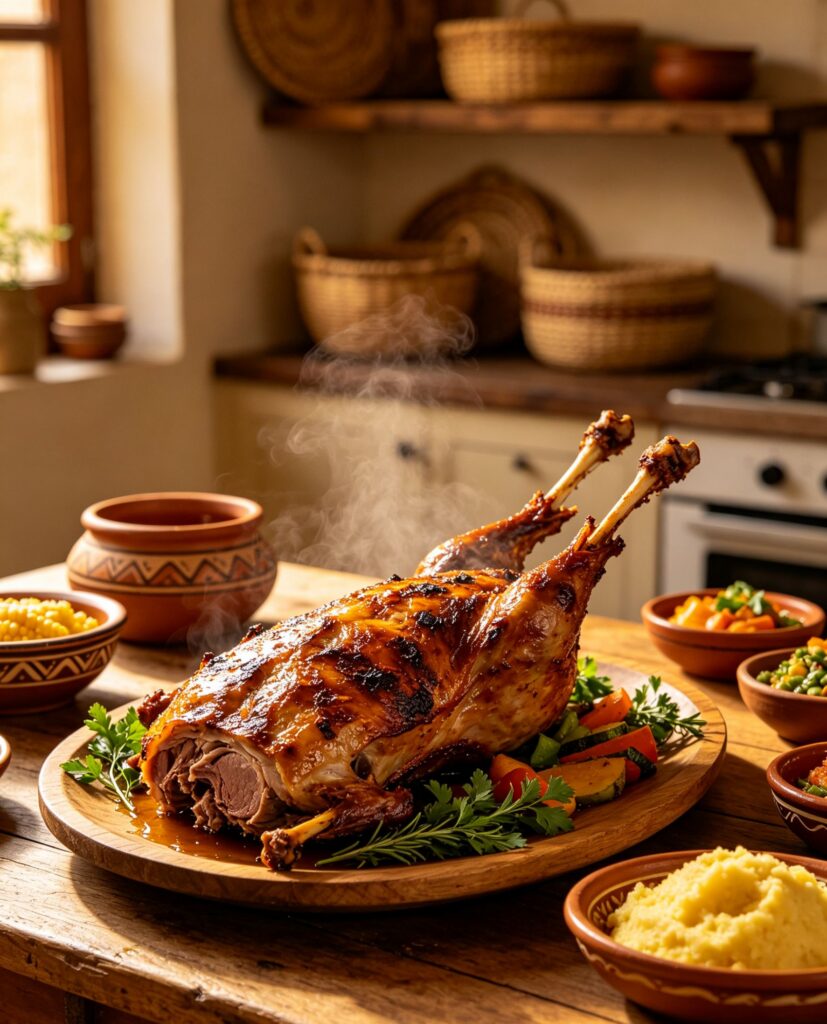
Ingredients
- Goat leg and shoulder, bone-in — 2.5 kg (5.5 lb)
- Vegetable oil — 60 ml (1/4 cup)
- Garlic, crushed — 6 cloves
- Coarse salt — 15 ml (1 tbsp)
- Black pepper — 10 ml (2 tsp)
- Paprika — 10 ml (2 tsp)
- Dried thyme — 5 ml (1 tsp)
- Fresh lemon juice — 30 ml (2 tbsp)
- Onions, quartered — 2
Method
- In a small bowl, mix the oil, garlic, salt, pepper, paprika, thyme and lemon juice into a marinade.
- Rub the marinade thoroughly all over the goat meat, working it into any slits or folds.
- Cover and refrigerate overnight to allow the flavours to penetrate.
- Bring the meat to room temperature about 30 minutes before cooking.
- Prepare a bed of medium-low coals for indirect roasting, or preheat an oven to 160C (320F).
- Place the meat on the grill over indirect heat with the onions scattered around, or in a roasting tray if using an oven, and cover.
- Roast slowly for 2.5-3 hours, turning and basting with any collected juices every 30-40 minutes, until the meat is very tender and a thermometer inserted into the thickest part reads at least 75C (167F).
- Rest the meat for 15 minutes before carving and serving to a gathered table.
Introduction: Roast goat holds an important place at Setswana celebrations, traditionally slaughtered and prepared for significant events such as weddings, initiation ceremonies, Botswana's Independence Day and family reunions.
Cultural Background: Roast goat holds an important place at Setswana celebrations, traditionally slaughtered and prepared for significant events such as weddings, initiation ceremonies, Botswana's Independence Day and family reunions. The animal is typically prepared whole or in large portions and slow-roasted over open coals, a communal process that brings families and neighbours together in both preparation and sharing of the meal.
Tips: Cook low and slow over indirect heat to ensure the goat becomes tender rather than tough. Basting regularly keeps the meat moist through the long cooking time.
Variations: Use lamb in place of goat for a milder-flavoured alternative where goat is not available. Add a spoonful of crushed chilli to the marinade for a spicier finish. No authentic vegetarian version exists; goat meat is central to the dish.
Storage: Store carved leftovers in an airtight container in the refrigerator for up to 3 days, or freeze for up to 2 months.
Reheating: Reheat gently, covered, in a low oven at 150C (300F) for 15-20 minutes, or in a covered pan with a splash of water over low heat.
Nutrition: Approx. per serving: 380 kcal, 42 g protein, 3 g carbohydrates, 21 g fat, 1 g fibre.
FAQs:
Q: What is podi ya Setswana traditionally served with?
A: It is typically served alongside phaletshe, seswaa-style side dishes, salads and fresh bread as part of a larger celebratory spread.
Q: Can this be made in a conventional oven if a braai is not available?
A: Yes, cook covered in a roasting tray at 160C (320F) for the same 2.5-3 hours, basting periodically.
- Goat leg and shoulder, bone-in — 2.5 kg (5.5 lb)
- Vegetable oil — 60 ml (1/4 cup)
- Garlic, crushed — 6 cloves
- Coarse salt — 15 ml (1 tbsp)
- Black pepper — 10 ml (2 tsp)
- Paprika — 10 ml (2 tsp)
- Dried thyme — 5 ml (1 tsp)
- Fresh lemon juice — 30 ml (2 tbsp)
- Onions, quartered — 2
Please log in to leave a comment.