
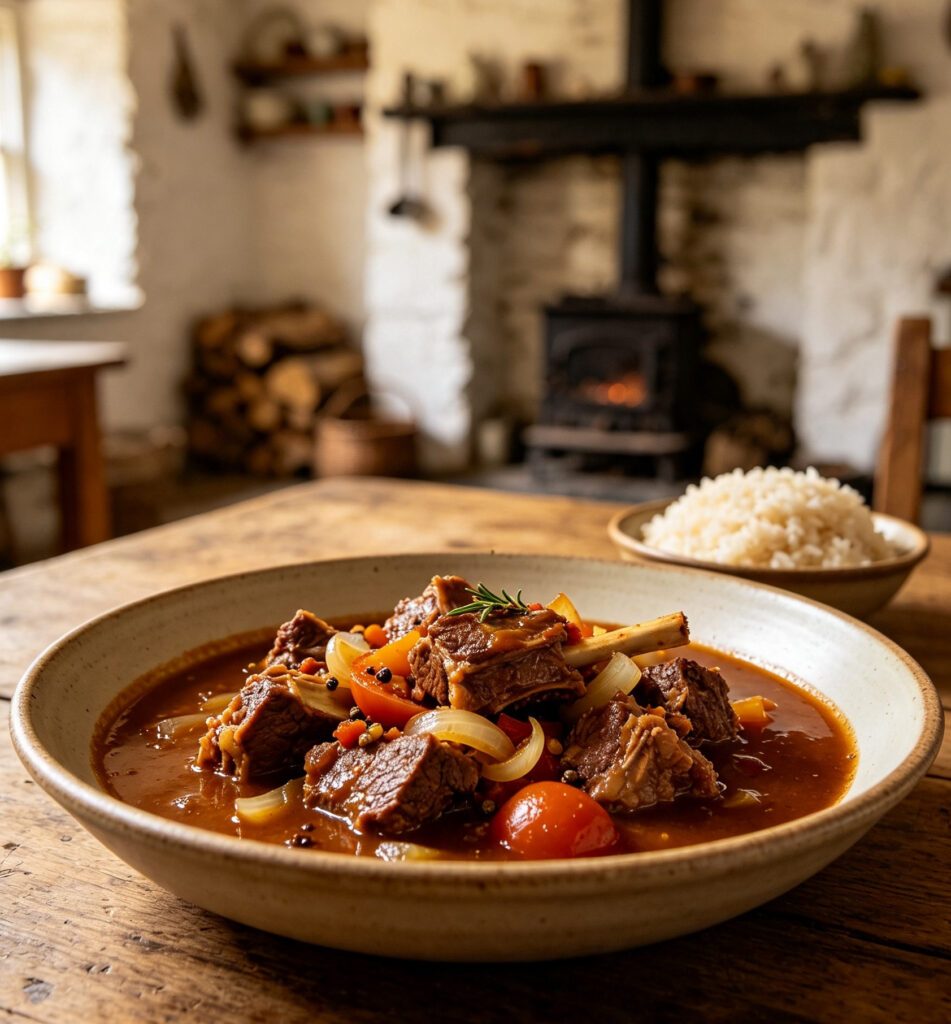
Mbuzi ya Phwando (Feast-Day Goat Meat Stew)
The Quirky Foodster Team
Ingredients
- Goat meat, bone-in, cubed — 1.2 kg (2 2/3 lb)
- Large Onions, chopped — 2
- Medium Tomatoes, chopped — 4
- Garlic, minced — 4 cloves
- Fresh ginger, grated — 10 g (2 tsp)
- Cooking oil — 45 ml (3 tbsp)
- Water or stock — 750 ml (3 cups)
- Curry powder — 8 g (1 1/2 tsp)
- Bay leaves — 2
- Salt — to taste
- Black pepper — to taste
Method
- Heat the oil in the large pot and brown the goat meat in batches over medium-high heat, about 10 minutes total. Remove and set aside.
- In the same pot, fry the onions until golden, about 6 minutes, then add the garlic and ginger and cook for a further 2 minutes.
- Add the tomatoes, curry powder and bay leaves, and cook for 6–8 minutes until the tomatoes break down into a thick sauce.
- Return the goat meat to the pot, add the water or stock, salt and pepper, and bring to a boil.
- Reduce heat to low, cover, and simmer for 1 1/2 to 2 hours, stirring occasionally and topping up water if needed, until the meat is very tender and pulls easily from the bone.
- Remove the bay leaves, taste and adjust seasoning, and serve hot, traditionally alongside nsima or rice for a large gathering.
Introduction: Tender goat meat slow-simmered with onion, tomato and spices until richly flavoured — a hearty stew prepared for weddings, funerals and major village feasts.
Cultural Background: Goats are commonly kept by rural households and are traditionally slaughtered for major community events such as weddings, funerals and initiation ceremonies, since a whole goat can feed a large gathering. Preparing mbuzi for a feast is often a shared community effort, with the meat cooked in large pots over open fires and served alongside nsima or rice to all who attend.
Tips: Goat meat benefits from a long, slow simmer — rushing it will leave the meat tough and chewy. Browning the meat well at the start builds a deeper flavour throughout the stew. This recipe scales up easily for large gatherings; simply increase quantities proportionally and use a very large pot.
Variations: Add cubed potatoes in the last 30 minutes of cooking for a heartier one-pot version. Use lamb or mutton as a substitute where goat is not readily available. Add a chopped chili or two for those who enjoy a spicier stew.
Storage: Store in an airtight container in the refrigerator for up to 3 days, or freeze for up to 3 months.
Reheating: Reheat in a covered saucepan over low-medium heat, stirring occasionally and adding a splash of water or stock, until piping hot throughout, about 10 minutes.
Nutrition: Approx. per serving: 380 kcal, 30 g protein, 10 g carbohydrate, 24 g fat, 2 g fibre.
FAQs:
Q: Why is goat meat used for feasts rather than beef?
A: Goats are more commonly and affordably kept by rural households and a single goat provides enough meat to feed a large gathering, making it the practical, traditional choice for feasts.
Q: Can this be made in advance for an event?
A: Yes, it reheats very well and its flavour often improves after a day, making it practical to prepare ahead of a large gathering.
Q: Is there a vegetarian version suitable for a mixed gathering?
A: There is no traditional vegetarian version of this specific dish; Nandolo (Pigeon Peas in Coconut Sauce) or Rice ndi Nyemba make suitable meat-free additions to a shared feast table.
- Goat meat, bone-in, cubed — 1.2 kg (2 2/3 lb)
- Large Onions, chopped — 2
- Medium Tomatoes, chopped — 4
- Garlic, minced — 4 cloves
- Fresh ginger, grated — 10 g (2 tsp)
- Cooking oil — 45 ml (3 tbsp)
- Water or stock — 750 ml (3 cups)
- Curry powder — 8 g (1 1/2 tsp)
- Bay leaves — 2
- Salt — to taste
- Black pepper — to taste
Please log in to leave a comment.