
Lunches
Fahsa
Ingredients
- 600 g (1.3 lb) beef or lamb, cut into chunks
- 3 tbsp vegetable oil
- 1 onion, chopped
- 3 garlic cloves, minced
- 2 tomatoes, chopped
- 1 tsp ground cumin
- 1/2 tsp ground coriander
- 1/4 tsp ground cardamom
- 750 ml (3 cups) water or stock
- 2 tbsp fenugreek seeds, soaked overnight, for the hilbeh topping
- 1 green chilli, chopped (for hilbeh)
- Fresh coriander, chopped (for hilbeh)
- Salt and pepper, to taste
Method
- Heat the oil in a large pot over medium-high heat and brown the meat on all sides, about 8 minutes.
- Add the onion and garlic, and sauté until softened, about 4 minutes.
- Add the tomatoes, cumin, coriander and cardamom, cooking until the tomatoes break down, about 6 minutes.
- Add the water or stock, bring to a simmer, cover, and cook over low heat for 1 hour 15 minutes to 1 hour 30 minutes, until the meat is extremely tender.
- Remove the meat and shred finely with two forks, then return it to the pot and stir well into the broth.
- Meanwhile, prepare the hilbeh: drain the soaked fenugreek seeds and blend with the chilli, coriander and a splash of water until frothy.
- Season the stew with salt and pepper, ladle into bowls, and top generously with the hilbeh just before serving.
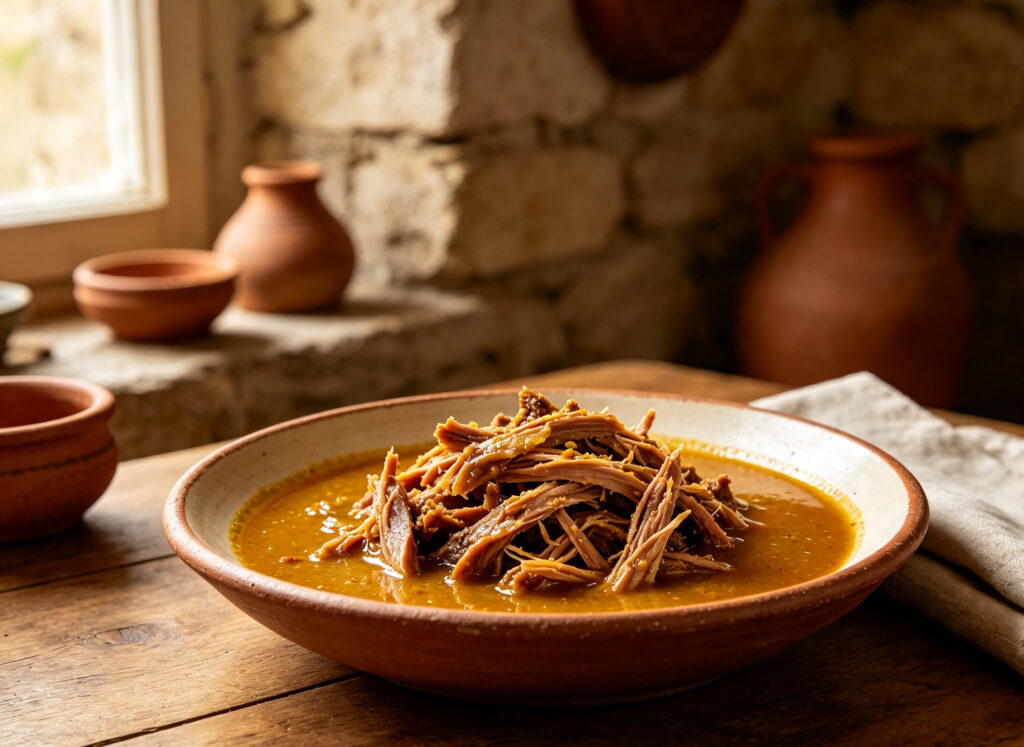
Introduction: Fahsa is a rich, savoury dish of slow-cooked, shredded meat simmered in a spiced broth and finished with the same frothy fenugreek topping (hilbeh) used in saltah.
Cultural Background: Fahsa is a rich, savoury dish of slow-cooked, shredded meat simmered in a spiced broth and finished with the same frothy fenugreek topping (hilbeh) used in saltah. Especially popular in Aden and southern Yemen, it’s a comforting lunch dish that showcases Yemen’s love of deeply spiced, communal stews.
Tips: Cook the meat low and slow until it shreds effortlessly — this is what defines fahsa’s texture. The hilbeh topping should be added just before serving for the best frothy texture. Serve with warm flatbread for scooping.
Variations: Add a handful of chopped okra for extra texture. Use lamb shoulder for an especially rich, traditional flavour. Add sahawiq (fresh tomato-chilli relish) alongside the hilbeh. Not applicable in its traditional form; the dish is defined by slow-cooked shredded meat.
Storage: Refrigerate the base stew in an airtight container for up to 3 days; hilbeh is best made fresh just before serving.
Reheating: Reheat the stew gently on the stovetop; prepare a fresh batch of hilbeh to top just before serving.
Nutrition: Per serving (approx.): 400 kcal, 32 g protein, 12 g carbohydrates, 24 g fat, 3 g fibre.
FAQs:
Q: How is fahsa different from saltah?
A: Fahsa features finely shredded meat in a rich broth, while saltah includes a chunkier meat and vegetable base; both share the same frothy fenugreek hilbeh topping.
Q: Can I use a slow cooker for the meat?
A: Yes, cooking on low for 4-5 hours produces excellent, easily shredded meat.
Q: Is this dish very spicy?
A: It has warm, aromatic spicing rather than intense heat, with additional spice typically added via hilbeh or fresh chilli at the table.
Please log in to leave a comment.