
Chapati ya Malawi (Malawian-Style Chapati)
The Quirky Foodster Team
Ingredients
- All-purpose flour, plus extra for dusting — 300 g (2 1/2 cups)
- Warm water — 180 ml (3/4 cup)
- Cooking oil, plus extra for frying — 45 ml (3 tbsp)
- Salt — 3 g (1/2 tsp)
- Sugar — 5 g (1 tsp)
Method
- In a bowl, combine the flour, salt and sugar. Add the warm water gradually, mixing until a soft dough forms.
- Knead the dough for 5–7 minutes until smooth and elastic, then cover with a damp cloth and rest for 20 minutes.
- Divide the dough into 8 equal balls. Roll each ball out thinly on a floured surface into a circle about 18 cm (7 inches) across.
- Brush each rolled circle lightly with oil, then stack two together and roll them out again slightly, pressed together, to create flaky layers (or simply fold and re-roll a single piece for a simpler method).
- Heat a dry frying pan over medium heat. Cook each chapati for about 1–2 minutes per side, brushing with a little oil, until golden brown spots appear and it puffs slightly.
- Stack cooked chapatis under a clean tea towel to keep warm and soft while cooking the rest.
- Serve warm alongside stews, beans, or tea.
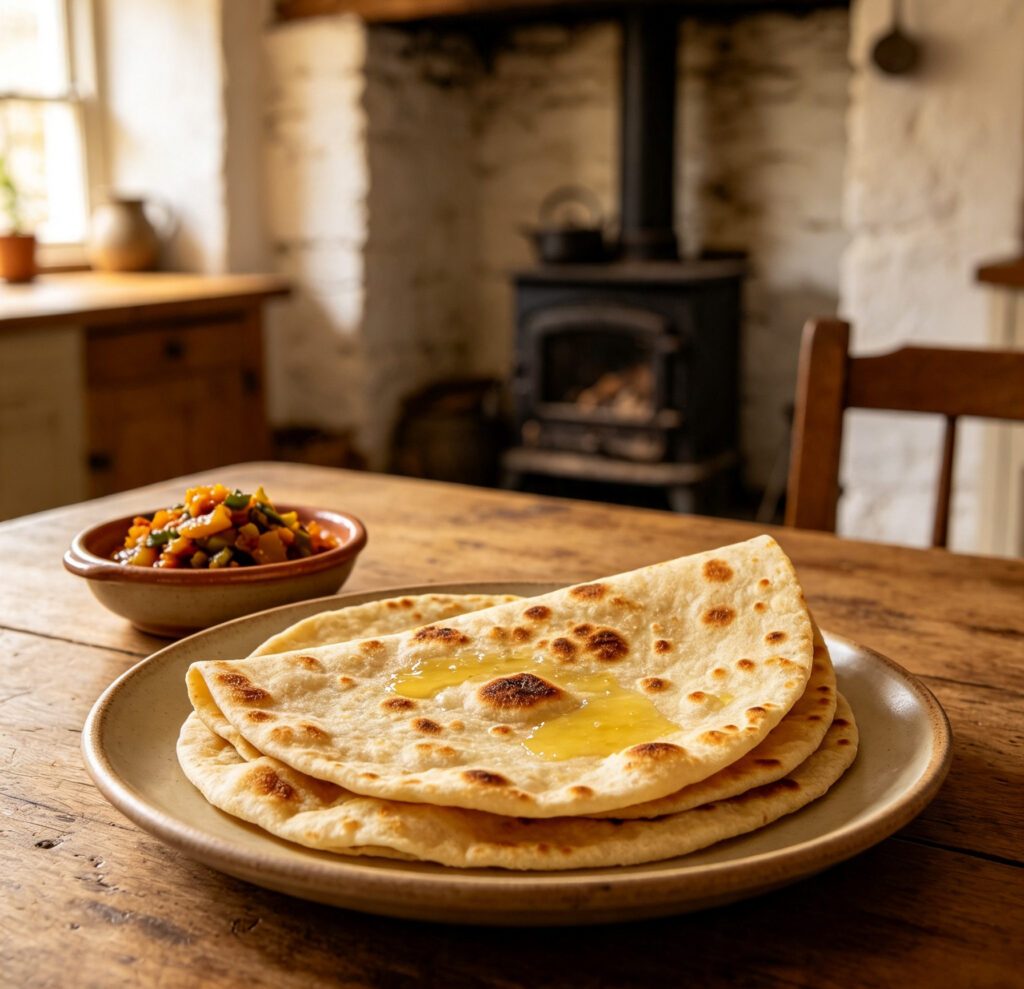
Introduction: Soft, layered flatbread, pan-fried until lightly golden — a bread with South Asian roots that has become a firm favourite across Malawi.
Cultural Background: Chapati arrived in Malawi through Indian traders and settlers, and has since become thoroughly woven into local food culture, often sold by street vendors and served at breakfast or alongside stews. It is especially popular as an accompaniment to bean or meat relishes, or eaten simply rolled up with tea.
Tips: Resting the dough relaxes the gluten, making it much easier to roll out thinly. Cooking over medium (not high) heat gives an evenly golden chapati without burning before it cooks through. Stacking cooked chapatis under a cloth keeps them soft rather than crisp.
Variations: Add a pinch of ground cumin or turmeric to the dough for a subtly spiced version. Make smaller chapatis for a snack-sized portion. Brush the cooked chapati with a little melted butter for extra richness.
Storage: Store cooled chapatis wrapped in foil or an airtight container at room temperature for up to 2 days, or refrigerate for up to 4 days.
Reheating: Reheat in a dry frying pan over medium heat for about 30 seconds per side until warm and pliable again.
Nutrition: Approx. per serving (2 chapatis): 280 kcal, 6 g protein, 46 g carbohydrate, 8 g fat, 2 g fibre.
FAQs:
Q: Why is my chapati tough?
A: This usually means the dough wasn’t rested long enough, or too much flour was used while rolling; rest the dough fully and roll gently.
Q: Can I make the dough ahead of time?
A: Yes, the dough can be made and refrigerated, well wrapped, for up to a day; bring to room temperature before rolling.
Q: Is chapati vegan?
A: Yes, as written it contains no animal products.
- All-purpose flour, plus extra for dusting — 300 g (2 1/2 cups)
- Warm water — 180 ml (3/4 cup)
- Cooking oil, plus extra for frying — 45 ml (3 tbsp)
- Salt — 3 g (1/2 tsp)
- Sugar — 5 g (1 tsp)
Please log in to leave a comment.