
Lunches
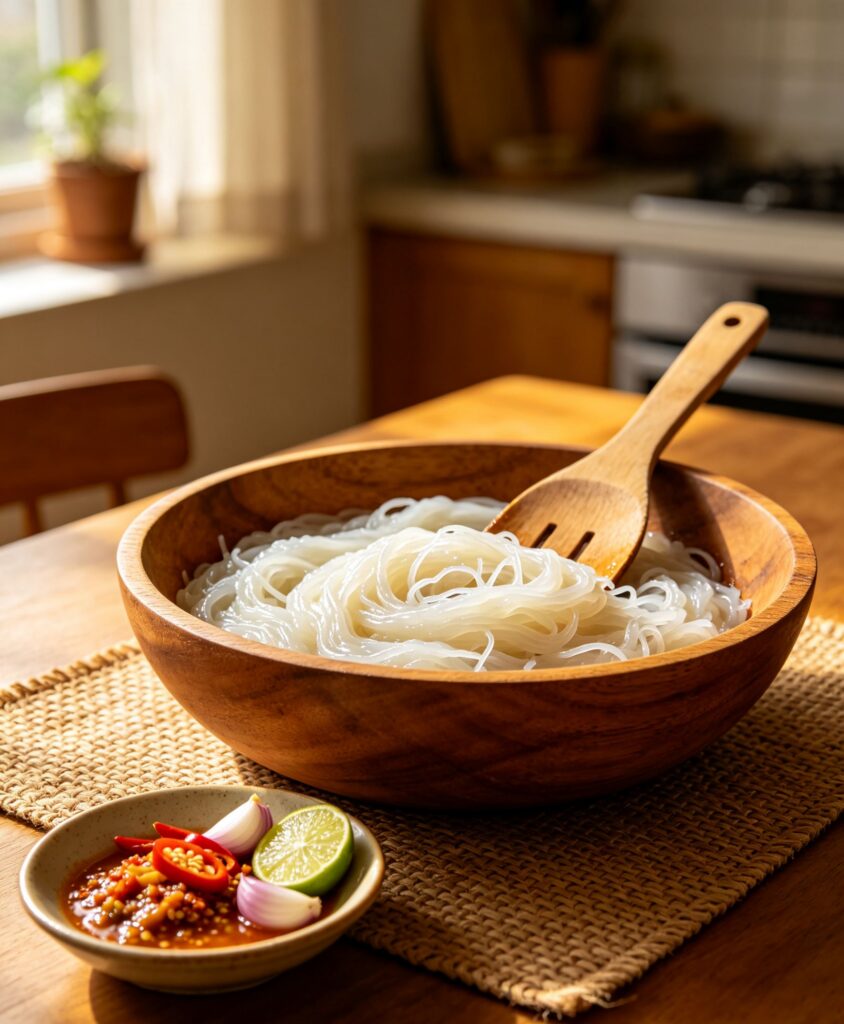
Ambuyat with Cacah (Sago Starch with Sour-Spicy Dip)
The Quirky Foodster Team
Ingredients
- 200 g Sago starch (ambuyat flour) (1½ cups)
- 500 ml Boiling water (2 cups)
- 30 g Tamarind pulp (2 tbsp)
- 100 ml Warm water, for tamarind (1/3 cup plus 1 tbsp)
- 3 Bird's eye chillies, finely chopped (adjust to taste)
- 2 Shallots, finely chopped
- 10 g Belacan (shrimp paste), toasted (2 tsp)
- 20 g Palm sugar, finely chopped (1 tbsp)
- 3 g Fine salt (½ tsp)
- 15 ml Fresh lime juice (1 tbsp)
Method
- Soak the tamarind pulp in warm water for 10 minutes, then strain to extract the tamarind liquid; discard the solids.
- Toast the belacan in a dry pan for 1 minute until fragrant, then pound with the chillies and shallots in a mortar and pestle to a coarse paste.
- Warm the paste briefly in a small saucepan, then stir in the tamarind liquid, palm sugar, salt and lime juice. Simmer for 2–3 minutes to make the cacah dip. Set aside.
- Place the sago starch in a heatproof bowl. Pour in the boiling water all at once.
- Stir immediately and vigorously with the candas or a wooden spatula in one direction, scraping the sides, until the mixture turns translucent, thick and glue-like — about 3–4 minutes.
- Serve the warm ambuyat immediately in its bowl alongside the cacah dip and a spread of grilled fish, fried vegetables and rice for those who prefer it.
Introduction: Ambuyat is Brunei's proud national dish and its most distinctive culinary symbol.
Cultural Background: Ambuyat is Brunei's proud national dish and its most distinctive culinary symbol. Made from the starch of the interior trunk of the sago palm, it is mixed with hot water until it forms a glossy, glue-like paste with almost no flavour of its own. Traditionally eaten communally at lunchtime using a two-pronged bamboo stick called candas, diners twirl the sticky ambuyat and dip it into cacah, a fiery, sour dipping sauce, swallowing it largely without chewing. It is typically served alongside a spread of side dishes such as grilled or fried fish and vegetables.
Tips: Ambuyat must be eaten warm — it stiffens and becomes unworkable once cool. Stir in one direction only; changing direction can make the starch clump unevenly. The dish is intentionally bland; all the flavour comes from the cacah dip, so don't under-season it.
Variations: Some households add a splash of fresh lime directly into the ambuyat instead of only the dip. Cacah can be made milder by reducing the chilli count for children or guests unused to spice. Ambuyat is sometimes served with a second, sweeter dipping sauce made with palm sugar and less chilli. No authentic vegetarian version exists, as the cacah traditionally relies on belacan (shrimp paste) for its depth of flavour.
Storage: Ambuyat does not store well once mixed and is best made fresh; the cacah dip keeps refrigerated in an airtight container for up to 3 days.
Reheating: Ambuyat cannot be successfully reheated once set; prepare only the amount needed for one sitting.
Nutrition: Per serving (ambuyat and dip only): approx. 160 kcal, 1g protein, 38g carbohydrate, 0.5g fat.
FAQs:
Q: Where can I buy sago starch?
A: Look for ‘sago flour’ or ‘ambuyat flour’ in Southeast Asian grocery stores or online specialty shops.
Q: How do I eat ambuyat properly?
A: Twirl a small amount around the candas sticks, lift, dip into the cacah, and swallow without chewing — the texture is the point.
Q: Is ambuyat gluten-free?
A: Yes, sago starch is naturally gluten-free, though always check the cacah’s other ingredients if cooking for a gluten-free guest.
Please log in to leave a comment.