
Lunches
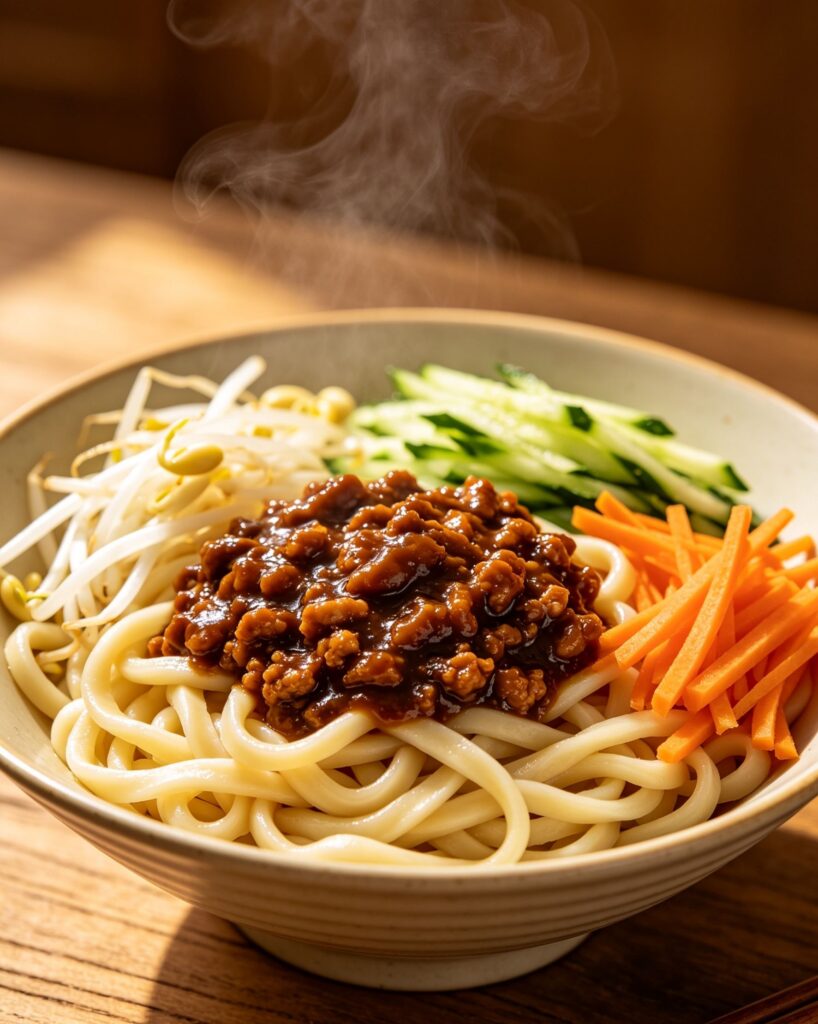
Zhajiangmian (Beijing Fried Sauce Noodles)
The Quirky Foodster Team
Ingredients
- 400 g (14 oz) fresh wheat noodles
- 300 g (10 oz) minced pork
- 4 tbsp sweet fermented bean paste (tianmianjiang)
- 2 tbsp yellow soybean paste (huangjiang)
- 3 cloves garlic, minced
- 1 tbsp fresh ginger, minced
- 2 tbsp vegetable oil
- 1 cucumber, julienned
- 100 g (1 cup) bean sprouts, blanched
- 2 spring onions, sliced
Method
- Heat the oil in a wok and sauté the garlic and ginger until fragrant.
- Add the minced pork and stir-fry until browned and cooked through, about 5 minutes.
- Stir in the sweet fermented bean paste and yellow soybean paste, and cook over low heat for 8-10 minutes, stirring often, until the sauce is thick and glossy.
- Meanwhile, cook the noodles in boiling water according to package directions, then drain.
- Divide the noodles among bowls, top generously with the sauce, and arrange the cucumber, bean sprouts and spring onion on top.
- Toss well at the table before eating.
Introduction: Zhajiangmian is a beloved Beijing noodle dish topped with a rich, savoury fermented soybean paste and minced pork sauce, traditionally tossed tableside with fresh cucumber and bean sprout garnishes for a satisfying midday meal.
Cultural Background: Zhajiangmian is a beloved Beijing noodle dish topped with a rich, savoury fermented soybean paste and minced pork sauce, traditionally tossed tableside with fresh cucumber and bean sprout garnishes for a satisfying midday meal.
Tips: Cook the paste slowly over low heat; rushing it can leave the sauce tasting raw and overly salty. Balancing the two bean pastes gives the signature depth; using only one makes the sauce one-dimensional.
Variations: Add diced firm tofu for a heartier sauce. Use ground chicken in place of pork for a lighter version.
Storage: Refrigerate sauce separately from noodles for up to 3 days.
Reheating: Reheat the sauce gently on the stovetop; cook noodles fresh for best texture.
Nutrition: Approx. 520 kcal, 24g protein, 20g fat, 60g carbohydrate per serving.
FAQs
Q: What can I substitute for tianmianjiang?
A: A mix of hoisin sauce and a little dark soy sauce can approximate it in a pinch, though the flavour will be sweeter.
Q: Is this dish very salty?
A: The fermented pastes are salty by nature, balanced by the fresh raw vegetable garnishes tossed through.
Please log in to leave a comment.