
Breads
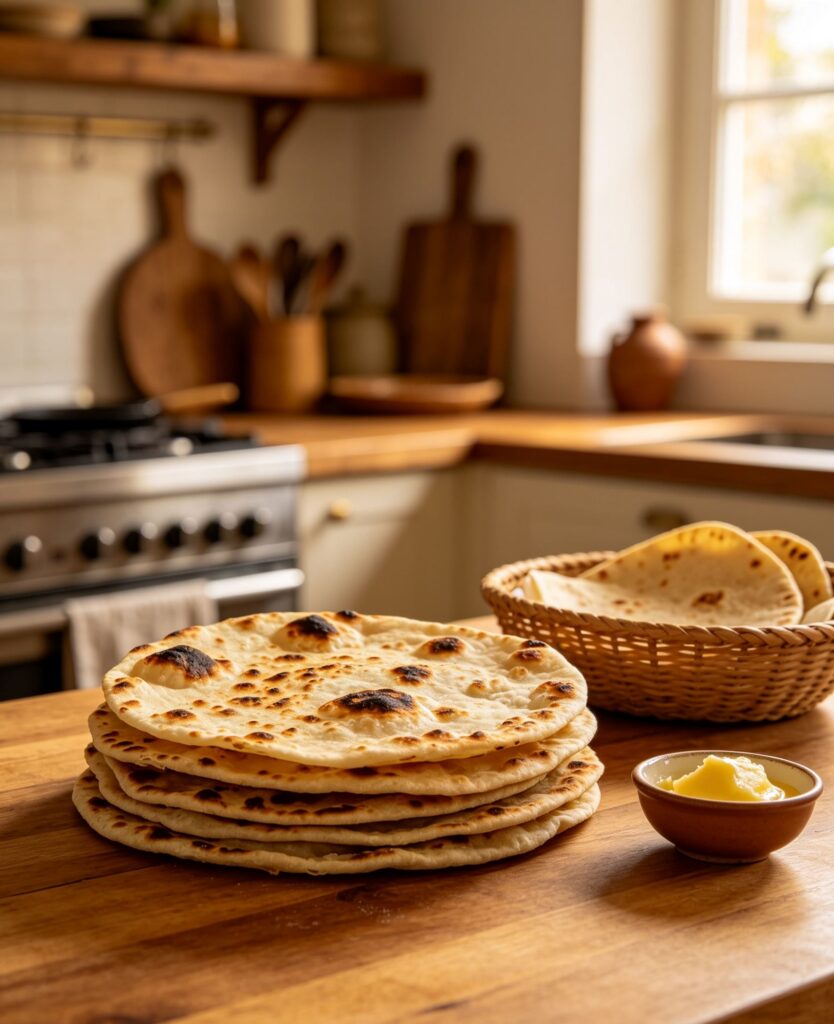
Chapati z’Uburundi (Burundian-Style Chapati)
The Quirky Foodster Team
Ingredients
- 500 g (4 cups) all-purpose flour
- 1 tsp salt
- 2 tbsp vegetable oil, plus extra for cooking and layering
- 300 ml (1 1/4 cups) warm water
Method
- Combine the flour and salt in a mixing bowl. Add the 2 tbsp oil and rub it in with your fingers.
- Gradually add the warm water, mixing until a soft, pliable dough forms.
- Knead for 8-10 minutes until smooth, then cover and rest for 20-30 minutes.
- Divide the dough into 8 equal balls. Roll each ball into a thin circle, brush lightly with oil, and roll up into a tight coil, then flatten and re-roll into a flat disc about 20 cm (8 inches) wide.
- Heat a dry griddle or skillet over medium heat.
- Cook each chapati for 1-2 minutes per side, brushing lightly with oil and pressing gently with a spatula, until golden brown spots appear and the layers puff slightly.
- Stack cooked chapatis under a clean cloth to keep soft and serve warm.
Introduction: Chapati arrived in the African Great Lakes region through Indian Ocean trade and South Asian communities, and has since become a thoroughly local staple, layered and pan-fried until flaky.
Cultural Background: Chapati arrived in the African Great Lakes region through Indian Ocean trade and South Asian communities, and has since become a thoroughly local staple, layered and pan-fried until flaky. In Burundi, chapati is a common accompaniment to bean stews and is sold hot from roadside stalls.
Tips: Coiling and re-rolling the dough is the key step that creates chapati's signature flaky layers. Resting the dough before rolling makes it easier to work and prevents shrinking back.
Variations: Add a tablespoon of plain yoghurt to the dough for extra softness. Already vegan as written.
Storage: Store wrapped in foil or an airtight container at room temperature for up to 2 days.
Reheating: Reheat on a dry skillet over medium heat for 30-60 seconds per side.
Nutrition: Approx. 240 kcal, 5 g protein, 40 g carbohydrate, 6 g fat per serving (based on 8 pieces).
FAQs:
Q: Can I make the dough ahead of time?
A: Yes, the dough can be made a day ahead and refrigerated; bring to room temperature before rolling.
Q: Why isn’t my chapati flaky?
A: Flakiness comes from the coiling technique and enough oil between the layers, so make sure to brush generously before coiling.
Please log in to leave a comment.