
Lunches
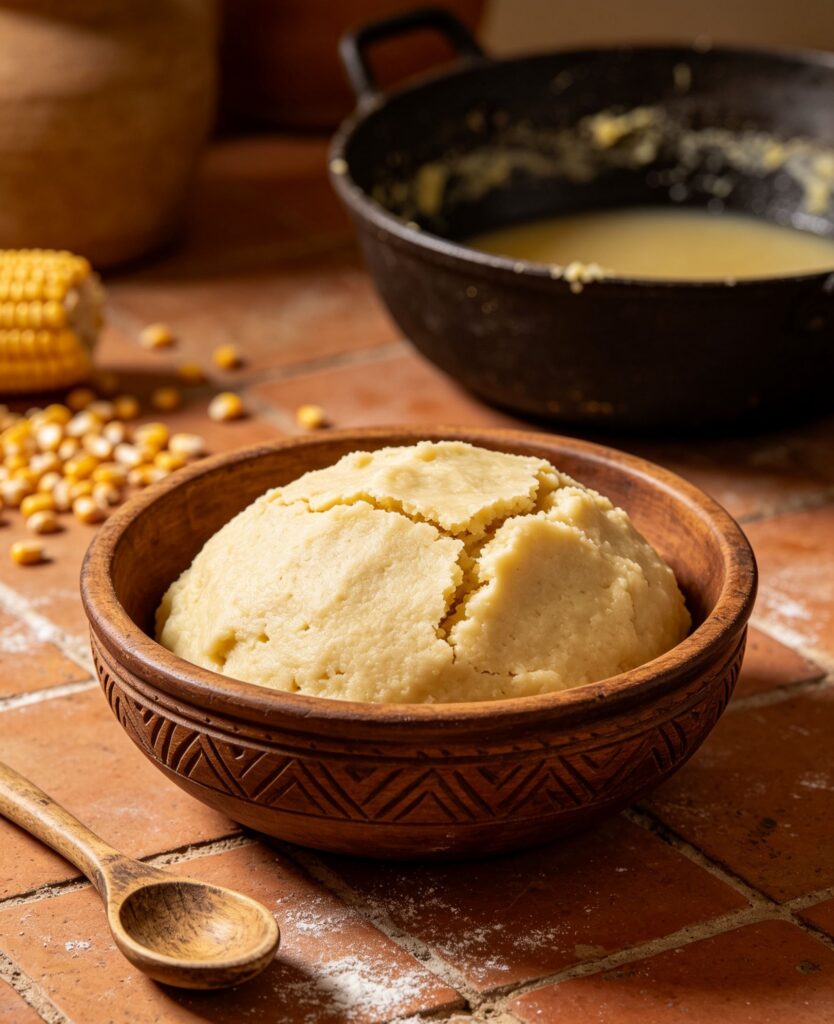
Ubugali bw’Ibigori (Maize Ubugali)
The Quirky Foodster Team
Ingredients
- 500 ml (2 cups) water
- 250 g (2 cups) fine white maize (corn) flour
- 250 ml (1 cup) cold water, extra
- 1/2 tsp salt
Method
- Bring the 500 ml water to a boil in a heavy-bottomed saucepan.
- Mix a third of the maize flour with the extra cold water to form a smooth paste, then stir this into the boiling water along with the salt.
- Cook for 2-3 minutes, stirring, until it thickens slightly.
- Gradually add the remaining maize flour, a little at a time, beating vigorously with a wooden spoon after each addition to prevent lumps.
- Reduce the heat to low and continue beating and folding the mixture for 8-10 minutes until it forms a smooth, stiff, dough-like mass that pulls away from the sides of the pot.
- Wet a serving bowl with cold water, turn out the ubugali into it, and shape into a smooth dome using the back of a wet spoon.
- Serve warm alongside beans, stewed greens or meat sauces.
Introduction: Ubugali is the stiff, dough-like maize porridge that forms the starchy centrepiece of countless Burundian meals, eaten with the hands and used to scoop up sauces, beans or greens.
Cultural Background: Ubugali is the stiff, dough-like maize porridge that forms the starchy centrepiece of countless Burundian meals, eaten with the hands and used to scoop up sauces, beans or greens. Its preparation calls for strong arms and patience, and mastering the right consistency is considered a mark of a skilled home cook.
Tips: Keep a cup of cold water beside the stove to wet your spoon and hands, which prevents sticking. The final texture should be firm enough to slice with a spoon but still soft and pliable.
Variations: Mix cassava flour with the maize flour for a slightly different, chewier texture common in some regions. Already vegan as written.
Storage: Refrigerate covered for up to 2 days; ubugali is best eaten fresh as it firms up considerably once cold.
Reheating: Slice and steam over simmering water for 5-8 minutes, or microwave covered with a damp paper towel until soft.
Nutrition: Approx. 230 kcal, 5 g protein, 50 g carbohydrate, 1 g fat per serving (based on 6 servings).
FAQs:
Q: Why is my ubugali lumpy?
A: Lumps form when flour is added too quickly. Add it gradually and beat vigorously and continuously between additions.
Q: What is ubugali traditionally eaten with?
A: It is almost always eaten by hand alongside a saucy dish such as beans, stewed greens or meat, using a small piece of ubugali to scoop the sauce.
Please log in to leave a comment.