
Bajan Jug-Jug
The Quirky Foodster Team
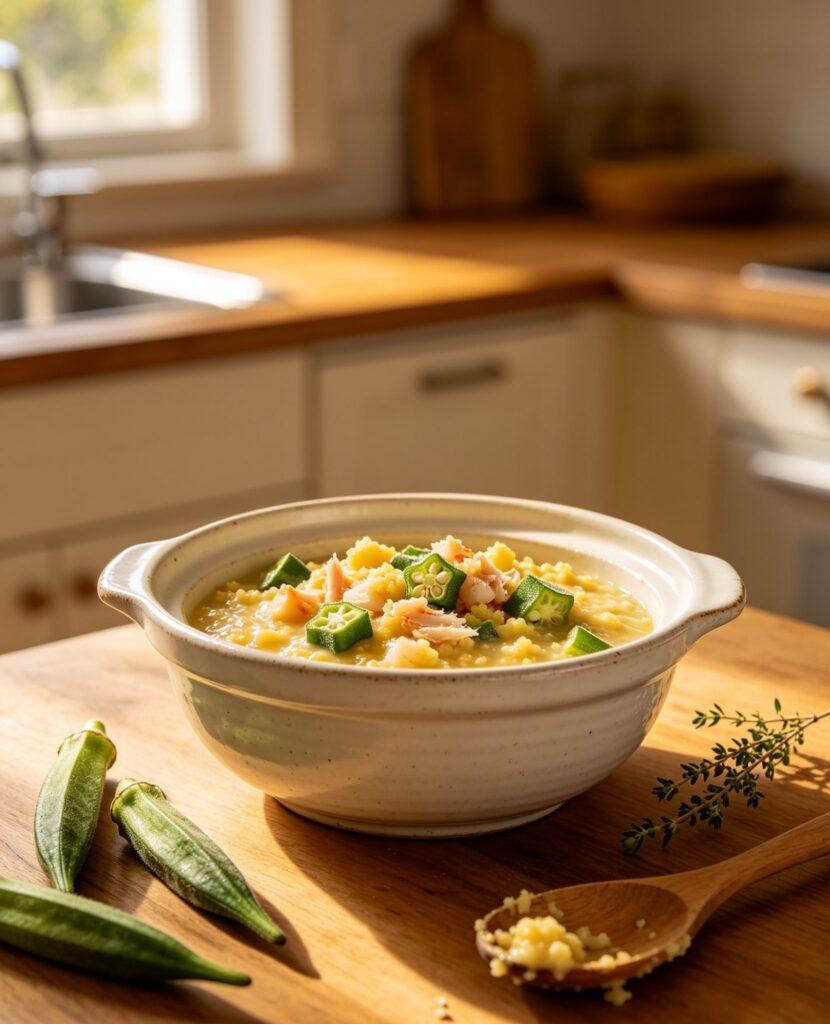
Ingredients
- Pigeon peas, cooked and drained — 250 g (1 1/4 cups)
- Guinea corn flour (millet flour, or fine cornmeal as substitute) — 200 g (1 cup)
- Salted beef, soaked and diced — 200 g (7 oz)
- Salted pork, soaked and diced — 150 g (5 oz)
- Onion, chopped — 1
- Garlic, minced — 2 cloves
- Fresh thyme — 1 sprig
- Spring onions, chopped — 2
- Hot pepper, whole — 1
- Butter — 2 tbsp
- Meat stock (from cooking the salted meats) — 500 ml (2 cups)
- Salt and black pepper, — to taste
Method
- Simmer the soaked salted beef and pork in fresh water for 45-60 minutes until tender. Reserve the cooking liquid as stock, then dice the meat finely.
- Blend or pound the cooked pigeon peas to a coarse paste using a food processor or mortar and pestle.
- In a large pot, melt the butter and sauté the onion, garlic and spring onion until softened.
- Add the diced meats, thyme and whole hot pepper, and stir for 2-3 minutes.
- Stir in the mashed pigeon peas and gradually whisk in the Guinea corn flour along with the reserved stock.
- Cook over low heat, stirring constantly, for 20-25 minutes until thick and well combined, similar in consistency to a firm mash.
- Remove the whole pepper, season with salt and black pepper, and serve hot alongside the Christmas meal.
Introduction: Jug-jug is Barbados’s distinctive Christmas dish, made from ground pigeon peas and Guinea corn (millet) cooked down with salted meats and herbs into a dense, savoury mash.
Cultural Background: Jug-jug is Barbados’s distinctive Christmas dish, made from ground pigeon peas and Guinea corn (millet) cooked down with salted meats and herbs into a dense, savoury mash. Believed to descend from Scottish haggis by way of early indentured Scottish settlers, later reshaped with African and local Caribbean ingredients, it is traditionally served alongside the main Christmas meal and considered one of the island’s most historically layered dishes.
Tips: Add the stock gradually, as the exact amount needed can vary with the flour used — aim for a firm, scoopable consistency. If Guinea corn flour isn’t available, fine yellow cornmeal is the most common modern substitute.
Variations: A vegetarian version can be made using vegetable stock and omitting the salted meats, seasoning generously to compensate. Some families add a small amount of coconut milk for a softer, creamier finish.
Storage: Store in an airtight container in the refrigerator for up to 3 days.
Reheating: Reheat gently on the stovetop with a splash of stock or water, stirring to loosen.
Nutrition: Approx. 340 kcal, 19 g protein, 38 g carbohydrates, 12 g fat per serving.
FAQs:
Q: Is jug-jug only eaten at Christmas?
A: Traditionally yes, though some households make smaller batches for other special family occasions.
Q: What is Guinea corn?
A: An older name for millet, ground into flour for this dish; cornmeal is the most accessible substitute today.
- Pigeon peas, cooked and drained — 250 g (1 1/4 cups)
- Guinea corn flour (millet flour, or fine cornmeal as substitute) — 200 g (1 cup)
- Salted beef, soaked and diced — 200 g (7 oz)
- Salted pork, soaked and diced — 150 g (5 oz)
- Onion, chopped — 1
- Garlic, minced — 2 cloves
- Fresh thyme — 1 sprig
- Spring onions, chopped — 2
- Hot pepper, whole — 1
- Butter — 2 tbsp
- Meat stock (from cooking the salted meats) — 500 ml (2 cups)
- Salt and black pepper, — to taste
Please log in to leave a comment.