
Pad Thai (Stir-Fried Rice Noodles)
The Quirky Foodster Team
Ingredients
- Flat rice noodles (dried, medium width) — 200 g (7 oz)
- Sunflower oil — 3 tbsp (45 ml)
- Shrimp, peeled and deveined — 200 g (7 oz)
- Firm tofu, cubed — 150 g (5 oz)
- Eggs — 2
- Dried shrimp, chopped (optional) — 2 tbsp
- Tamarind paste — 3 tbsp
- Fish sauce — 3 tbsp
- Palm sugar or brown sugar — 3 tbsp
- Chilli powder (optional) — 1 tsp
- Bean sprouts — 150 g (2 cups)
- Spring onions, cut into short lengths — 3
- Crushed roasted peanuts, to serve — 4 tbsp
- Lime wedges, to serve
Method
- Soak the dried rice noodles in warm water for 20 minutes, until pliable but still slightly firm, then drain.
- In a small bowl, whisk together the tamarind paste, fish sauce, palm sugar and chilli powder to make the sauce.
- Heat the oil in a wok over high heat and stir-fry the shrimp for 1–2 minutes until just turning pink, then push to one side.
- Add the tofu and dried shrimp, if using, and stir-fry for 1–2 minutes.
- Crack the eggs into the wok and scramble briefly, then mix everything together.
- Add the drained noodles and the sauce, and toss constantly for 3–4 minutes, until the noodles are tender and have absorbed the sauce.
- Add the bean sprouts and spring onions, and toss for a further 1 minute, just until the sprouts soften slightly.
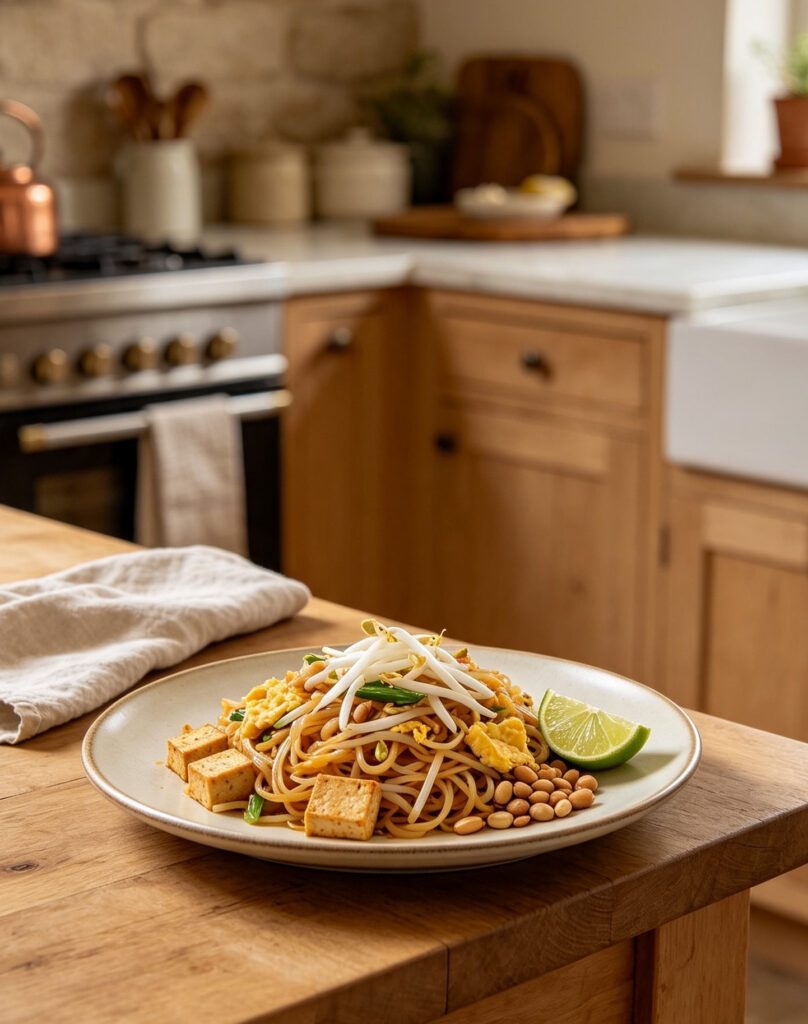
- Plate and top generously with crushed peanuts, extra bean sprouts and lime wedges.
Introduction: Pad Thai, Thailand's most internationally recognised dish, stir-fries flat rice noodles with egg, tofu and
shrimp in a balanced sweet, sour and salty sauce, finished with crushed peanuts, bean sprouts and lime.
Cultural Background: Pad Thai, Thailand's most internationally recognised dish, stir-fries flat rice noodles with egg, tofu and
shrimp in a balanced sweet, sour and salty sauce, finished with crushed peanuts, bean sprouts and lime.
Promoted as a national dish in the mid-20th century, it remains a beloved everyday lunch across the
country.
Tips: Don't over-soak the noodles — they should still have a slight bite before going into the wok, as they'll continue to soften while frying. Cook over high heat and keep the ingredients moving constantly for the best stir-fried texture.
Variations: Use chicken instead of shrimp, or omit seafood entirely for a vegetarian version with extra tofu. Adjust the balance of tamarind, fish sauce and sugar to taste — pad Thai should be a balance of sour, salty and sweet. A vegetarian version can be made by omitting the shrimp, dried shrimp and fish sauce, using extra tofu
and substituting soy sauce for the fish sauce.
Vegetarian Pad Thai: Omit the shrimp and dried shrimp. Increase the tofu to 300 g (10 oz). Replace the
fish sauce with an equal amount of soy sauce. Proceed exactly as directed.
Storage: Refrigerate in an airtight container for up to 2 days; noodles will soften further.
Reheating: Reheat in a hot wok or pan with a splash of water, tossing until warmed through.
FAQs:
Q: What is tamarind paste?
A: A tangy, fruity paste made from the pulp of the tamarind pod, essential for pad Thai's characteristic sourness; available at Asian grocers.
Q: Can I use rice noodles from a package labelled 'pad Thai noodles'?
A: Yes, these are specifically the right width and type for this dish.
Q: Why soak rather than boil the noodles?
A: Soaking keeps them from becoming mushy, since they finish cooking directly in the wok with the sauce.
- Flat rice noodles (dried, medium width) — 200 g (7 oz)
- Sunflower oil — 3 tbsp (45 ml)
- Shrimp, peeled and deveined — 200 g (7 oz)
- Firm tofu, cubed — 150 g (5 oz)
- Eggs — 2
- Dried shrimp, chopped (optional) — 2 tbsp
- Tamarind paste — 3 tbsp
- Fish sauce — 3 tbsp
- Palm sugar or brown sugar — 3 tbsp
- Chilli powder (optional) — 1 tsp
- Bean sprouts — 150 g (2 cups)
- Spring onions, cut into short lengths — 3
- Crushed roasted peanuts, to serve — 4 tbsp
- Lime wedges, to serve
Please log in to leave a comment.