
Springbok Potjie Festive (Springbok Potjie)
The Quirky Foodster Team
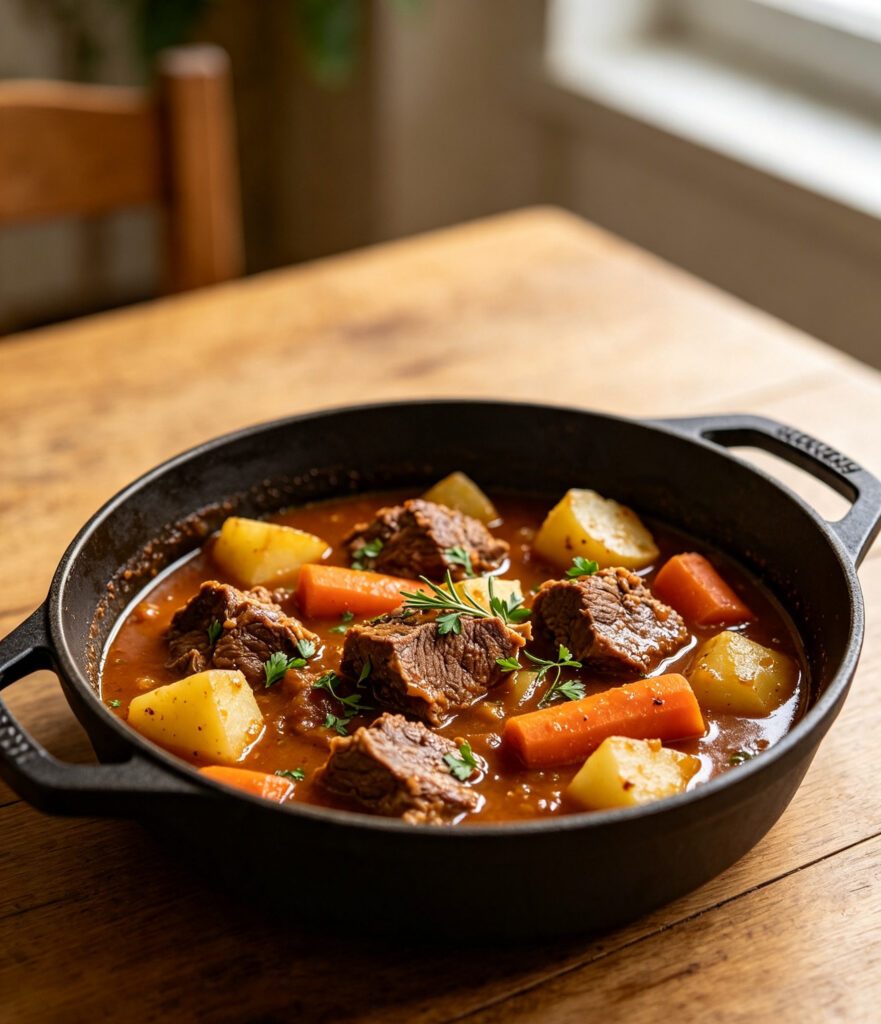
Ingredients
- Springbok meat, cut into chunks — 1.2 kg (2.6 lb)
- Onions, chopped — 2
- Carrots, chunked — 3
- Potatoes, chunked — 3
- Garlic, minced — 4 cloves
- Oil — 2 tbsp
- Red wine or beef stock — 480 ml (16 fl oz)
- Bay leaf — 1
- Apricot jam — 2 tbsp
- Salt and pepper — to taste
Method
- Heat the oil in the potjie pot and brown the springbok meat in batches; set aside.
- In the same pot, sauté the onion and garlic until softened.
- Layer the browned meat back into the pot, followed by the carrots and potatoes, without stirring.
- Add the wine or stock, bay leaf and apricot jam, and season with salt and pepper.
- Cover and cook low and slow over gentle coals (or on low stovetop heat) for 2.5–3 hours, resisting the urge to stir, until the meat is very tender.
- Serve directly from the pot for a shared, celebratory meal.
Introduction: A rich, slow-cooked springbok stew prepared in a traditional potjie pot, a celebratory dish showcasing Namibia's iconic game meat.
Cultural Background: Springbok, Namibia's national animal, is a prized game meat often reserved for special gatherings, and preparing it as a slow-cooked potjie honours both the occasion and the country's strong hunting and outdoor cooking traditions.
Tips: Springbok is lean, so cooking low and slow with enough liquid is important to keep it tender rather than tough. The apricot jam adds a traditional South Africa-influenced sweetness that complements the game meat well.
Variations: Use kudu or oryx in place of springbok for a similar celebratory game potjie. Add a handful of dried apricots for extra traditional sweetness.
Storage: Refrigerate leftovers in an airtight container for up to 3 days.
Reheating: Reheat gently on the stovetop over low heat, covered, with a splash of water, until warmed through.
FAQs:
Q: Why is springbok considered special?
A: It's Namibia's national animal and a prized, lean game meat often reserved for celebratory or special occasion meals.
Q: Can this be made with a different game meat?
A: Yes, kudu or oryx can be substituted using the same method and timing.
- Springbok meat, cut into chunks — 1.2 kg (2.6 lb)
- Onions, chopped — 2
- Carrots, chunked — 3
- Potatoes, chunked — 3
- Garlic, minced — 4 cloves
- Oil — 2 tbsp
- Red wine or beef stock — 480 ml (16 fl oz)
- Bay leaf — 1
- Apricot jam — 2 tbsp
- Salt and pepper — to taste
Please log in to leave a comment.