
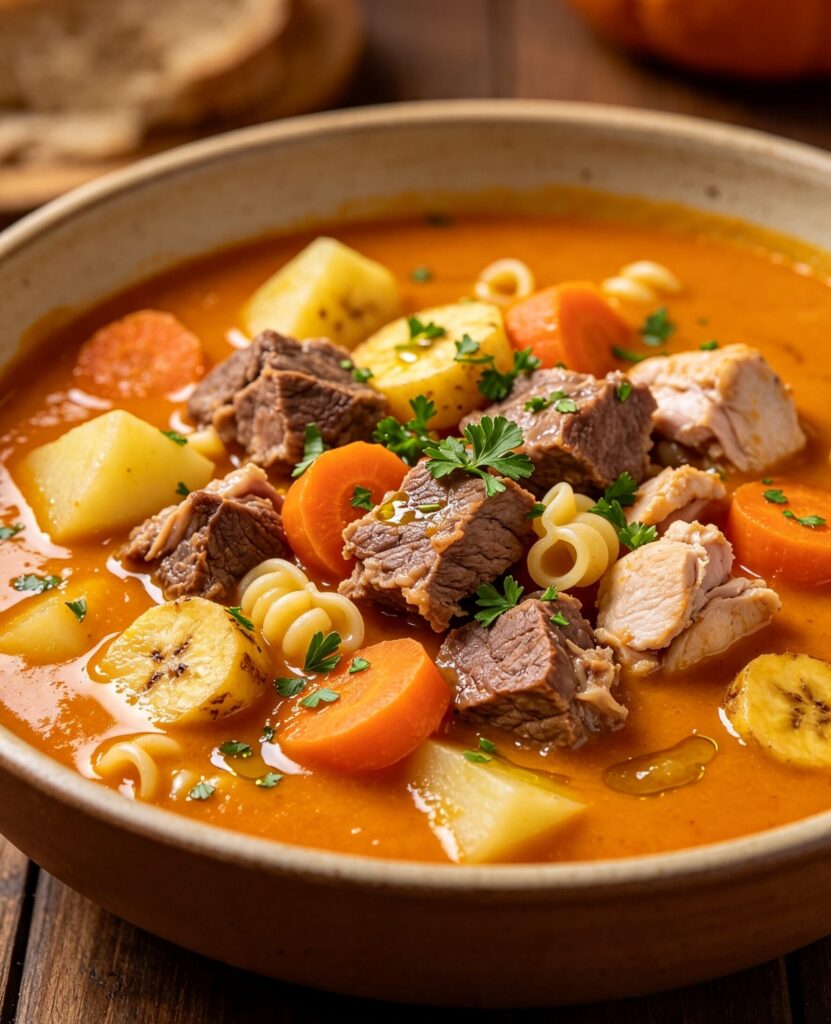
Independence Day Pumpkin Soup (Soup Joumou)
The Quirky Foodster Team
Ingredients
- Beef shank or stewing beef, cubed — 600 g (1.3 lb)
- Limes, juiced (for cleaning meat) — 2
- Calabaza pumpkin, peeled and cubed — 1 kg (2.2 lb)
- Vegetable oil — 2 tbsp
- Onion, chopped — 1
- Garlic, minced — 4 cloves
- Fresh thyme — 1 sprig
- Whole Scotch bonnet pepper — 1
- Water or beef stock — 2 L (8 cups)
- Carrots, sliced — 2
- Small turnip, peeled and cubed — 1
- Small cabbage, shredded — 1
- Celery stalk, sliced — 1
- Small pasta (such as macaroni) — 150 g (1 cup)
- Salt and pepper, — to taste
Method
- Rub the beef with lime juice, rinse, and pat dry.
- Simmer half the pumpkin in a separate pot of water until very soft, about 20 minutes, then blend until smooth; set this pumpkin purée aside.
- Heat oil in a large pot and brown the beef on all sides, about 8 minutes.
- Add onion and garlic; cook until fragrant, 4 minutes.
- Pour in the water or stock, add thyme and whole Scotch bonnet, cover, and simmer 1 hour until the beef is tender.
- Stir in the pumpkin purée, remaining cubed pumpkin, carrots, turnip, cabbage, and celery; simmer uncovered 25 minutes until the vegetables are tender.
- Add the pasta and cook a further 10-12 minutes until al dente.
- Remove the Scotch bonnet, season with salt and pepper, and serve hot in deep bowls.
Introduction: Haiti's most symbolically important dish, soup joumou is a rich pumpkin and beef soup traditionally eaten every January 1st to celebrate Haiti's 1804 independence, since enslaved people were once forbidden from eating this once-colonial delicacy.
Cultural Background: Haiti's most symbolically important dish, soup joumou is a rich pumpkin and beef soup traditionally eaten every January 1st to celebrate Haiti's 1804 independence, since enslaved people were once forbidden from eating this once-colonial delicacy. It was recognized by UNESCO as part of humanity's Intangible Cultural Heritage in 2021.
Tips: Blending part of the pumpkin into a purée gives the soup its signature thick, golden body while leaving some pumpkin in cubes for texture.
Variations: Some families add a splash of vinegar-marinated cabbage on top just before serving for extra brightness.
Storage: Refrigerate in an airtight container for up to 4 days; freezes well for up to 2 months (add fresh pasta after thawing).
Reheating: Reheat gently on the stovetop over medium-low heat, adding water or stock if the soup has thickened too much.
Nutrition: Approx. 320 kcal, 24 g protein, 12 g fat, 30 g carbohydrate, 5 g fibre per serving.
FAQs:
Q: Why is soup joumou eaten on January 1st?
A: It commemorates Haiti's independence in 1804, celebrating freedom by eating a soup once reserved for French colonizers.
Q: Is soup joumou recognized internationally?
A: Yes, UNESCO added it to its Representative List of the Intangible Cultural Heritage of Humanity in 2021.
- Beef shank or stewing beef, cubed — 600 g (1.3 lb)
- Limes, juiced (for cleaning meat) — 2
- Calabaza pumpkin, peeled and cubed — 1 kg (2.2 lb)
- Vegetable oil — 2 tbsp
- Onion, chopped — 1
- Garlic, minced — 4 cloves
- Fresh thyme — 1 sprig
- Whole Scotch bonnet pepper — 1
- Water or beef stock — 2 L (8 cups)
- Carrots, sliced — 2
- Small turnip, peeled and cubed — 1
- Small cabbage, shredded — 1
- Celery stalk, sliced — 1
- Small pasta (such as macaroni) — 150 g (1 cup)
- Salt and pepper, — to taste
Please log in to leave a comment.