
Holidays & Special Occasions
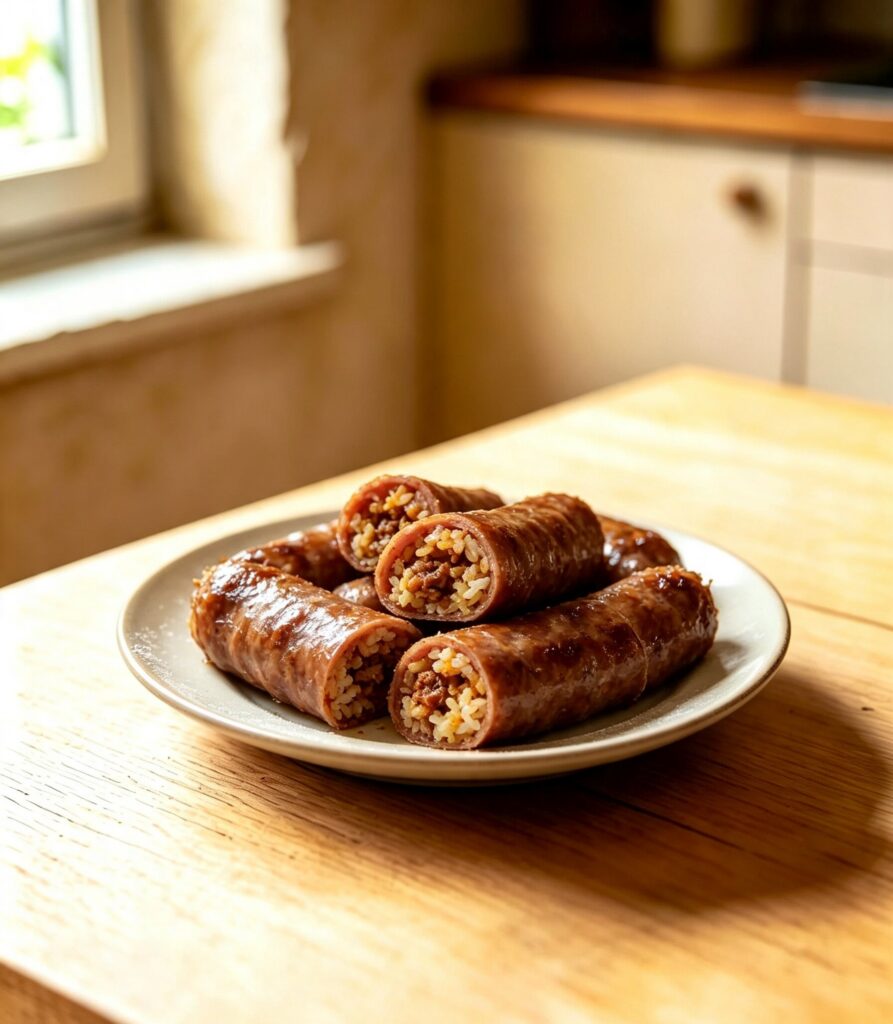
Usban (Stuffed Lamb Sausage for Eid)
Ingredients
- 1 lamb stomach or 1 meter (about 3 ft) natural sausage casing, well cleaned
- 200 g (1 cup) rice, rinsed
- 300 g (10.5 oz) minced lamb or lamb liver, finely chopped
- 1 onion, finely chopped
- 3 tbsp chopped parsley
- 3 tbsp chopped mint
- 1 tsp ground cumin
- 1 tsp paprika
- 0.5 tsp cinnamon
- 2 tbsp tomato paste
- Salt and pepper, to taste
- 1.5 liters (6 cups) water or broth, for simmering
- 1 onion, halved, and 2 bay leaves, for the simmering liquid
Method
- Thoroughly clean the lamb stomach or casing, turning inside out and washing well under running water; this can also be done using a well-cleaned casing from a butcher.
- In a bowl, mix the rinsed rice with minced lamb or liver, onion, parsley, mint, cumin, paprika, cinnamon, tomato paste, salt and pepper.
- Loosely stuff the casing with the rice and meat mixture, leaving room for the rice to expand as it cooks, then tie off the open ends securely with kitchen string.
- Place the stuffed usban in a large pot with water or broth, halved onion and bay leaves.
- Bring to a gentle boil, then reduce heat and simmer covered for 60-75 minutes, occasionally piercing the casing lightly with a fork to release steam and prevent bursting, until the rice is fully cooked.
- Carefully remove the usban from the pot and let rest for 10 minutes before slicing into rounds.
- Serve warm, sliced, alongside bread or rice as part of the festive meal.
Introduction: Usban is a traditional stuffed sausage made from lamb's stomach or casing filled with a seasoned mixture of rice, minced offal or meat, herbs and spices, most closely associated with Eid al-Adha when the ritual sacrifice provides fresh offal used to prepare it.
Cultural Background: Usban is a traditional stuffed sausage made from lamb's stomach or casing filled with a seasoned mixture of rice, minced offal or meat, herbs and spices, most closely associated with Eid al-Adha when the ritual sacrifice provides fresh offal used to prepare it. Considered a dish of resourcefulness and celebration, it is typically simmered slowly and served sliced as a centerpiece for festive family meals.
Tips: Stuff the casing loosely rather than tightly, since the rice will expand significantly during cooking and a tightly packed casing may burst. Piercing the casing lightly a few times while simmering helps prevent it from splitting.
Variations: In some regions, the mixture includes chopped liver or heart in place of, or alongside, minced lamb for a richer, more traditional offal-based filling.
Storage: Refrigerate cooked and sliced usban in an airtight container for up to 2 days.
Reheating: Reheat gently in a covered pan with a little broth over low heat, or steam briefly until warmed through.
FAQs:
Q: Can I use a synthetic casing instead of stomach lining?
A: A wide natural sausage casing from a butcher works well as a more accessible substitute.
Q: Is usban always made with offal?
A: Traditional versions often include liver or other offal, though home cooks may use minced lamb alone for a milder, more accessible version.
Please log in to leave a comment.