
Drinks
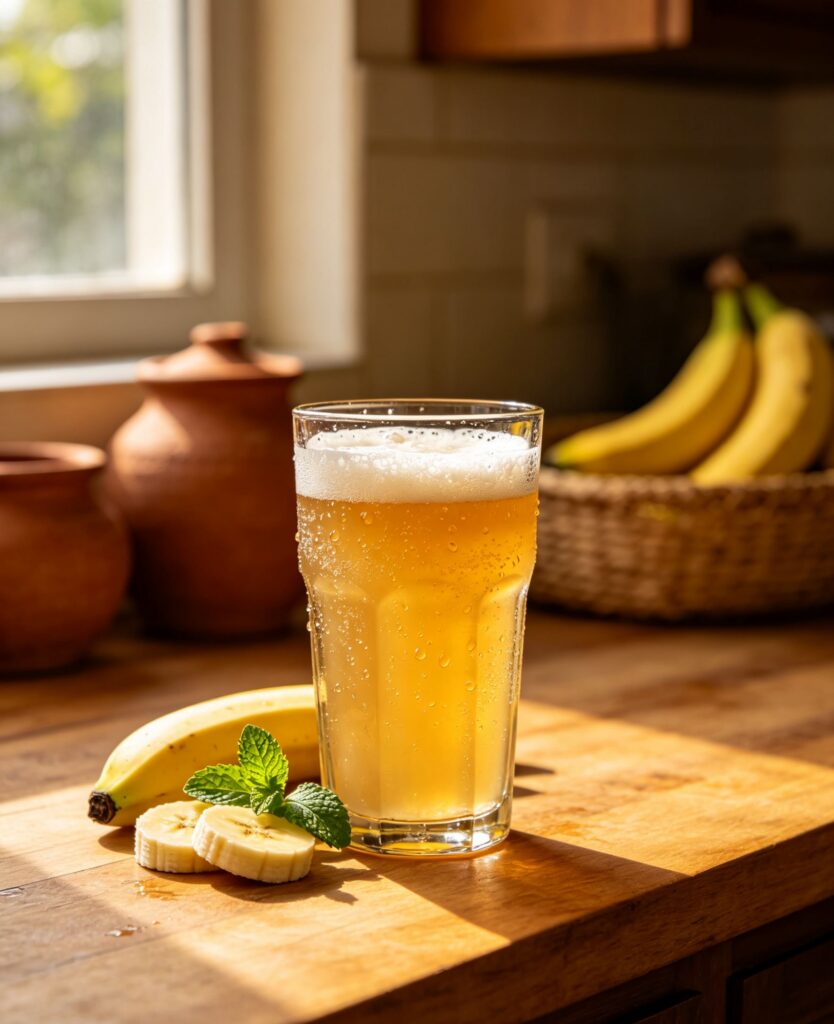
Urwarwa (Traditional Banana Beer)
The Quirky Foodster Team
Ingredients
- 2 kg (4.4 lb) very ripe bananas, peeled
- 150 g (1 1/4 cups) roasted sorghum flour
- 1.5 litres (6 cups) water
- 2 tbsp honey (optional, for sweetness)
Method
- Mash the ripe bananas thoroughly in a large basin until they form a smooth, pulpy mash.
- Add the water gradually, mixing to loosen the mash into a thick liquid.
- Strain the mixture through muslin cloth into a clean fermentation jar, pressing to extract as much liquid as possible; discard the solids.
- Stir the roasted sorghum flour into the strained banana liquid, along with honey if using.
- Cover the jar loosely (to allow gases to escape) and leave in a warm place to ferment for 2-3 days, stirring once daily, until pleasantly tangy and lightly effervescent.
- Strain again if desired for a smoother drink, then serve at room temperature in small cups or traditional gourds.
Introduction: Banana beer is one of Burundi's most culturally significant beverages, brewed from mashed ripe bananas fermented with sorghum flour and traditionally shared from a communal pot through long reed straws at ceremonies, weddings and community meetings.
Cultural Background: Banana beer is one of Burundi's most culturally significant beverages, brewed from mashed ripe bananas fermented with sorghum flour and traditionally shared from a communal pot through long reed straws at ceremonies, weddings and community meetings. Its preparation and sharing carry deep social meaning around hospitality and unity.
Tips: Very ripe, sweet bananas ferment best and give the most authentic flavour. Taste daily during fermentation, as the process is temperature-dependent and can move quickly in warm weather.
Variations: A non-alcoholic version can be made by omitting the fermentation step and serving the fresh, unfermented banana-sorghum mixture chilled as a sweet drink. Already vegan as written.
Storage: Refrigerate the fermented beverage and consume within 3-4 days, as fermentation continues even when chilled.
Reheating: This drink is served at room temperature or chilled and is never reheated.
Nutrition: Approx. 140 kcal, 1 g protein, 32 g carbohydrate, 0.5 g fat per 250 ml serving.
FAQs:
Q: Is urwarwa alcoholic?
A: Yes, the traditional fermented version develops a mild natural alcohol content through the fermentation process; the non-alcoholic variation omits fermentation.
Q: Where is urwarwa traditionally served?
A: It is traditionally shared communally from a single large pot, often drunk through long reed straws at social and ceremonial gatherings.
Please log in to leave a comment.