
Ulam-Ulaman (Malay Raw Herb and Vegetable Platter with Sambal)
The Quirky Foodster Team
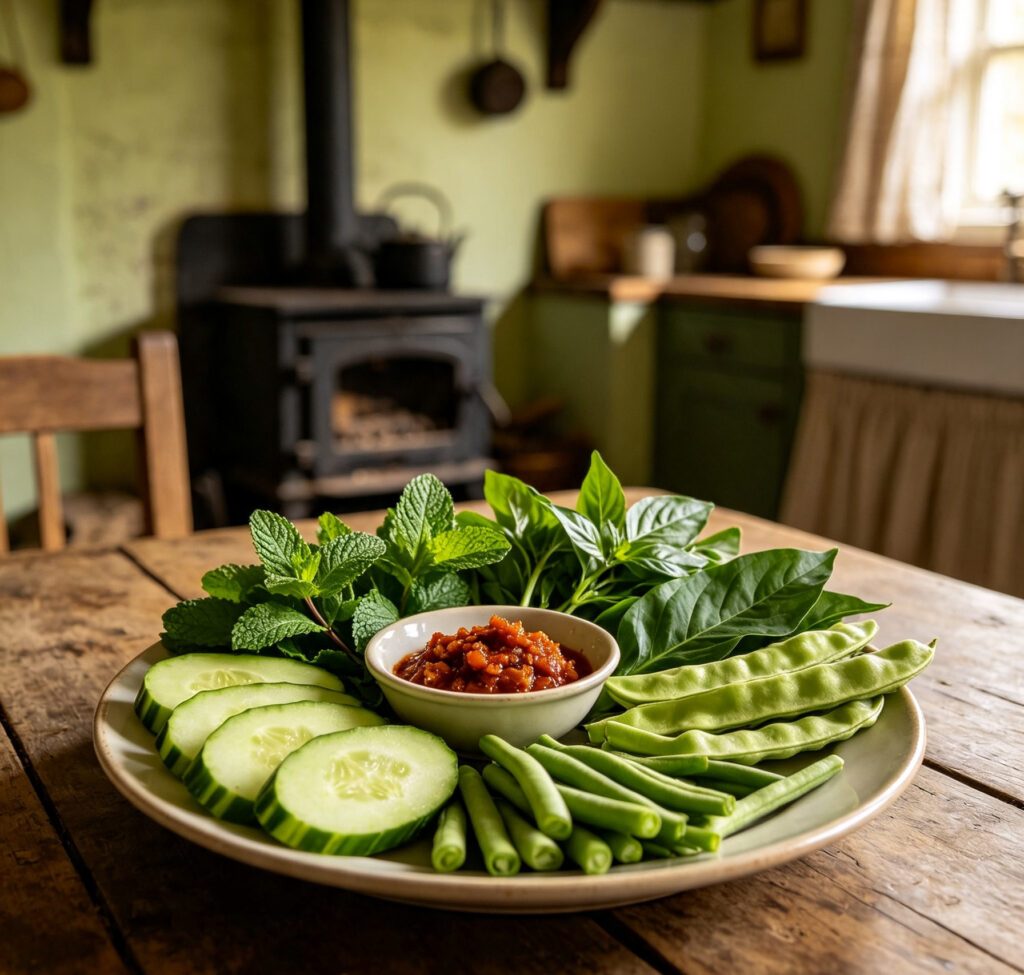
Ingredients
- Small bunch Ulam raja (king's salad leaf) or basil leaves — 1
- Long beans, cut into short lengths — 100 g (1 cup)
- Medium Cucumber, sliced — 1
- Cabbage, thinly shredded — 100 g (1 1/2 cups)
- Bean sprouts — 80 g (1 cup)
- Winged beans (or extra long beans), sliced — 80 g (1 cup)
- Sambal belacan, for dipping (see separate recipe) — 60 g (about 4 tbsp)
- Salted egg, quartered, optional — 1
Method
- Wash all vegetables and herbs thoroughly and pat dry.
- If preferred lightly cooked, briefly blanch the long beans, winged beans and bean sprouts in boiling water for 30–60 seconds, then plunge into cold water to stop the cooking and preserve crunch. Otherwise, all vegetables can be served entirely raw.
- Arrange the ulam leaves, cucumber, cabbage, long beans, winged beans and bean sprouts attractively on a large serving platter.
- Place the sambal belacan in a small bowl at the centre or side of the platter, with quartered salted egg alongside, if using.
- Serve as a side, with diners taking a little of each vegetable and dipping it into the sambal.
Introduction: A colourful platter of raw and lightly blanched local herbs and vegetables, eaten by hand and dipped into a spicy sambal — a refreshing, traditional side that balances rich, heavier dishes.
Cultural Background: Ulam is one of the oldest elements of Malay cuisine, rooted in a tradition of eating fresh, locally foraged herbs and leaves believed to aid digestion and offer health benefits. It remains a common accompaniment to rice-based meals in Malay households, offering a fresh, palate-cleansing contrast to fried or curried dishes.
Tips: Use the freshest vegetables and herbs possible, as this dish relies entirely on natural flavour and texture with minimal seasoning. Blanching is optional and simply softens the vegetables slightly — many prefer the fully raw, crunchy version. Arrange the platter with variety and colour in mind, as ulam is as much a visual dish as a flavourful one.
Variations: Include other traditional ulam leaves such as pegaga (Asiatic pennywort) or daun kaduk (wild betel leaf) if available. Add slices of green mango or starfruit for extra sourness. Serve with budu (fermented fish sauce) instead of sambal belacan for an east-coast variation.
Storage: Best assembled and eaten fresh; store any unused raw vegetables separately in the refrigerator for up to 2 days.
Reheating: This is a raw/fresh side dish and is not reheated.
Nutrition: Approx. per serving: 90 kcal, 4 g protein, 12 g carbohydrate, 3 g fat, 4 g fibre.
FAQs:
Q: What is ulam?
A: Ulam refers to a wide variety of raw or lightly blanched local herbs, leaves and vegetables traditionally eaten with sambal as part of a Malay meal.
Q: Can I substitute the vegetables listed?
A: Yes, ulam is flexible and traditionally uses whatever fresh, local herbs and vegetables are available.
Q: Is this dish vegan?
A: Yes, provided a vegan sambal (using fermented soybean paste instead of shrimp paste) is used and the salted egg is omitted.
- Small bunch Ulam raja (king's salad leaf) or basil leaves — 1
- Long beans, cut into short lengths — 100 g (1 cup)
- Medium Cucumber, sliced — 1
- Cabbage, thinly shredded — 100 g (1 1/2 cups)
- Bean sprouts — 80 g (1 cup)
- Winged beans (or extra long beans), sliced — 80 g (1 cup)
- Sambal belacan, for dipping (see separate recipe) — 60 g (about 4 tbsp)
- Salted egg, quartered, optional — 1
Please log in to leave a comment.