
Turkmen Sumalak (Nowruz Sprouted Wheat Pudding)
The Quirky Foodster Team
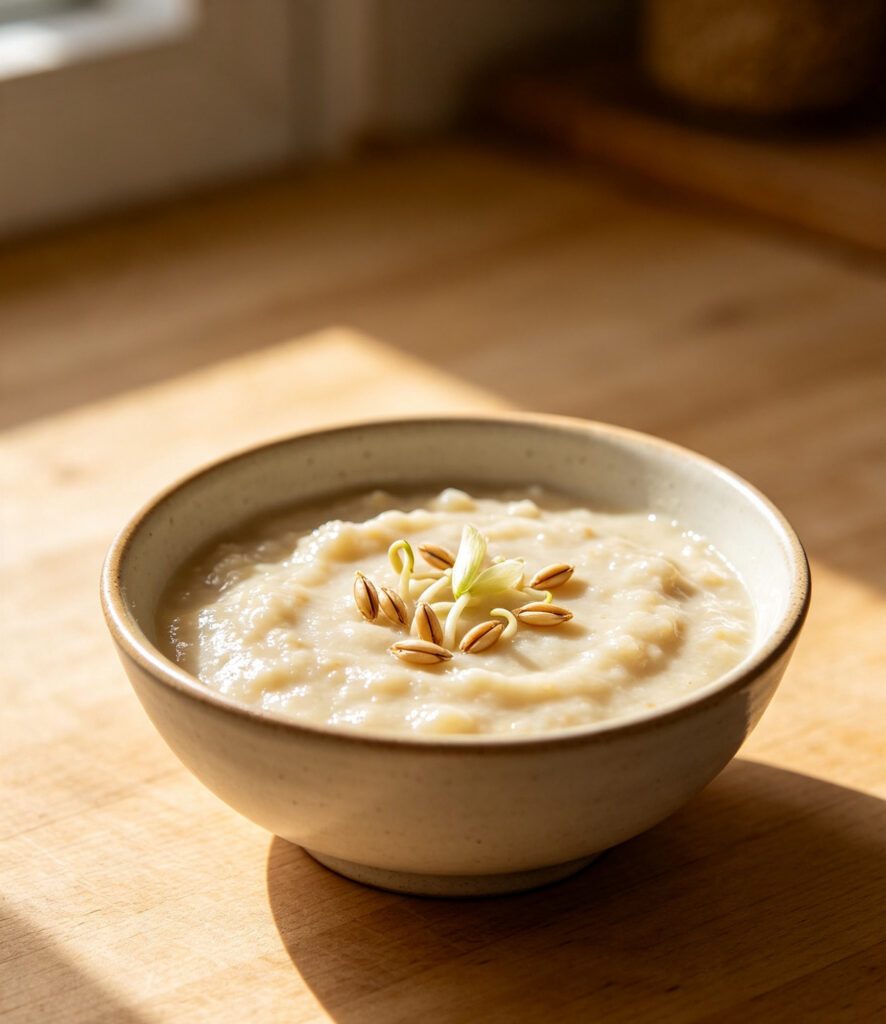
Ingredients
- Wheat berries, for sprouting — 1 kg (5 cups)
- Plain flour — 2.5 kg (5 1/2 lb)
- Water, plus extra as needed — 3 L (12 cups)
- Sunflower oil — 200 ml (3/4 cup plus 1 tbsp)
- Smooth, clean pebbles or walnuts in the shell (traditional, optional) — a few
Method
- Rinse the wheat berries and soak in water for 24 hours, then drain and spread on a tray lined with a damp cloth.
- Keep the wheat covered and moist in a warm spot for 3–4 days, rinsing daily, until sprouts about 1–2 cm (about 1/2 in) long appear.
- Blend or pound the sprouted wheat with a little water to extract a thick, sweet, milky liquid; strain through cheesecloth to remove the fibrous solids, reserving the liquid.
- In a very large heavy pot, warm the oil, then gradually whisk in the flour and the sprouted wheat liquid, along with enough additional water to form a thin batter.
- Bring to a very gentle simmer and cook for 6–8 hours over low heat, stirring constantly (traditionally by rotating groups of people) to prevent sticking or burning, until the mixture turns a deep caramel-brown and thickens to a soft, jam-like consistency.
- If using, drop in a few clean pebbles or whole walnuts partway through — finding one in your bowl is considered good luck.
- Pour into a wide dish, smooth the top, and let cool completely before serving in small bowls.
Introduction: Sumalak is a sweet, dense pudding made entirely from sprouted wheat, with no added sugar — its
sweetness comes purely from the sprouting grain.
Cultural Background: Sumalak is a sweet, dense pudding made entirely from sprouted wheat, with no added sugar — its
sweetness comes purely from the sprouting grain. Prepared communally by groups of women who take
turns stirring it through the night, it is the defining dish of Nowruz, the spring new year celebration shared
across Turkmenistan and much of Central Asia.
Tips: Sumalak needs almost constant stirring over many hours to keep it from catching on the bottom of the pot — traditionally, this task is shared among a group. The final colour should be a deep caramel-brown; a paler colour usually means it needs longer cooking.
Variations: Some households add a few whole walnuts in their shells instead of pebbles for the same 'lucky find' tradition. A smaller home batch can be made by scaling all ingredients down proportionally, though it still requires many hours of slow cooking. Naturally vegan and vegetarian.
Storage: Refrigerate in a covered container for up to a week.
Reheating: Serve at room temperature or gently warmed; it does not need to be piping hot.
FAQs:
Q: Why does sumalak have no added sugar?
A: Its sweetness comes entirely from the natural sugars released as the wheat sprouts.
Q: Is it really cooked for that long?
A: Yes — the long, slow simmer with continuous stirring is essential to develop its flavour and caramel colour, and is part of its communal, celebratory tradition.
Q: What's the significance of the pebbles or walnuts?
A: Finding one in your portion is considered a sign of good luck for the new year.
- Wheat berries, for sprouting — 1 kg (5 cups)
- Plain flour — 2.5 kg (5 1/2 lb)
- Water, plus extra as needed — 3 L (12 cups)
- Sunflower oil — 200 ml (3/4 cup plus 1 tbsp)
- Smooth, clean pebbles or walnuts in the shell (traditional, optional) — a few
Please log in to leave a comment.