
Tteokguk (New Year Rice Cake Soup)
The Quirky Foodster Team
Ingredients
- Sliced rice cakes for soup (garae-tteok, thin ovals) — 400 g (14 oz)
- Beef brisket or shank, thinly sliced — 200 g (7 oz)
- Beef or anchovy stock — 1.5 L (6 cups)
- Garlic cloves, minced — 3
- Soy sauce — 2 tbsp (30 ml)
- Sesame oil — 1 tsp (5 ml)
- Eggs, separated, for egg garnish (jidan) — 2
- Gim (dried seaweed), toasted and shredded — 2 sheets
- Spring onions, sliced — 2
- Salt and pepper, — to taste
Method
- If the rice cakes are firm, soak them in cold water for 15–20 minutes to soften slightly and prevent sticking.
- For the egg garnish, separate the egg yolks and whites into two bowls, beat each lightly, and fry each separately in a lightly oiled pan into thin sheets. Cool, then slice into fine strips.
- In a pot, briefly stir-fry the sliced beef in the sesame oil with a pinch of the minced garlic until lightly browned.
- Add the stock and bring to a boil, skimming off any foam, then simmer for 10 minutes to develop flavour.
- Add the drained rice cakes and simmer for 5–7 minutes until they float and turn soft and chewy, being careful not to overcook them into mush.
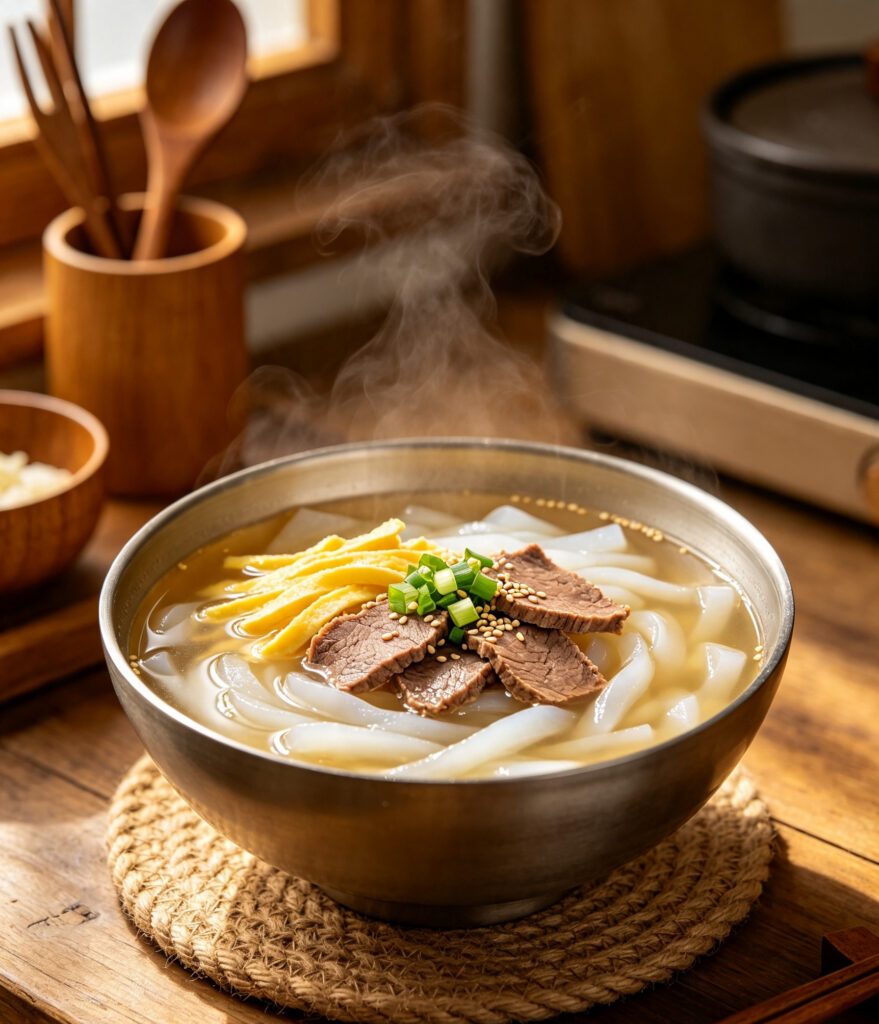
- Season with soy sauce, remaining garlic, salt and pepper to taste. Ladle into bowls and top each with the shredded egg garnish, toasted seaweed strips and spring onion before serving.
Introduction: Tteokguk is the dish every Korean traditionally eats on the morning of Seollal, the Lunar New Year, with a folk belief that eating a bowl symbolically grants another year of age.
Cultural Background: Tteokguk is the dish every Korean traditionally eats on the morning of Seollal, the Lunar New Year, with a folk belief that eating a bowl symbolically grants another year of age. Thin oval slices of chewy rice cake are simmered in a clear beef or anchovy broth, their pale colour symbolising a clean, fresh start to the new year.
Tips: Soak firm or refrigerated rice cakes briefly before cooking so they soften evenly and don't stay chewy in the centre. Don't over-stir once the rice cakes are added — they can break apart if handled too roughly while simmering.
Variations: Manduguk-tteokguk: add a handful of mandu (dumplings) to the pot alongside the rice cakes for a combined dumpling-and-rice-cake soup, especially common in the northern Korean tradition. Use a clear anchovy and kelp stock instead of beef stock for a lighter version. Omit the beef and use a kelp and dried shiitake stock; season with a little extra soy sauce for depth.
Storage: Refrigerate broth and rice cakes separately in airtight containers for up to 2 days, as rice cakes continue to absorb liquid and soften if stored together.
Reheating: Reheat gently on the stovetop until just simmering; avoid prolonged boiling, which can make the rice cakes mushy.
Nutrition: Calories: 340 kcal | Protein: 20 g | Carbs: 44 g | Fat: 8 g | Fibre: 1 g | Sodium: 780 mg Per serving; estimate only.
FAQs:
Q: Why is tteokguk eaten specifically on Lunar New Year?
A: Korean folk tradition holds that eating a bowl of tteokguk on Seollal morning symbolically grants a person another year of age, making the dish deeply tied to New Year customs.
Q: Can I use frozen rice cakes?
A: Yes, thaw them at room temperature or soak briefly in cold water before adding to the soup so they cook evenly.
Q: What does the white colour of the rice cakes symbolise?
A: The pale, unblemished white of the sliced rice cakes traditionally represents purity and a clean start to the new year.
- Sliced rice cakes for soup (garae-tteok, thin ovals) — 400 g (14 oz)
- Beef brisket or shank, thinly sliced — 200 g (7 oz)
- Beef or anchovy stock — 1.5 L (6 cups)
- Garlic cloves, minced — 3
- Soy sauce — 2 tbsp (30 ml)
- Sesame oil — 1 tsp (5 ml)
- Eggs, separated, for egg garnish (jidan) — 2
- Gim (dried seaweed), toasted and shredded — 2 sheets
- Spring onions, sliced — 2
- Salt and pepper, — to taste
Please log in to leave a comment.