
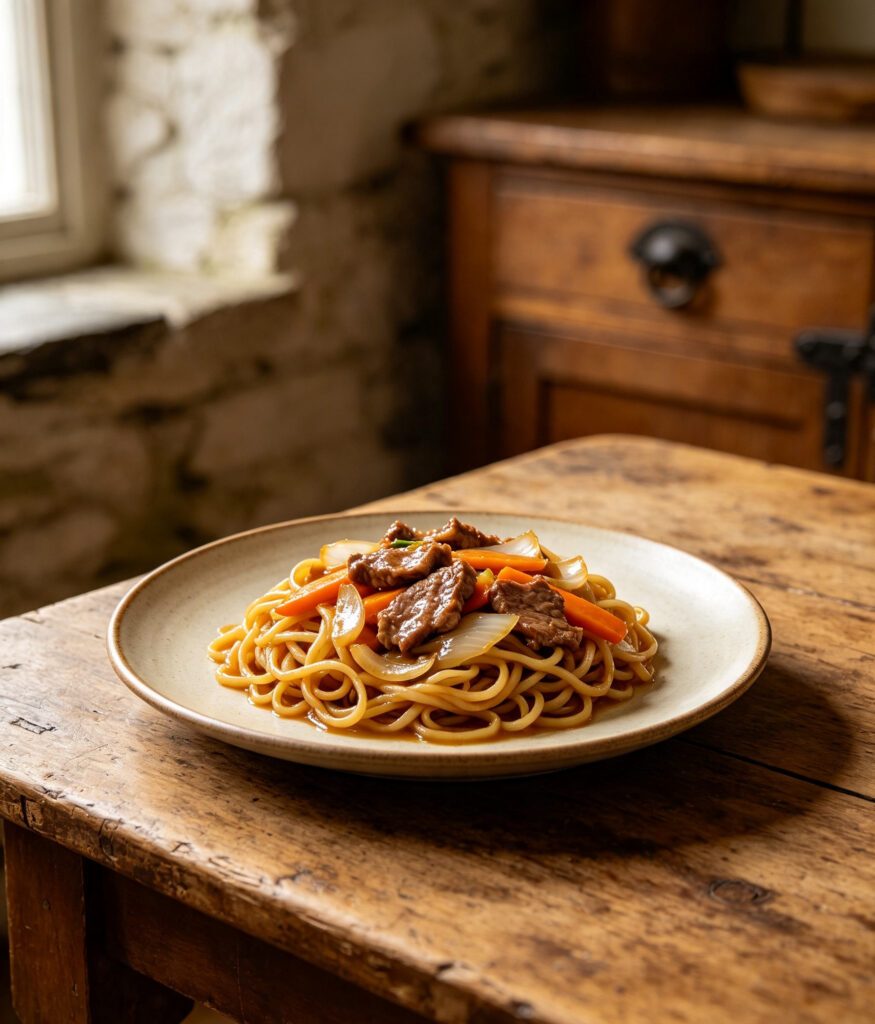
Tsuivan
The Quirky Foodster Team
Ingredients
- Plain flour — 3 cups (375 g / 13 oz)
- Water — 1 cup (240 ml / 8 fl oz)
- Salt, plus extra for seasoning — 1/2 tsp
- Mutton or beef, thinly sliced — 400 g (14 oz)
- Onion, sliced — 1
- Carrot, julienned — 1
- Potato, cubed — 1
- Cabbage, shredded — 1/2
- Oil — 3 tbsp
- Pepper — to taste
Method
- Combine the flour, water and salt into a smooth, firm dough; rest for 20 minutes, then roll thin and cut into wide noodle strips.
- Steam the noodle strips for 10–12 minutes until just cooked through; set aside.
- Heat the oil in a large wok and stir-fry the meat until browned.
- Add the onion, carrot and potato, stir-frying for 5–6 minutes until softened.
- Add the cabbage and cook for a further 3–4 minutes.
- Add the steamed noodles to the wok, tossing everything together over high heat for 3–4 minutes until well combined and heated through.
- Season with salt and pepper before serving.
Introduction: Hand-pulled noodles stir-fried with mutton and vegetables, a hearty one-pan meal found in homes and roadside stops across Mongolia.
Cultural Background: Tsuivan reflects the practical, filling cooking style suited to Mongolia’s herding lifestyle, combining homemade noodles with whatever meat and vegetables are on hand into a single satisfying dish.
Tips: Steaming the noodles before stir-frying keeps them from turning mushy in the pan. Cut the vegetables into similar-sized pieces so they cook evenly.
Variations: Add garlic and a splash of soy sauce for extra depth. Use beef in place of mutton for a milder flavour.
Storage: Refrigerate in an airtight container for up to 2 days.
Reheating: Reheat in a hot pan with a splash of oil, stirring frequently, until piping hot.
Nutrition: Per serving (approx.): 480 kcal, 26 g protein, 20 g fat, 52 g carbohydrate.
FAQs:
Q: Can I use store-bought noodles instead?
A: Yes, wide fresh or dried wheat noodles can substitute
Q: What meat is traditionally used?
A: Mutton is most traditional, reflecting the importance of sheep in
- Plain flour — 3 cups (375 g / 13 oz)
- Water — 1 cup (240 ml / 8 fl oz)
- Salt, plus extra for seasoning — 1/2 tsp
- Mutton or beef, thinly sliced — 400 g (14 oz)
- Onion, sliced — 1
- Carrot, julienned — 1
- Potato, cubed — 1
- Cabbage, shredded — 1/2
- Oil — 3 tbsp
- Pepper — to taste
Please log in to leave a comment.