
Holidays & Special Occasions
Toshikoshi Soba (Year-Crossing Buckwheat Noodles)
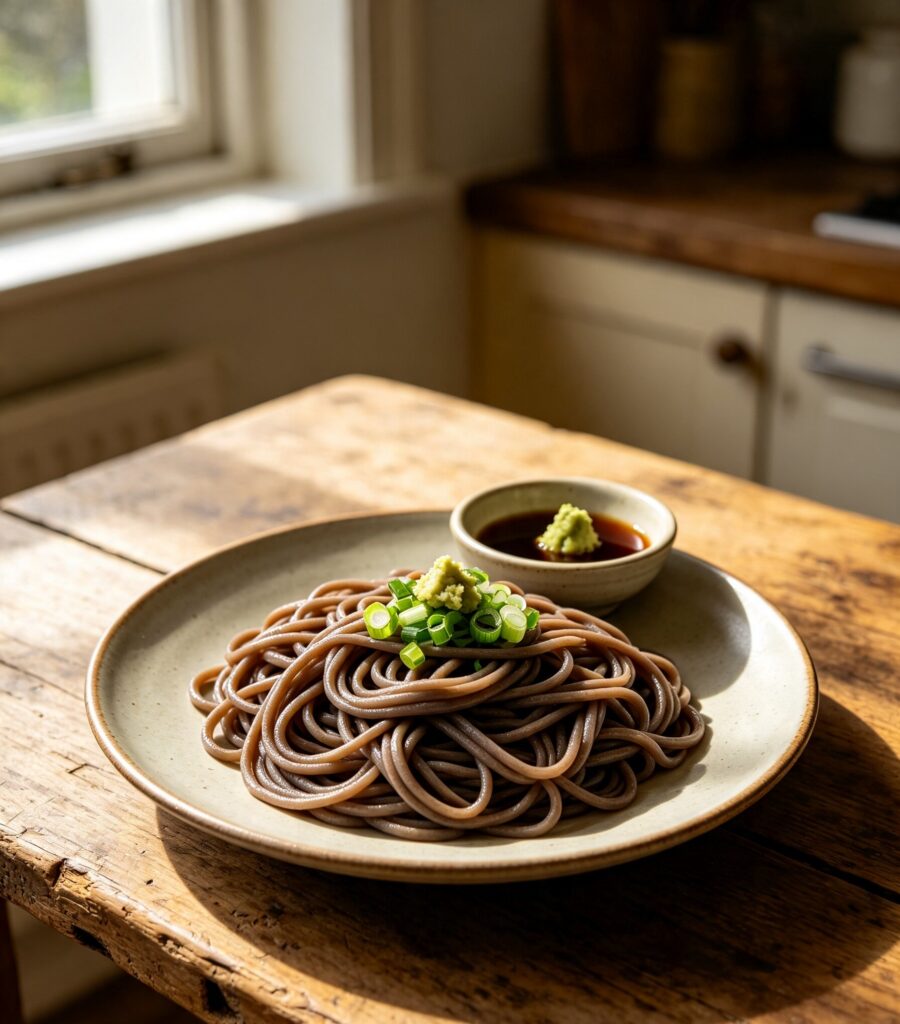
Ingredients
- 200 g dried soba noodles (7 oz)
- 600 ml dashi stock (2.5 cups)
- 60 ml soy sauce (1/4 cup)
- 60 ml mirin (1/4 cup)
- 1 tbsp sugar
- 2 pieces tempura shrimp (store-bought or homemade), optional topping
- 2 spring onions, finely sliced
- Shichimi togarashi (seven-spice blend), to serve
Method
- Bring a large pot of water to a rolling boil and cook soba noodles according to package instructions, usually 4-5 minutes.
- Drain and rinse noodles thoroughly under cold running water to remove excess starch, then set aside.
- In a separate saucepan, combine dashi, soy sauce, mirin and sugar and bring to a gentle simmer for 5 minutes.
- Warm the drained noodles briefly by dipping in hot water or the broth, then divide among serving bowls.
- Pour hot broth over the noodles, top with tempura shrimp if using, and garnish with spring onion and a sprinkle of shichimi togarashi.
Introduction: Toshikoshi soba is eaten on New Year's Eve across Japan, a custom believed to date to the Edo period; the long, easily-cut buckwheat noodles symbolise letting go of the hardships of the past year and welcoming a long, resilient new one.
Cultural Background: Toshikoshi soba is eaten on New Year's Eve across Japan, a custom believed to date to the Edo period; the long, easily-cut buckwheat noodles symbolise letting go of the hardships of the past year and welcoming a long, resilient new one.
Tips: Rinsing the cooked soba under cold water is essential to remove surface starch and prevent a gummy texture.
Variations: Regional versions include kake soba (simple broth only), or toppings such as duck (kamo), deep-fried tofu (kitsune), or grated daikon.
Storage: Best eaten immediately; if needed, store noodles and broth separately in the refrigerator for up to 1 day.
Reheating: Reheat broth separately on the stovetop; briefly dip noodles in hot water to warm before combining, as reheating noodles directly in broth can make them mushy.
FAQs:
Q: Why is soba eaten specifically on New Year's Eve?
A: The noodles' length and the ease with which buckwheat strands break symbolise cutting ties with the year's hardships while wishing for a long life ahead.
Q: Can this be made vegetarian?
A: Yes, using a kombu-based dashi and vegetable tempura instead of shrimp.
Please log in to leave a comment.