
Breads
Tapalapa (Gambian French-Style Bread Rolls)
The Quirky Foodster Team
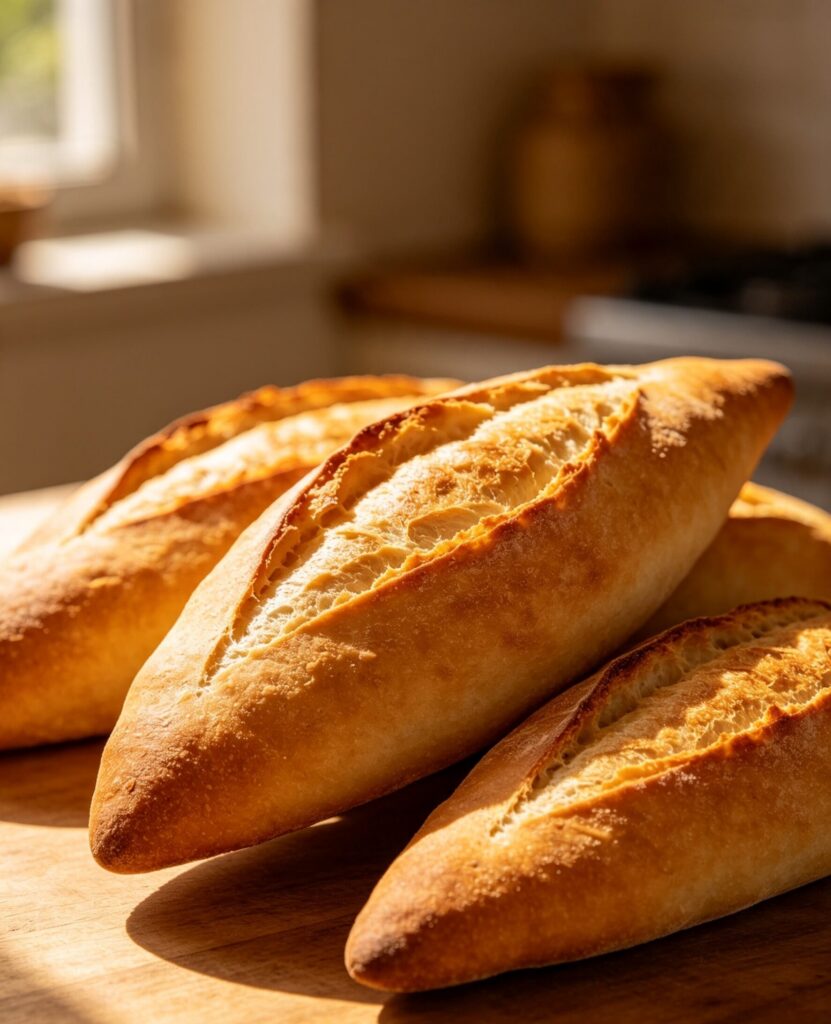
Ingredients
- 500 g (4 cups) bread flour
- 10 g (2 tsp) instant yeast
- 10 g (2 tsp) salt
- 10 g (2 tsp) sugar
- 300 ml (1 1/4 cups) warm water
- 2 tbsp vegetable oil
Method
- Combine the flour, yeast, salt and sugar in a large bowl.
- Add the warm water and oil, and knead for 10-12 minutes until smooth and elastic.
- Cover and leave to rise in a warm place for 1 hour, or until doubled in size.
- Punch down the dough and divide into 6 equal pieces, shaping each into an oval roll.
- Place on a baking tray, cover, and prove for a further 30 minutes.
- Preheat the oven to 220°C (425°F) and bake the rolls for 20-25 minutes until golden and hollow-sounding when tapped.
Introduction: Tapalapa is the Gambia's beloved everyday bread roll, a legacy of French colonial-era baguette influence adapted into a dense, chewy local roll, baked fresh daily in wood-fired ovens and sold from bicycle-mounted baskets each morning.
Cultural Background: Tapalapa is the Gambia's beloved everyday bread roll, a legacy of French colonial-era baguette influence adapted into a dense, chewy local roll, baked fresh daily in wood-fired ovens and sold from bicycle-mounted baskets each morning.
Tips: A well-floured surface prevents sticking when shaping the dense dough. A shallow slash across the top of each roll before baking helps it expand evenly.
Variations: Add a tablespoon of powdered milk to the dough for a slightly softer crumb. Brush with water before baking for a crisper crust.
Storage: Store in a paper bag at room temperature for up to 2 days.
Reheating: Warm in the oven at 180°C (350°F) for 5 minutes to refresh the crust.
Nutrition: Approx. 240 kcal, 7g protein, 4g fat, 44g carbohydrate per roll.
FAQs:
Q: Why is Tapalapa denser than a French baguette?
A: It is made with a firmer, less hydrated dough suited to wood-fired ovens and long keeping, giving it a chewier, denser crumb than a classic baguette.
Q: What is Tapalapa usually eaten with?
A: It is a breakfast staple, often filled with Akara, eggs, or a smear of mayonnaise and vegetables.
Please log in to leave a comment.