
Lunches
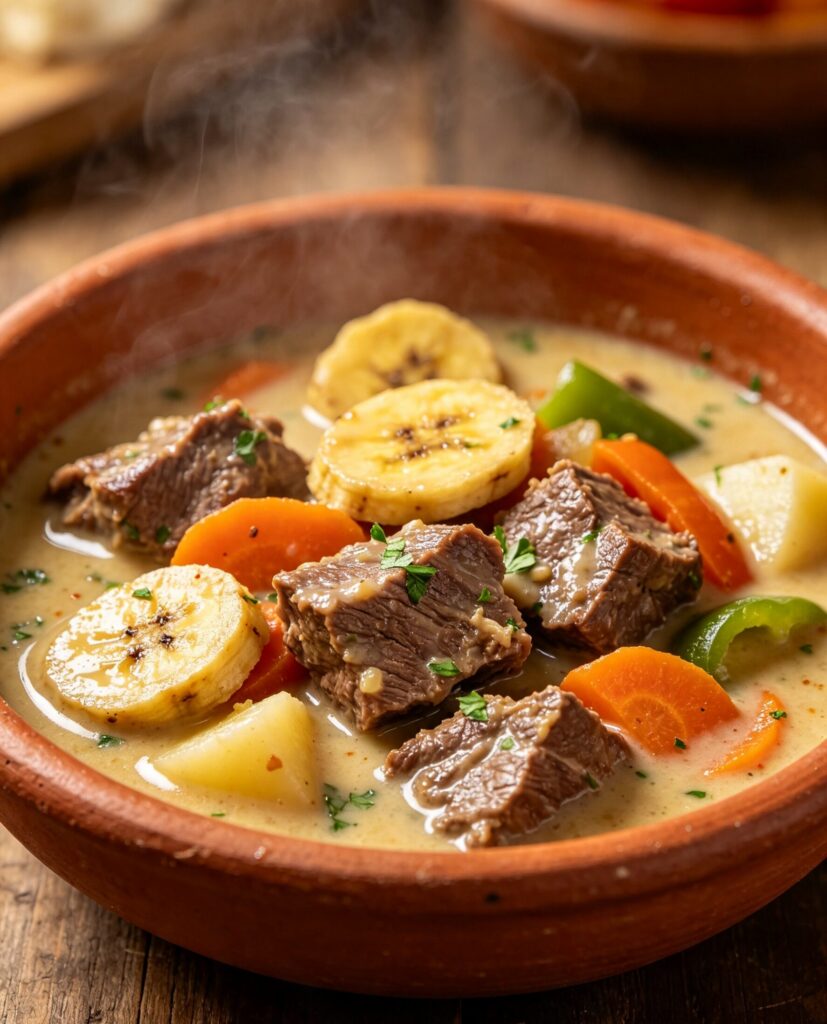
Tapado Olanchano
The Quirky Foodster Team
Ingredients
- 500 g (1 lb) beef short rib, cut into chunks
- 300 g (10 oz) pork belly, cubed
- 2 green plantains, thick-sliced
- 1 yuca root, peeled and chunked
- 1 onion, sliced
- 2 cloves garlic, minced
- 400 ml (14 oz) coconut milk
- 500 ml (2 cups) beef stock
- 1 sweet chile pepper, sliced
- Salt and pepper to taste
Method
- Brown the beef and pork in a heavy pot over medium-high heat, about 8 minutes.
- Add onion, garlic and chile, and cook until fragrant, about 3 minutes.
- Layer the yuca and plantain over the meat, then pour in the stock and coconut milk.
- Cover tightly and simmer on low heat for 1.5 hours until the meat is tender and the roots are soft.
- Season with salt and pepper, and ladle into bowls with some broth.
Introduction: A robust one-pot stew from the cattle-ranching department of Olancho, layering beef, pork and plantain under a lid ('tapado' means 'covered') so the ingredients steam together.
Cultural Background: A robust one-pot stew from the cattle-ranching department of Olancho, layering beef, pork and plantain under a lid ('tapado' means 'covered') so the ingredients steam together. It reflects Olancho's reputation for hearty, meat-forward cooking and is traditionally served at midday for farmhands returning from the fields.
Tips: Keep the lid on throughout cooking; the steaming action is what gives tapado its name and texture.
Variations: Coastal versions add fish or shrimp; some cooks include chunks of ripe plantain for sweetness.
Storage: Refrigerate up to 3 days in an airtight container; the stew deepens in flavor overnight.
Reheating: Reheat gently on the stovetop over low heat, adding a splash of stock if it has thickened.
Nutrition: Approx. 540 kcal, 32 g protein, 30 g fat, 34 g carbohydrate per serving.
FAQs:
Q: Can I make this in a slow cooker?
A: Yes, brown the meat first, then transfer everything to a slow cooker on low for 6 hours.
Q: Is tapado spicy?
A: Traditionally mild; the chile is for aroma and gentle warmth rather than heat.
Please log in to leave a comment.