
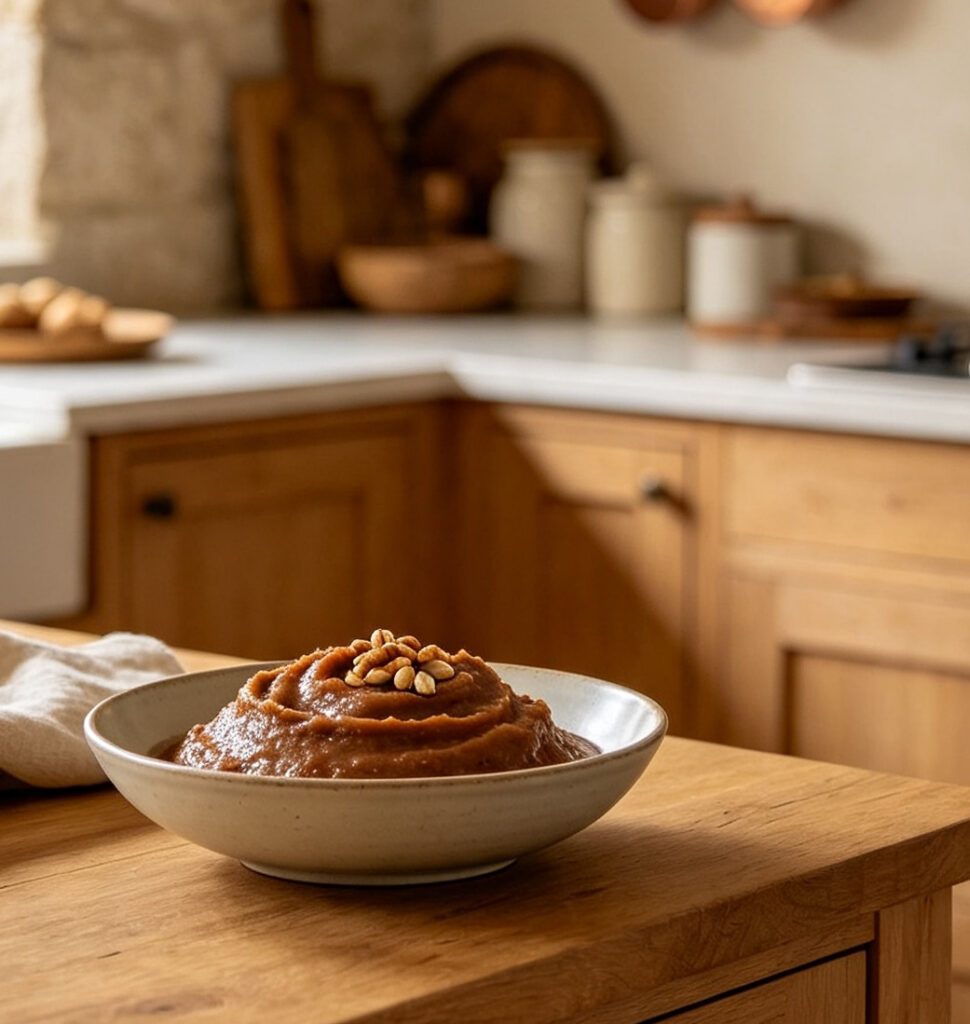
Tajik Sumalak (Nowruz Sprouted Wheat Pudding)
The Quirky Foodster Team
Ingredients
- Sprouted, from about 250 g (1¼ cups) dry wheat berries Wheat berries, sprouted (see method) — 500 g (1.1 lb)
- Water, divided — 2.5 L (10 cups)
- All-purpose flour — 200 g (1⅔ cups)
- Vegetable oil — 60 ml (¼ cup)
- Walnuts, whole, for the pot (traditional, prevents sticking) — a handful
- Sugar (optional, some traditional versions use none) — 100 g (½ cup)
Method
- Several days ahead, soak wheat berries in water for 24 hours, then drain and spread on a damp cloth in a warm, dark place, rinsing daily and keeping moist, until they sprout small green shoots, about 3–5 days.
- Once sprouted, blend the wheat sprouts with about 1 L (4 cups) water until it forms a smooth, milky liquid. Strain through cheesecloth into a bowl, pressing to extract all the liquid; discard the solids or reserve for another use.
- In a separate bowl, whisk the flour with a little of the remaining water to form a smooth paste, then combine with the sprouted wheat liquid and the rest of the water in a large heavy pot.
- Add the oil and whole walnuts (placed in the pot to prevent the mixture from sticking and burning on the bottom, and traditionally removed and discarded before serving, or kept as a treat for whoever finds them).
- Bring to a boil, stirring frequently, then reduce heat to very low and simmer, stirring constantly and continuously (traditionally by multiple people taking turns) for 6–8 hours, until the mixture turns a deep caramel-brown colour and thickens into a smooth, pudding-like consistency.
- Add sugar partway through if using, adjusting sweetness to taste, keeping in mind the natural sweetness that develops from the sprouted wheat itself.
- Once thickened and deep brown, remove from heat, discard the walnuts (or set them aside as a treat), and pour the sumalak into a wide dish to cool. Serve at room temperature, traditionally shared among family, friends, and neighbours to mark Nowruz.
Introduction: Sumalak is a deeply symbolic sweet pudding made entirely from sprouted wheat, prepared communally over many hours of continuous stirring as part of Nowruz, the Persian and Central Asian New Year celebration marking the spring equinox.
Cultural Background: Sumalak is a deeply symbolic sweet pudding made entirely from sprouted wheat, prepared communally over many hours of continuous stirring as part of Nowruz, the Persian and Central Asian New Year celebration marking the spring equinox. Its preparation, often accompanied by singing, represents renewal, community, and the abundance of the coming year.
Tips: Continuous, unbroken stirring over many hours is essential to prevent burning and to properly develop the natural caramelization and thick texture that defines sumalak — this is traditionally a shared, communal task.
Variations: Some households add a few dried apricots or raisins to the pot during cooking for extra natural sweetness and texture.
Storage: Refrigerate in an airtight container for up to 1 week.
Reheating: Best served at room temperature or gently warmed; not typically reheated to a hot temperature.
FAQs:
Q: Why does sumalak need to be stirred for so many hours?
A: The long, continuous cooking and stirring develops the natural caramelization from the sprouted wheat’s sugars and prevents the thick mixture from burning on the bottom of the pot.
Q: Is sumalak vegan?
A: Yes, as written it’s naturally vegan and dairy-free.
Q: Why is sumalak specifically associated with Nowruz?
A: Its preparation from sprouted wheat symbolizes renewal, fertility, and the abundance of spring, central themes of the Nowruz New Year celebration.
- Sprouted, from about 250 g (1¼ cups) dry wheat berries Wheat berries, sprouted (see method) — 500 g (1.1 lb)
- Water, divided — 2.5 L (10 cups)
- All-purpose flour — 200 g (1⅔ cups)
- Vegetable oil — 60 ml (¼ cup)
- Walnuts, whole, for the pot (traditional, prevents sticking) — a handful
- Sugar (optional, some traditional versions use none) — 100 g (½ cup)
Please log in to leave a comment.