
Lunches
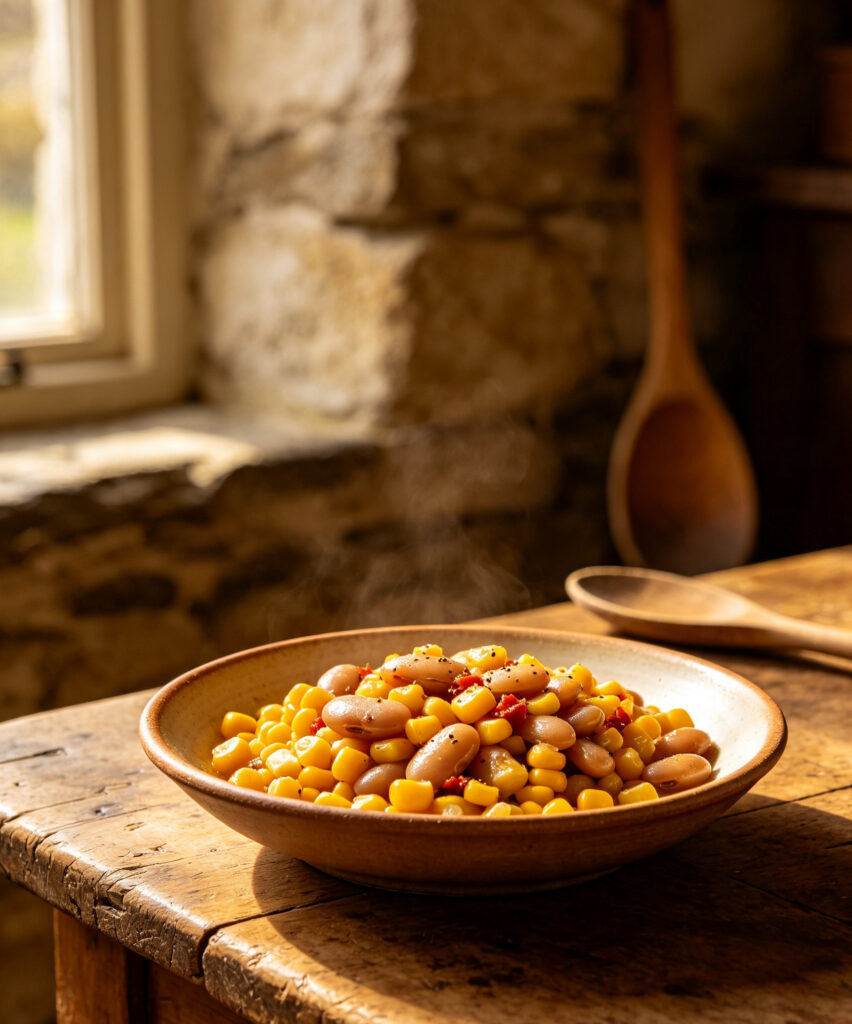
Succotash (Succotash)
sjfegan
Ingredients
- 450 g (3 cups) fresh or dried lima beans (soaked if dried)
- 450g (3 cups) Corn kernels
- 2 tbsp butter or bacon fat
- 1 onion, chopped
- 480ml (2 cups) Water or stock
- Salt and pepper to taste
Method
- If using dried lima beans, simmer them in water until nearly tender, about 45 minutes; drain.
- Heat the butter or bacon fat in a large pot and sauté the onion until softened.
- Add the lima beans, corn and water or stock.
- Simmer for 20–25 minutes until the beans and corn are tender and the mixture has thickened slightly.
- Season with salt and pepper before serving hot.
Introduction: A hearty stew of corn and lima beans, a dish learned directly from Native American agriculture and cooking, and embraced widely across colonial tables.
Cultural Background: Succotash derives from a Narragansett word, the dish itself and the corn-and-bean cultivation technique it relies on learned directly from Indigenous peoples, becoming a fundamental and beloved staple across colonial America.
Tips: If using fresh lima beans, cooking time will be shorter — check for tenderness accordingly. A little bacon fat, if available, adds a traditional depth of flavour to the dish.
Variations: Add a piece of salt pork or bacon to the pot for extra richness, a common colonial addition. Include a few chopped tomatoes for a later, more elaborate variation.
Storage: Refrigerate in an airtight container for up to 3 days.
Reheating: Reheat gently on the stovetop with a splash of water, stirring, until warmed through.
Nutrition: Per serving (approx.): 260 kcal, 12 g protein, 6 g fat, 42 g carbohydrate.
FAQs:
Q: Where does the word ‘succotash’ come from?
A: It derives from a Narragansett word referring to boiled corn kernels, reflecting the dish’s direct Indigenous origins.
Q: Was this dish common across the colonies?
A: Yes, given the widespread adoption of corn and bean cultivation learned from Native American agricultural practices, succotash became a common dish across many colonial regions.
Please log in to leave a comment.