
Holidays & Special Occasions
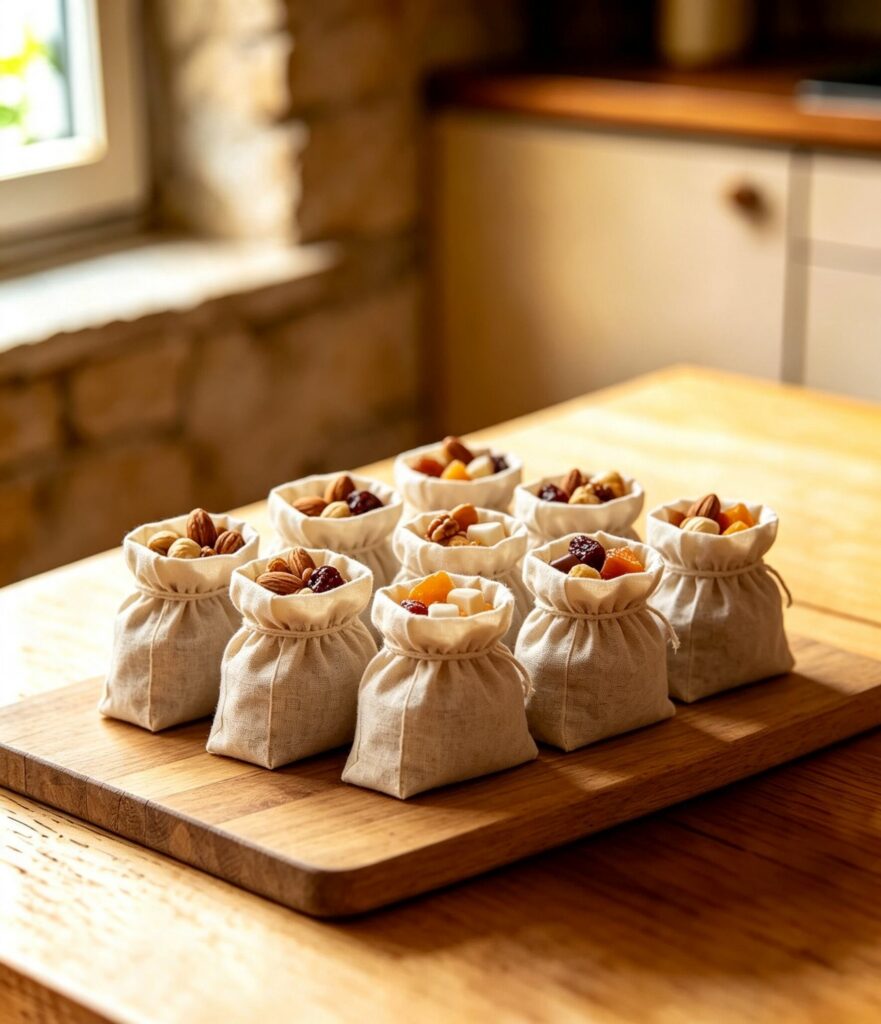
St. Nicholas Day Treat Bags (Chlausensäckli)
Ingredients
- Mixed whole nuts in their shells (walnuts, hazelnuts, almonds)
- Small mandarin oranges
- Wrapped chocolate coins or small chocolate figures
- Small gingerbread biscuits (Lebkuchen-style)
- Dried figs or dates
- Small drawstring fabric or paper bags, to package
Method
- Lay out all the treats on a table: nuts, mandarins, chocolate coins, gingerbread biscuits and dried fruit.
- Divide the treats evenly among the small drawstring bags, aiming for a good mix of textures and flavours in each.
- Tuck a mandarin into each bag alongside a small handful of nuts, a few chocolate coins, a gingerbread biscuit and a piece of dried fruit.
- Gather and tie each bag securely with ribbon or string.
- Traditionally given to children by St. Nicholas (Samichlaus) on the evening of 6 December.
Introduction: On the evening of 6 December, St.
Cultural Background: On the evening of 6 December, St. Nicholas (Samichlaus) traditionally visits Liechtenstein households and villages, often accompanied by the fearsome Schmutzli figure, to reward children with small drawstring bags filled with nuts, mandarins, chocolate and gingerbread. Assembling and gifting these treat bags is a cherished part of the Alpine winter calendar leading up to Christmas.
Tips: Nuts in their shells are traditional, though pre-shelled nuts can be used for younger children. Homemade gingerbread biscuits add a personal touch, though good-quality bought ones work just as well.
Variations: Add a small handwritten note or poem, a tradition in some Liechtenstein and wider Alpine households. For a fully allergen-conscious version, replace nuts with dried fruit and seeds.
Storage: Assembled bags keep at room temperature for up to 2 weeks, given the shelf-stable ingredients.
Reheating: Not applicable; this is a no-cook assembled treat.
FAQs:
Q: What is Samichlaus?
A: The Alpine name for St. Nicholas, who traditionally visits homes and villages on the evening of 6 December.
Q: Is this eaten as a meal?
A: No, it's a festive treat gift rather than a cooked recipe, prepared and given as part of the St. Nicholas Day tradition.
Please log in to leave a comment.