
Sri Lankan Rice and Curry Plate
The Quirky Foodster Team
Ingredients
- Cooked white rice (from 1.5 cups / 300 g raw rice) — 3 cups
- Boneless chicken thigh, cut into pieces (10.5 oz) — 300 g (10.6 oz)
- Sri Lankan curry powder, roasted (2 tablespoons) — 15 g (0.5 oz)
- Chilli powder (1 teaspoon) — 3 g
- Turmeric (1/2 teaspoon) — 2 g
- Thin coconut milk (1 cup) — 240 ml (1 cup)
- Thick coconut milk (1/2 cup) — 120 ml (1/2 cup)
- Onion, sliced (about 150 g) — 1
- Garlic cloves, chopped — 2
- Ginger, chopped (1/2 inch) — 1 cm piece
- Curry leaves — 1 sprig
- Pandan leaf or rampe, optional — 1 stick
- Coconut oil (2 tablespoons) — 30 ml (2 tbsp)
- Pumpkin, cubed, for a side vegetable curry (7 oz) — 200 g (7.1 oz)
- Red lentils, for dhal (1 cup) — 200 g (7.1 oz)
- Salt — to taste
Method
- Marinate the chicken with curry powder, chilli powder, turmeric and a pinch of salt for at least 15 minutes.
- Heat coconut oil in a saucepan and fry half the onion, garlic, ginger and curry leaves until fragrant. Add the marinated chicken and sear for 3-4 minutes.
- Pour in the thin coconut milk, bring to a simmer, cover and cook for 15 minutes until the chicken is tender. Stir in the thick coconut milk, simmer uncovered for 5 more minutes to thicken, then season with salt.
- In a second pan, cook the pumpkin with the remaining onion, a little turmeric, chilli powder and thin coconut milk until soft, about 15 minutes, for a simple vegetable curry.
- In a third pan, boil the lentils with turmeric and water until soft, about 12 minutes, then temper with a small pan of oil, mustard seeds, curry leaves and dried chilli poured over the top for the dhal.
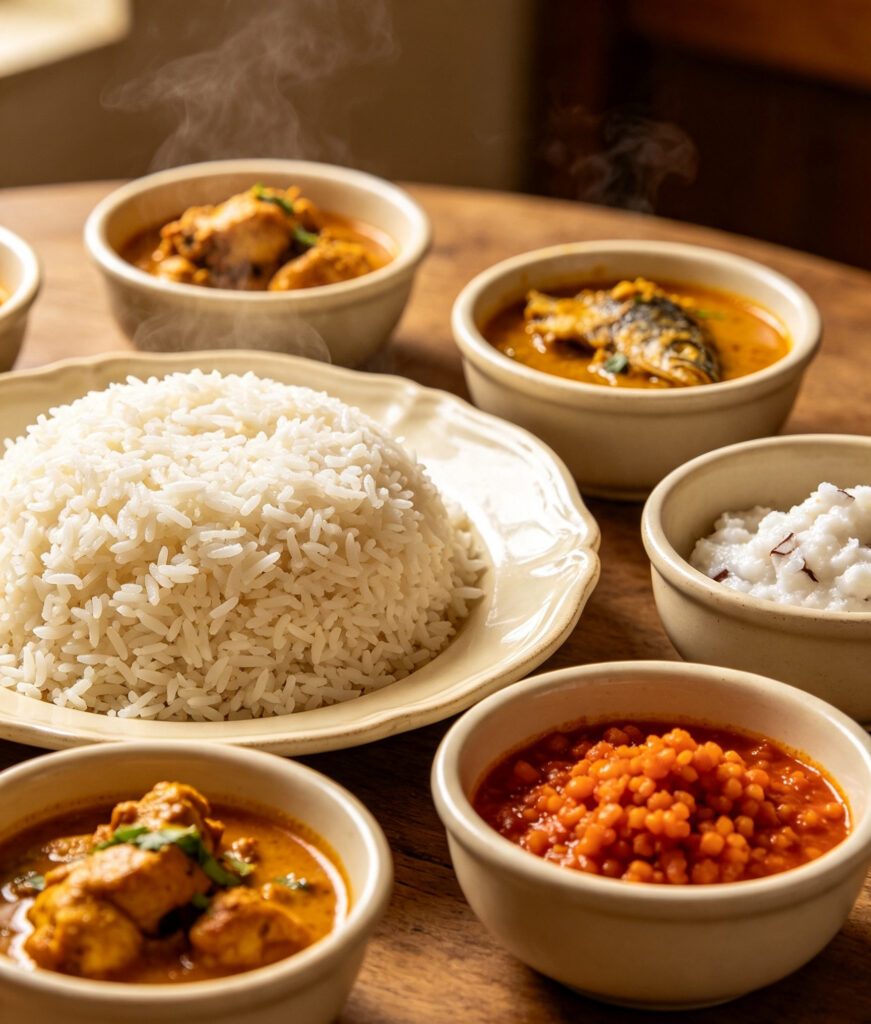
- Serve the rice mounded on plates with the chicken curry, pumpkin curry and dhal arranged around it.
Introduction: Rice and curry is less a single dish than the daily architecture of Sri Lankan eating: a mound of rice surrounded by several small curries, sambols and mallungs, each offering a different balance of heat, sourness, bitterness and coconut richness.
Cultural Background: Rice and curry is less a single dish than the daily architecture of Sri Lankan eating: a mound of rice surrounded by several small curries, sambols and mallungs, each offering a different balance of heat, sourness, bitterness and coconut richness. A proper spread might include a meat or fish curry, a vegetable curry, a dhal, a sambol and a stir-fried green – the goal is variety on one plate, eaten by hand and mixed bite by bite so the flavours meet fresh each time.
Tips: Roast whole spices and grind your own curry powder if possible – it makes a noticeably deeper-flavoured curry than pre-ground powder. Cook the curries in order from driest to wettest so pans can be reused between dishes. Serve with a sambol or lime pickle on the side for the sour, sharp note the meal needs.
Variations: Swap chicken for fish, beef or jackfruit (polos) for a different centrepiece curry. A boiled or fried egg curry is a common addition for extra protein. Omit the chicken curry and add a second vegetable curry (such as okra or long beans) to keep the plate balanced; the pumpkin curry and dhal are naturally vegan.
Storage: Refrigerate curries separately in airtight containers for up to 3 days.
Reheating: Reheat each curry gently on the stovetop over low heat, adding a splash of water if thickened; rice reheats well in the microwave covered with a damp paper towel.
Nutrition: Approx. 520 kcal, 28 g protein, 20 g fat, 58 g carbohydrates, 6 g fibre per serving (full plate)
FAQs:
Q: What is Sri Lankan curry powder and how is it different from Indian curry powder?
A: Sri Lankan curry powder is dry-roasted until dark brown before grinding, giving it a smokier, more intense flavour than the lighter, unroasted curry powders common in Indian cooking.
Q: How many curries make a proper rice and curry meal?
A: There's no fixed number, but a home meal typically has 3-5: one protein curry, one or two vegetable curries, a dhal, and a sambol.
Q: Can I prepare the curries ahead of time?
A: Yes, most Sri Lankan curries taste even better the next day as the flavours settle; just reheat gently before serving.
- Cooked white rice (from 1.5 cups / 300 g raw rice) — 3 cups
- Boneless chicken thigh, cut into pieces (10.5 oz) — 300 g (10.6 oz)
- Sri Lankan curry powder, roasted (2 tablespoons) — 15 g (0.5 oz)
- Chilli powder (1 teaspoon) — 3 g
- Turmeric (1/2 teaspoon) — 2 g
- Thin coconut milk (1 cup) — 240 ml (1 cup)
- Thick coconut milk (1/2 cup) — 120 ml (1/2 cup)
- Onion, sliced (about 150 g) — 1
- Garlic cloves, chopped — 2
- Ginger, chopped (1/2 inch) — 1 cm piece
- Curry leaves — 1 sprig
- Pandan leaf or rampe, optional — 1 stick
- Coconut oil (2 tablespoons) — 30 ml (2 tbsp)
- Pumpkin, cubed, for a side vegetable curry (7 oz) — 200 g (7.1 oz)
- Red lentils, for dhal (1 cup) — 200 g (7.1 oz)
- Salt — to taste
Please log in to leave a comment.