
Lunches
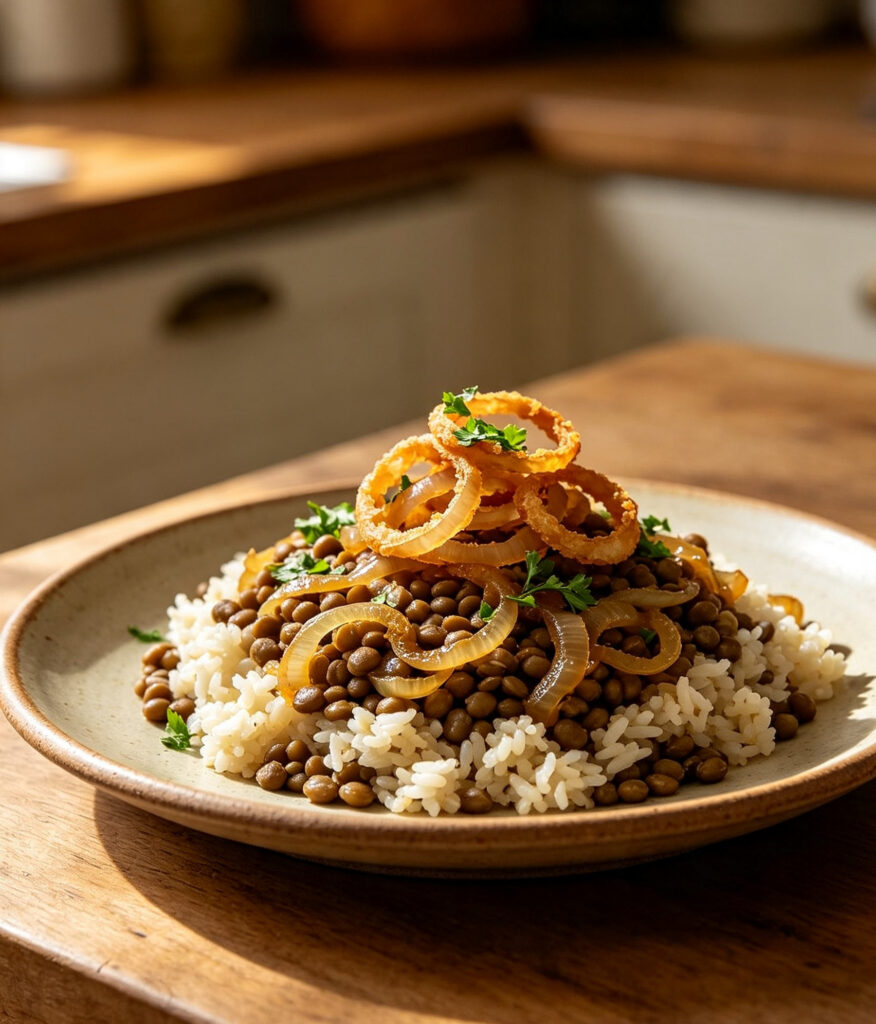
Spiced Lentils with Rice (Mujaddara)
sjfegan
Ingredients
- 200g (1 cup) Brown or green lentils, rinsed
- 185g (1 cup) Rice
- 3 onions, thinly sliced
- 80ml (1/3 cup) Olive oil
- 1 tsp ground cumin
- 960ml (4 cups) Water
- Salt to taste
Method
- Simmer the lentils in the water for 15–18 minutes until just tender but not mushy; drain, reserving the cooking liquid.
- Heat half the olive oil in a frying pan and cook the sliced onions over medium-low heat for 25–30 minutes, stirring occasionally, until deeply caramelised and dark golden; set half aside for garnish.
- In a large pot, combine the lentils, rice, remaining onions, cumin, remaining oil and enough reserved cooking liquid to cover the rice by about 2 cm (3/4 in).
- Bring to a boil, then reduce to low heat, cover, and simmer for 18–20 minutes until the rice is tender.
- Season with salt, and top with the reserved caramelised onions before serving warm.
Introduction: Lentils and rice cooked together and topped with deeply caramelised onions, one of the most enduring and beloved dishes to emerge from Abbasid-era cuisine.
Cultural Background: Mujaddara reflects the sophisticated simplicity of Abbasid cooking, its combination of humble lentils and rice elevated by richly caramelised onions, a dish so beloved it remains a staple across the Middle East to this day.
Tips: Caramelise the onions patiently over medium-low heat, as rushing this step will result in a bitter, burnt flavour rather than the desired deep sweetness. Cook the lentils only until just tender before combining with the rice, as they’ll continue cooking together.
Variations: Serve with a dollop of yoghurt alongside. Adjust the cumin quantity to taste.
Storage: Refrigerate in an airtight container for up to 4 days.
Reheating: Reheat gently with a splash of water, stirring, until warmed through.
Nutrition: Per serving (approx.): 380 kcal, 14 g protein, 12 g fat, 58 g carbohydrate.
FAQs:
Q: Is mujaddara still eaten today?
A: Yes, remarkably, this Abbasid-era dish remains a hugely popular and beloved staple across the Levant and wider Middle East, largely unchanged in its essential character.
Q: Why is caramelising the onions so important?
A: The deeply sweet, richly coloured onions are the defining feature of mujaddara, providing the dish’s signature flavour and visual appeal.
Please log in to leave a comment.