
Silpancho
The Quirky Foodster Team
Ingredients
- Thin beef steaks (about 150g/5 oz each), pounded very thin — 4
- Large eggs, beaten (for coating) — 2
- Breadcrumbs — 150 g (1 1/2 cups)
- Medium potatoes, peeled and sliced — 4
- Cooked white rice — 300 g (1 1/2 cups)
- Eggs (for frying, one per plate) — 4
- Tomatoes, diced — 2
- Red onion, thinly sliced — 1
- Lemon juice — 1 tbsp
- Vegetable oil for frying
- Salt and pepper — to taste
- Llajwa (spicy tomato salsa), to serve
Method
- Season the pounded steaks with salt and pepper, dip in beaten egg, then coat in breadcrumbs.
- Fry the sliced potatoes in hot oil until golden and cooked through; drain on paper towels.
- Fry the breaded steaks in the same oil, 2-3 minutes per side, until crisp and golden.
- Fry the remaining eggs sunny-side up in a separate pan.
- Toss the diced tomato and onion with lemon juice, salt and a little oil to make a quick salad.
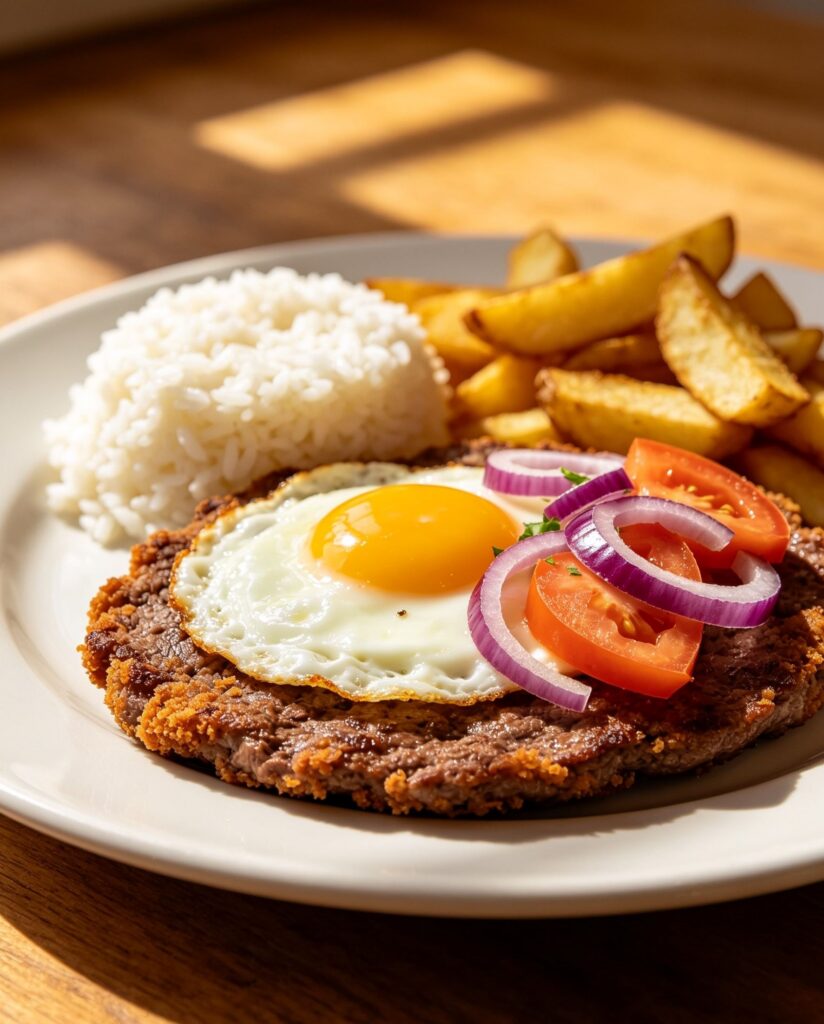
- To plate, spread a bed of rice, top with fried potatoes, then the breaded steak, the fried egg, and finish with the tomato-onion salad and a spoonful of llajwa.
Introduction: Silpancho originated in Cochabamba in the mid-20th century and has since become a national favourite, typically eaten at lunchtime.
Cultural Background: Silpancho originated in Cochabamba in the mid-20th century and has since become a national favourite, typically eaten at lunchtime. It layers rice, potatoes, a thin breaded and fried steak, and a fried egg — a hearty combination reflecting Cochabamba's reputation as Bolivia's culinary capital.
Tips: Pound the steak until almost translucent — this is what gives silpancho its name and texture.
Fry the potatoes first so the oil is already hot and clean for the meat.
Variations: Chicken breast can replace beef for a lighter version, often called silpancho de pollo. Vegetarian / Vegan Note A grilled portobello mushroom, breaded and fried the same way, makes a satisfying vegetarian substitute for the steak.
Storage: Best eaten fresh; components can be refrigerated separately for up to 1 day.
Reheating: Reheat the steak and potatoes in a dry frying pan to keep them crisp; fry a fresh egg rather than reheating it.
Nutrition: Per serving (approx.): 620 kcal, 34g protein, 28g fat, 58g carbohydrate.
FAQs:
Q: Why is the steak pounded so thin?
A: It cooks in under three minutes and gives the dish its characteristic large, flat presentation.
Q: What is llajwa?
A: A fresh, spicy Bolivian salsa of tomato, locoto chilli and herbs, served with almost every savoury dish.
- Thin beef steaks (about 150g/5 oz each), pounded very thin — 4
- Large eggs, beaten (for coating) — 2
- Breadcrumbs — 150 g (1 1/2 cups)
- Medium potatoes, peeled and sliced — 4
- Cooked white rice — 300 g (1 1/2 cups)
- Eggs (for frying, one per plate) — 4
- Tomatoes, diced — 2
- Red onion, thinly sliced — 1
- Lemon juice — 1 tbsp
- Vegetable oil for frying
- Salt and pepper — to taste
- Llajwa (spicy tomato salsa), to serve
Please log in to leave a comment.