
Breads
Shrak
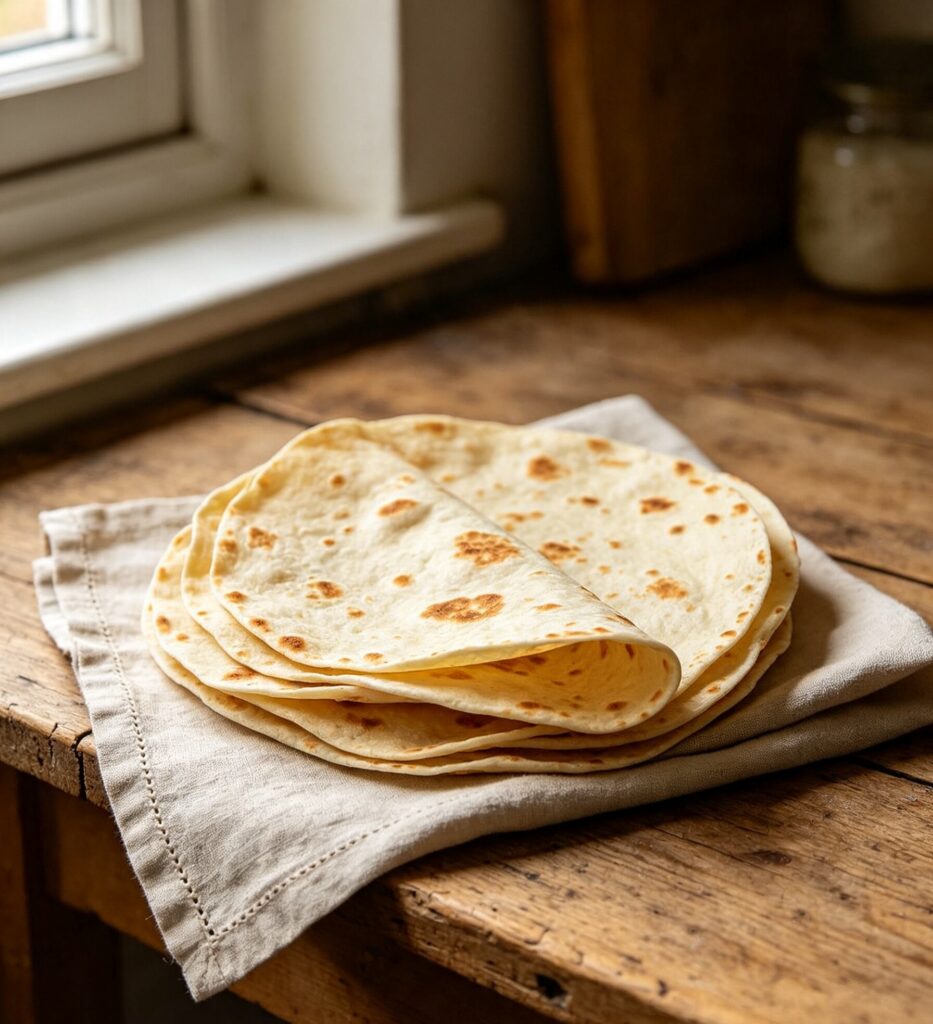
Ingredients
- 400 g (3.25 cups) plain flour, plus extra for dusting (14 oz)
- 1 tsp salt
- 1 tsp instant yeast
- 280 ml (1.2 cups) warm water (9.5 fl oz)
- 1 tbsp olive oil
Method
- Dissolve the yeast in the warm water and let stand for 5 minutes.
- Mix the flour and salt in a bowl, add the yeast water and olive oil, and knead for 8 minutes until smooth and soft.
- Cover and let rest for 30 minutes.
- Divide the dough into 8 pieces and roll each out as thinly as possible, almost paper-thin.
- Heat a domed griddle or large flat pan over medium-high heat.
- Drape the rolled dough over the hot surface and cook for 30-45 seconds per side, until lightly speckled and dry, not browned.
- Stack the cooked shrak between clean tea towels to keep soft and pliable.
Introduction: Shrak is an ultra-thin, almost translucent flatbread cooked on a domed metal griddle called a saj, closely tied to Jordan's Bedouin communities in the eastern desert, where it is baked quickly over an open fire and used to wrap grilled meats or scoop mansaf.
Cultural Background: Shrak is an ultra-thin, almost translucent flatbread cooked on a domed metal griddle called a saj, closely tied to Jordan's Bedouin communities in the eastern desert, where it is baked quickly over an open fire and used to wrap grilled meats or scoop mansaf.
Tips: Roll the dough as thin as you can manage – shrak should be almost see-through, which is what gives it its characteristic softness for wrapping.
Variations: A slightly thicker version is sometimes preferred for scooping mansaf rather than wrapping.
Storage: Store stacked and wrapped at room temperature for up to 2 days, or freeze between sheets of parchment for up to 1 month.
Reheating: Warm briefly on a dry hot pan for a few seconds per side, or wrap in foil and heat gently in the oven.
FAQs:
Q: What can I use instead of a saj griddle?
A: A large flat non-stick or cast-iron pan works well as a home substitute.
Q: Why doesn't shrak brown much?
A: It cooks very quickly at high heat, drying rather than browning due to its thinness.
Please log in to leave a comment.