
Breads
Ship’s Biscuit (Biscoito de Mar)
sjfegan
Ingredients
- 4 cups flour (500 g / 1 lb 2 oz)
- 360ml (1.5 cups) Water
- 1 tsp salt
Method
- Combine the flour, water and salt into a firm, dry dough.
- Roll out to about 1 cm (1/2 in) thick.
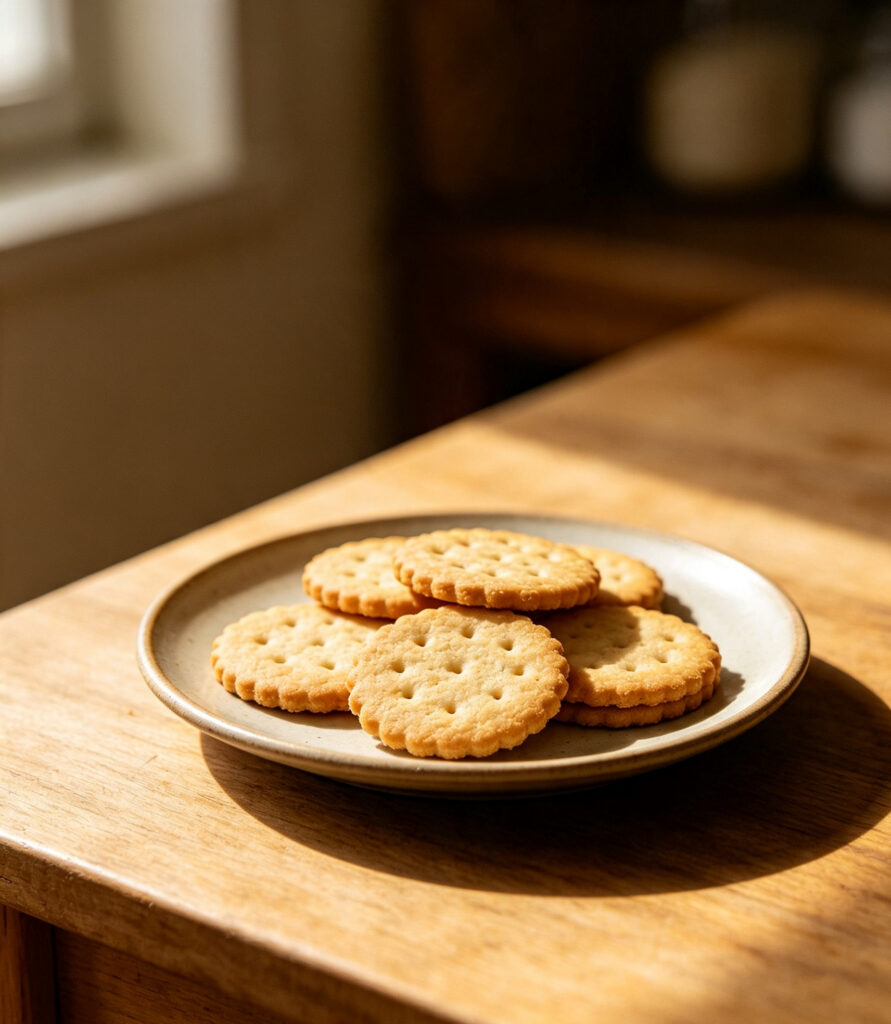
- Cut into squares or rounds and prick each piece all over with a fork.
- Preheat the oven to 150°C (300°F).
- Bake for 45–60 minutes until very hard and dried through, turning once partway.
- Let cool completely; store in a dry place.
Introduction: A hard, long-lasting bread baked to remove nearly all moisture, the essential provision that made long ocean voyages of exploration possible.
Cultural Background: Ship’s biscuit, or hardtack, was arguably one of the most consequential foods of the Age of Exploration, its extraordinary shelf life making the era’s ambitious, months-long transoceanic voyages logistically feasible.
Tips: This bread is intentionally baked hard and dry, unlike typical bread — this is essential to its long-keeping qualities. Pricking the dough helps it dry evenly throughout during the long, slow bake.
Variations: Soften in water, broth or milk before eating, as was standard practice. Bake in smaller batches for quicker use.
Storage: Store in a dry, airtight container for several months to a year, provided it stays completely dry.
Reheating: Not applicable — this bread is meant to be extremely dry; soften with liquid before eating.
Nutrition: Per serving (approx., 1 piece): 140 kcal, 4 g protein, 0 g fat, 30 g carbohydrate.
FAQs:
Q: Why was ship’s biscuit baked so hard?
A: The extreme dryness prevented mould and spoilage over the course of long voyages, making it possible to carry bread-like sustenance for months at sea.
Q: How was ship’s biscuit typically eaten?
A: It was usually softened by soaking in water, broth, or another liquid before eating, as its extreme hardness made it otherwise very difficult to consume directly.
Please log in to leave a comment.