
Lunches
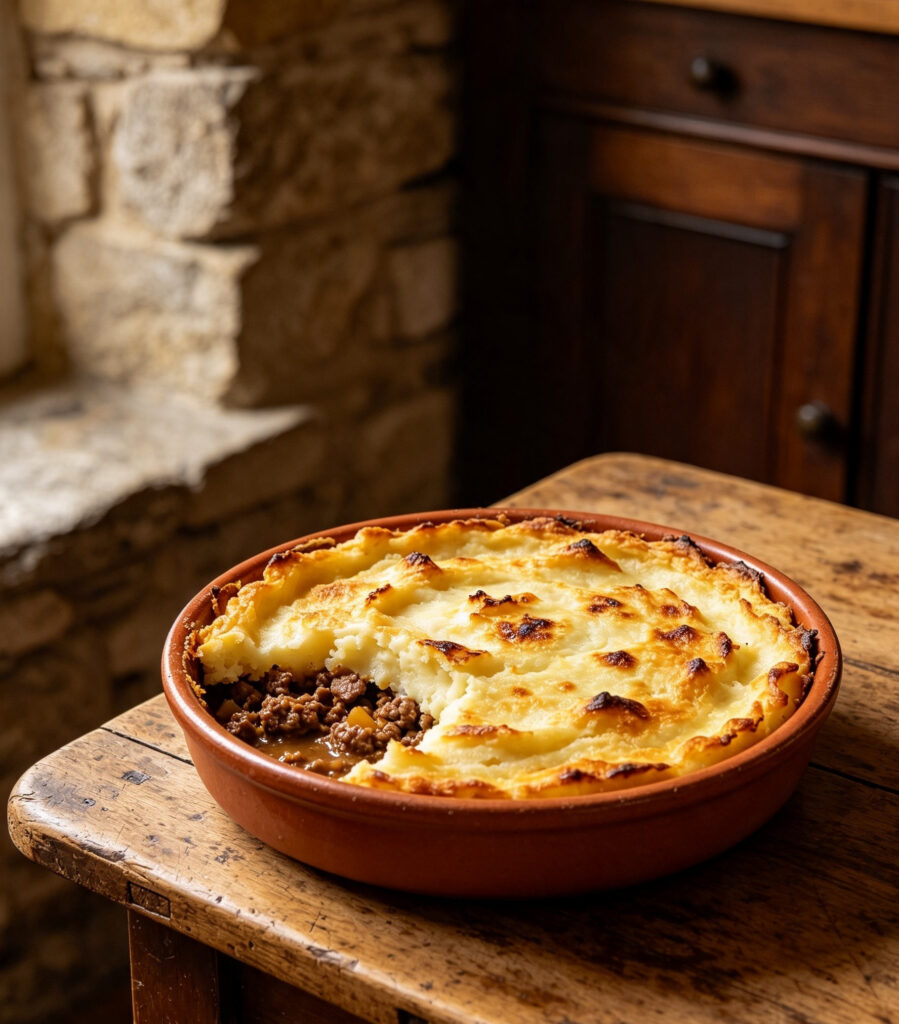
Shepherd’s Pie (Shepherd’s Pie)
sjfegan
Ingredients
- 500g (1 lb 2 oz) Minced lamb
- 1 onion, chopped
- 2 carrots, diced
- 2 tbsp flour
- 240ml (1 cup) Beef or lamb stock
- 1 tbsp Worcestershire sauce
- 800g (1.75 lb) Potatoes, peeled and boiled
- 3 tbsp butter
- 60ml (1/4 cup) Milk
- Salt and pepper to taste
Method
- Brown the minced lamb in a frying pan, breaking it up as it cooks.
- Add the onion and carrot, and sauté until softened.
- Sprinkle in the flour, stirring to coat, then add the stock and Worcestershire sauce.
- Simmer for 15–20 minutes until thickened; season with salt and pepper.
- Mash the boiled potatoes with the butter and milk until smooth.
- Preheat the oven to 190°C (375°F).
- Spread the meat mixture in a baking dish and top with the mashed potato, smoothing or forking the surface.
- Bake for 25–30 minutes until golden on top.
Introduction: Minced lamb topped with a layer of mashed potato and baked until golden, a beloved and enduring Victorian comfort dish born of practical, no-waste cooking.
Cultural Background: Shepherd’s pie emerged in the Victorian era as a practical way to use leftover roasted meat, mashed potato serving as both topping and stretching agent, becoming a beloved staple across British households of many social classes.
Tips: Simmer the meat filling until nicely thickened before topping with potato, so the pie holds together well. Fork the potato surface before baking, as this creates attractive crisp peaks.
Variations: Use minced beef for a variation traditionally called cottage pie. Add a layer of peas between the meat and potato for extra colour and nutrition.
Storage: Refrigerate in an airtight container for up to 3 days.
Reheating: Reheat in an oven at 180°C (350°F) for 20–25 minutes until hot throughout.
Nutrition: Per serving (approx.): 420 kcal, 24 g protein, 22 g fat, 32 g carbohydrate.
FAQs:
Q: What is the difference between shepherd’s pie and cottage pie?
A: Shepherd’s pie traditionally uses lamb (reflecting the ‘shepherd’ in its name), while cottage pie uses beef, though the two names are sometimes used interchangeably today.
Q: Why did this dish become popular in the Victorian era?
A: It reflected practical, economical cooking, transforming leftover roasted meat into a satisfying new meal, well suited to the era’s emphasis on thrift in the kitchen.
Please log in to leave a comment.