
Breads
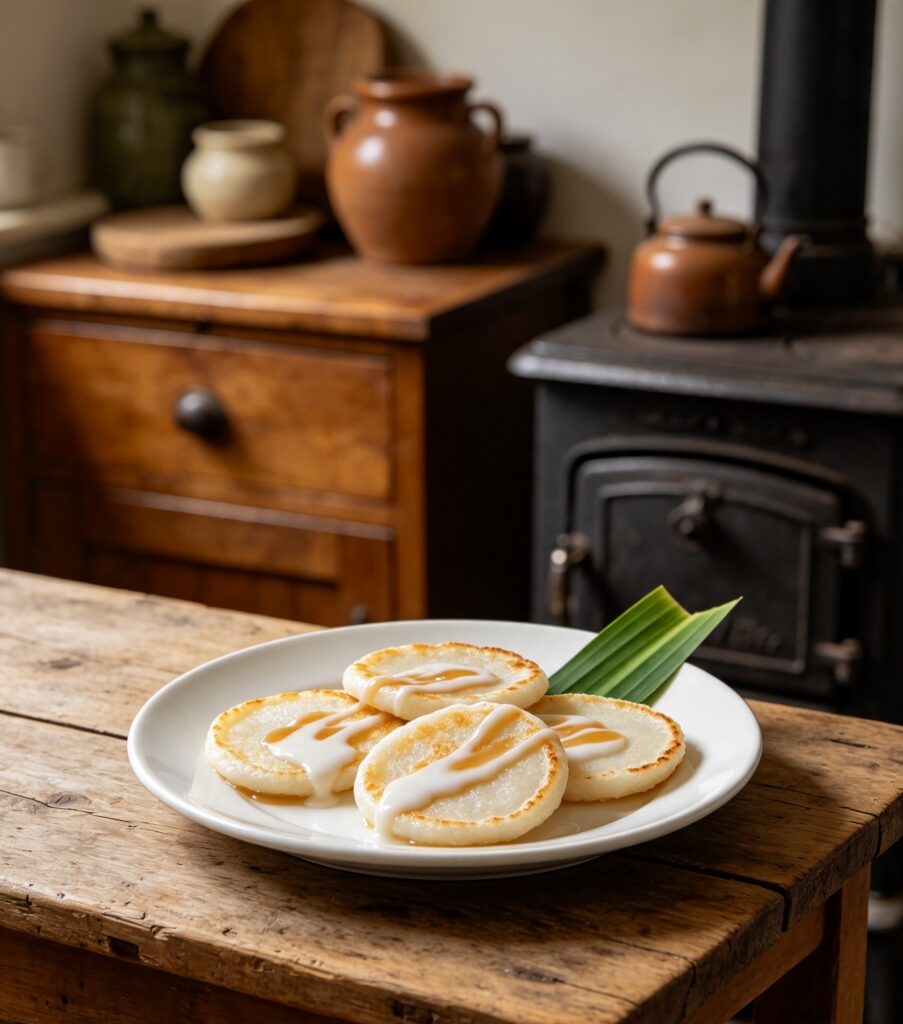
Serabi (Coconut Rice Flour Pancakes)
Ingredients
- 200 g rice flour
- 30 g all-purpose flour
- 400 ml coconut milk
- 1/4 tsp salt
- 1/2 tsp instant yeast
- 1 pandan leaf, knotted
- For the sauce: 100 g palm sugar, 200 ml coconut milk, 1 pandan leaf
Method
- Whisk rice flour, all-purpose flour, salt, and yeast with coconut milk into a smooth, thin batter; let rest for 20-30 minutes until slightly bubbly.
- Heat a small pan over medium-low heat, add pandan leaf briefly for aroma, then pour in a ladle of batter, swirling slightly up the sides.
- Cover and cook until the edges turn lacy and golden and the center is set but still soft, about 3-4 minutes; no flipping needed.
- Meanwhile, simmer palm sugar, coconut milk, and pandan leaf together until slightly thickened to make the sauce.
- Serve warm serabi drizzled with the warm coconut sugar sauce.
Introduction: Serabi are traditional Indonesian pancakes made from rice flour and coconut milk, cooked in small clay or cast-iron pans until the edges turn lacy and crisp while the center stays soft.
Cultural Background: Serabi are traditional Indonesian pancakes made from rice flour and coconut milk, cooked in small clay or cast-iron pans until the edges turn lacy and crisp while the center stays soft. Found across Java in countless regional versions, they are often topped with a sweet coconut sugar sauce or savory toppings.
Tips: Let the batter rest so the yeast can create the characteristic light, slightly bubbly texture. Keep the heat moderate; too high a heat will burn the lacy edges before the center sets.
Variations: Serabi Notosuman from Solo is often eaten plain or with a simple sugar syrup rather than coconut sauce. Top with grated young coconut or a sprinkle of chocolate for a modern variation.
Storage: Best eaten fresh; store leftover pancakes covered at room temperature for up to a day.
Reheating: Reheat gently in a covered pan over low heat or in a microwave for a few seconds.
FAQs:
Q: Do serabi need to be flipped while cooking?
A: No, traditional serabi are cooked covered on one side only, allowing the top to steam-set while the bottom crisps.
Q: Can serabi be made without yeast?
A: Yes, though the yeast gives the pancakes their characteristic light, slightly bubbly texture; a pinch of baking powder can substitute.
Please log in to leave a comment.