
Holidays & Special Occasions
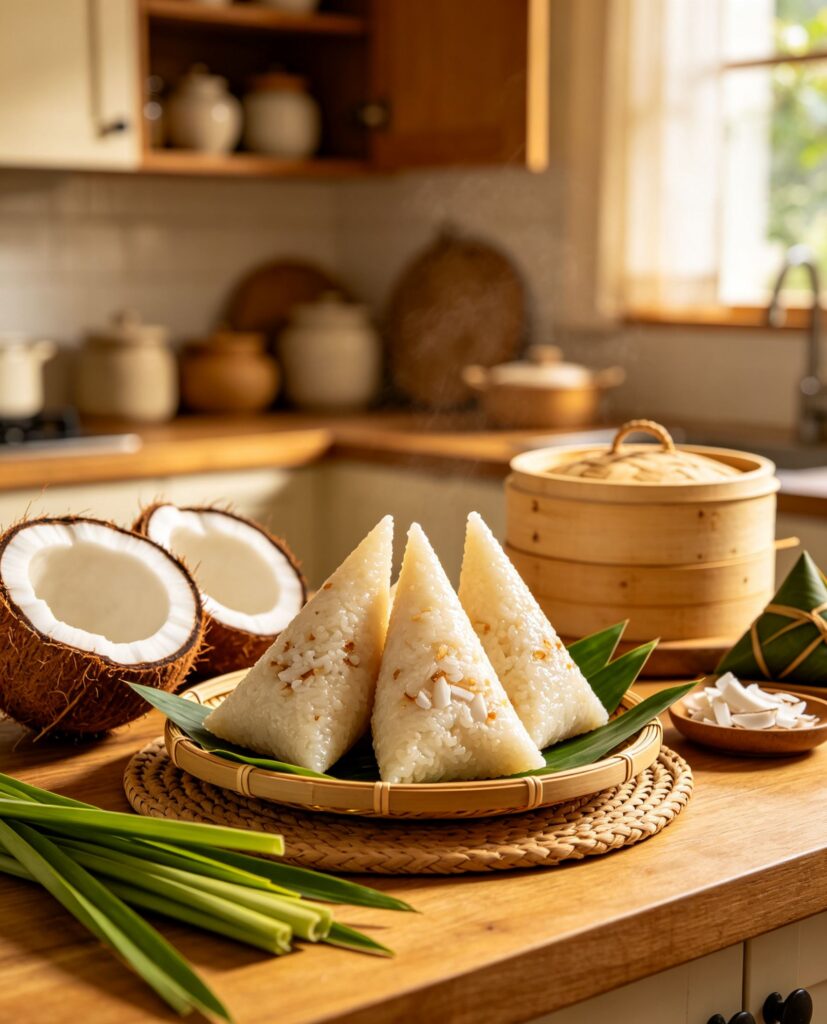
Selurut (Steamed Coconut-Rice Cones)
The Quirky Foodster Team
Ingredients
- 150 g Rice flour (1 cup)
- 50 g Sago flour (1/3 cup)
- 400 ml Coconut milk (1¾ cups)
- 100 ml Water (1/3 cup plus 1 tbsp)
- 120 g Palm sugar, finely chopped (1/2 cup)
- 3 g Fine salt (½ tsp)
- 2 Pandan leaves, knotted
- 10 sheets Young coconut leaves (janur), for cones
- 10 Toothpicks or kitchen string, for securing cones
Method
- Dissolve the palm sugar in the water over low heat in a small saucepan, then strain out any impurities and cool slightly.
- Whisk the rice flour and sago flour together, then gradually whisk in the coconut milk, palm sugar syrup and salt until completely smooth.
- Add the pandan leaves to the batter and let it infuse for 15 minutes, then remove the leaves.
- Shape the young coconut leaves into slim cones, securing the seam with a toothpick or a knot of string.
- Stand the cones upright in a steamer, supporting them against each other or in a rack so they don't tip over.
- Carefully pour or spoon the batter into each cone, filling to about three-quarters full to allow for expansion.
- Steam over gently boiling water for 25–30 minutes until the mixture is fully set and no longer liquid at the centre.
- Cool slightly before serving; the cones can be eaten warm or at room temperature, unwrapped at the table.
Introduction: Selurut, also known by regional names such as celorot or jelurut, is a cone-shaped steamed sweet made from rice flour, sago, coconut milk and salt, poured into cones rolled from young coconut leaves and steamed until soft and delicately sweet.
Cultural Background: Selurut, also known by regional names such as celorot or jelurut, is a cone-shaped steamed sweet made from rice flour, sago, coconut milk and salt, poured into cones rolled from young coconut leaves and steamed until soft and delicately sweet. It appears frequently at festive occasions across Brunei, including Hari Raya celebrations, where trays of the pale, glossy cones are a familiar and much-loved sight.
Tips: Support the cones upright in a rack, muffin tin, or tightly packed together so the batter doesn't leak out while steaming. Strain the palm sugar syrup to remove any grit or impurities before mixing it into the batter. Do not overfill the cones — the mixture expands slightly as it steams.
Variations: Add finely diced fresh durian to the batter for a richer, more indulgent version, especially popular in season. Use grated sweet potato mixed into the batter for a textured variation. Some households add a beaten egg to the batter for a firmer, custard-like set. Naturally vegan and gluten-free as written.
Storage: Store cooled, unwrapped selurut in an airtight container in the refrigerator for up to 2 days.
Reheating: Re-steam for 5 minutes to soften and warm through before serving.
Nutrition: Per cone: approx. 110 kcal, 1g protein, 20g carbohydrate, 3g fat.
FAQs:
Q: What are young coconut leaves (janur)?
A: Janur are the pale, still-unfurled fronds of the coconut palm, pliable enough to be rolled into cones for steaming sweets like selurut.
Q: Can I use baking parchment instead of coconut leaves?
A: Yes — roll parchment into small cones and secure with tape or a paperclip as a practical substitute, though the leaves add a subtle fragrance of their own.
Q: Why is my selurut too soft in the centre?
A: It likely needs a few more minutes of steaming; test by inserting a toothpick, which should come out clean when the cone is fully set.
Please log in to leave a comment.