
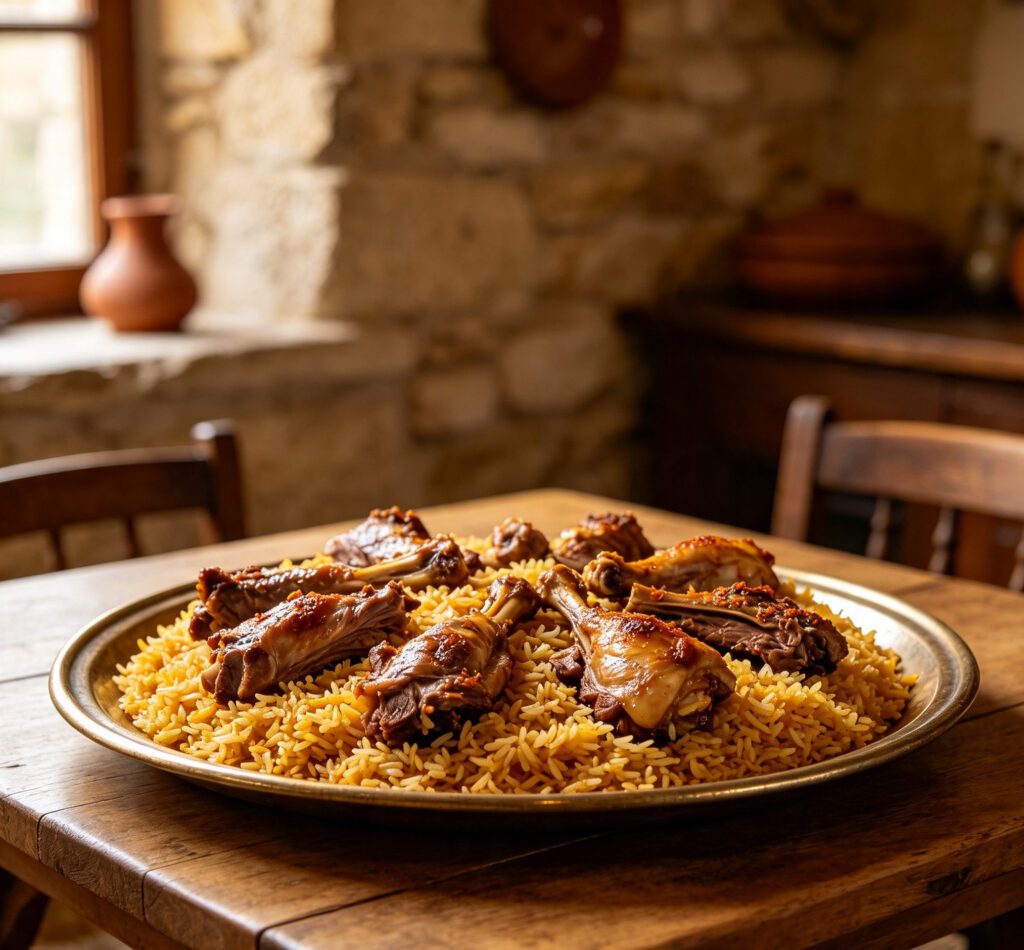
Saudi Mandi
The Quirky Foodster Team
Ingredients
- Lamb or chicken, bone-in — 1.2 kg (2.6 lb)
- Baharat spice blend — 2 tbsp
- Ground turmeric — 1 tsp
- Onions, sliced — 2
- Garlic, crushed — 4 cloves
- Basmati rice, rinsed and soaked 30 minutes — 400 g (2 cups)
- Meat stock — 750 ml (3 cups)
- Cinnamon Stick — 1
- Whole Cardamom pods — 3
- Salt, — to taste
- Wood chips or charcoal, for smoking (optional)
Method
- Rub the meat generously with Baharat, turmeric and salt; marinate for at least 1 hour.
- Preheat the oven to 160°C (320°F).
- Place the meat on a rack over a roasting pan, cover tightly with foil, and roast for 2-2.5 hours until very tender.
- Meanwhile, sauté the onions and garlic in a large pot until softened.
- Add the drained rice, stock, cinnamon and cardamom, then simmer covered for 18-20 minutes until tender.
- For a smoky flavour, place a small piece of hot charcoal in a metal bowl set into the rice, drizzle with a little oil, and cover tightly for 5 minutes to infuse smoke, then remove.
- Serve the meat over the smoky rice.
Introduction: Slow-cooked, smoky spiced rice with tender meat, traditionally cooked in an underground pit oven.
Cultural Background: Mandi, originating from Yemen but deeply embraced across Saudi Arabia, involves meat and rice cooked together in a sealed pit for a distinctive smoky flavour, now commonly adapted for home ovens.
Tips: Cooking the meat low and slow, tightly covered, is key to achieving the traditional tender, falling-apart texture. The charcoal smoking step is optional but adds an authentic smoky depth.
Variations: Use goat meat for a more traditional flavour profile; add a dried lime to the rice for extra tang.
Storage: Store meat and rice separately in airtight containers in the refrigerator for up to 3 days.
Reheating: Reheat the rice gently in a covered pan with a splash of stock; reheat the meat in a covered dish in a low oven.
Nutrition: Approx. 560 kcal, 34 g protein, 52 g carbohydrate, 22 g fat per serving.
FAQs:
Q: What gives mandi its distinctive smoky flavour?
A: Traditionally, cooking in a sealed underground pit; home cooks can approximate this using the charcoal-smoking technique.
Q: Is mandi the same as kabsa?
A: They are related but distinct — mandi is traditionally pit-cooked with a smokier flavour, while kabsa is cooked entirely on the stovetop with a spicier tomato base.
- Lamb or chicken, bone-in — 1.2 kg (2.6 lb)
- Baharat spice blend — 2 tbsp
- Ground turmeric — 1 tsp
- Onions, sliced — 2
- Garlic, crushed — 4 cloves
- Basmati rice, rinsed and soaked 30 minutes — 400 g (2 cups)
- Meat stock — 750 ml (3 cups)
- Cinnamon Stick — 1
- Whole Cardamom pods — 3
- Salt, — to taste
- Wood chips or charcoal, for smoking (optional)
Please log in to leave a comment.