
Salads
Salade y’Imyumbati (Cassava Leaf Salad)
The Quirky Foodster Team
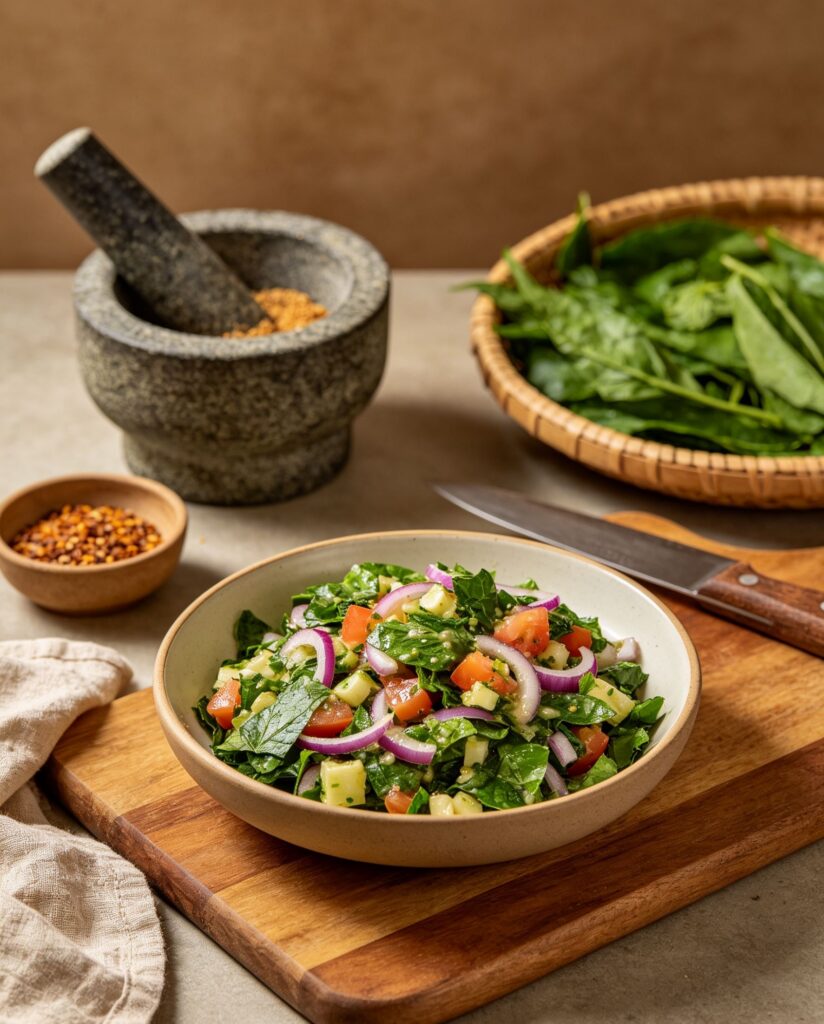
Ingredients
- 400 g (about 6 cups) cassava leaves, tough stems removed, finely chopped (or substitute collard greens)
- 1 onion, finely sliced
- 2 tomatoes, diced
- 2 tbsp vegetable oil
- 1 lemon, juiced
- 1 tsp salt
- 1/4 tsp ground black pepper
Method
- Bring a large pot of salted water to a boil and add the cassava leaves.
- Boil for 20-25 minutes until tender (this is essential, as raw cassava leaves contain natural compounds that must be cooked out).
- Drain thoroughly in a colander and allow to cool to room temperature.
- Transfer to a mixing bowl and add the onion and tomatoes.
- Whisk together the oil, lemon juice, salt and pepper, then pour over the salad and toss well.
- Serve at room temperature as a side dish.
Introduction: Cassava leaves are a valued leafy vegetable across Burundi, typically pounded and boiled before being dressed simply with oil, onion and a touch of acidity.
Cultural Background: Cassava leaves are a valued leafy vegetable across Burundi, typically pounded and boiled before being dressed simply with oil, onion and a touch of acidity. This lightly cooked salad is served at room temperature and is especially common in rural households where cassava is grown for both its roots and its leaves.
Tips: Never eat cassava leaves raw or undercooked; a full 20-25 minute boil is necessary for safety. Squeeze out excess water from the boiled leaves before dressing for the best texture.
Variations: Collard greens, kale or spinach can replace cassava leaves where unavailable, using a much shorter cooking time of 5-8 minutes. Already vegan as written.
Storage: Refrigerate in an airtight container for up to 2 days.
Reheating: This salad is served at room temperature or cold and does not require reheating.
Nutrition: Approx. 110 kcal, 4 g protein, 9 g carbohydrate, 7 g fat per serving (based on 4 servings).
FAQs:
Q: Why must cassava leaves be boiled so long?
A: Raw cassava leaves contain naturally occurring cyanogenic compounds that are neutralised by thorough boiling, making this step essential for safety.
Q: Can I use frozen cassava leaves?
A: Yes, frozen pre-pounded cassava leaves, available in African grocery stores, work well and follow the same boiling time.
Please log in to leave a comment.