
Lunches
Salacatabia (Roman Bread Salad)
The Quirky Foodster Team
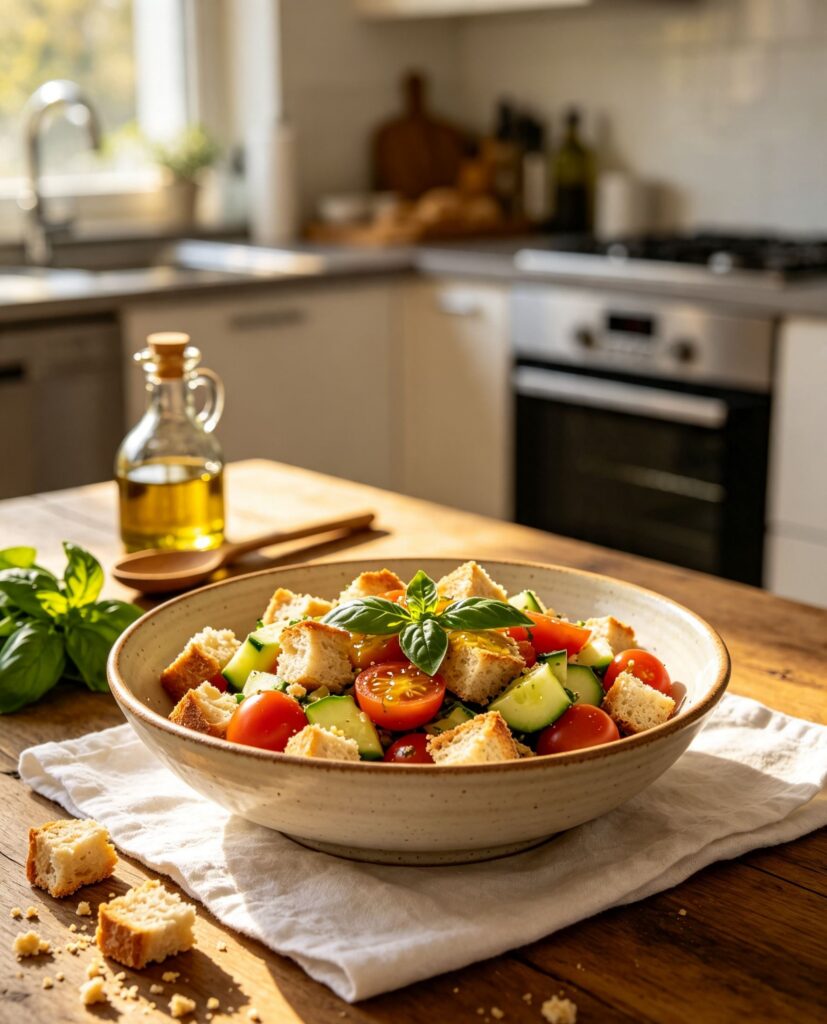
Ingredients
- 300g Day-old rustic bread, torn into chunks
- 250ml Water
- 60ml White wine vinegar
- 1 small cucumber, diced
- 60g Pecorino cheese, crumbled
- 2 tbsp fresh mint, chopped
- 2 tbsp fresh coriander, chopped
- 45ml Olive oil
- Salt, to taste
Method
- Soak the torn bread in the water and vinegar for about 20 minutes, until softened.
- Squeeze out the excess liquid gently and place the bread in a large mixing bowl.
- Add the cucumber, pecorino, mint and coriander.
- Toss with the olive oil and season with salt.
- Let the salad rest for 10 minutes before serving so the flavours combine.
Native Name: Salacatabia
Cultural Background: Recorded in the Apicius collection, Salacatabia soaked stale bread in vinegar and water before combining it with herbs, cheese and cucumber – a practical way to use up old bread that shares clear roots with the bread salads still eaten around the Mediterranean today.
Tips: Squeeze the soaked bread firmly – too much liquid left in will make the salad soggy rather than pleasantly moist.
Variations: Add chopped celery or a handful of chopped walnuts for extra texture, both attested in variant Roman recipes.
Vegetarian / Vegan Note: Vegetarian as written; use a plant-based cheese alternative for a vegan version.
Storage: Best eaten the day it's made; will keep covered in the refrigerator for up to 1 day but softens further.
Reheating: Not applicable – served cold.
Nutrition: Approx. 270 kcal, 8 g protein, 30 g carbohydrate, 13 g fat per serving.
FAQs:
Q: What does 'salacatabia' mean?
A: The name likely derives from a Greek-influenced word for a mixed, seasoned dish – the recipe survives in the Apicius manuscript.
Q: Can I use fresh bread?
A: Slightly stale bread holds its shape better after soaking; very fresh bread can turn mushy.
Please log in to leave a comment.