
Holidays & Special Occasions
Saint Phanourios Vegan Spice Cake
The Quirky Foodster Team
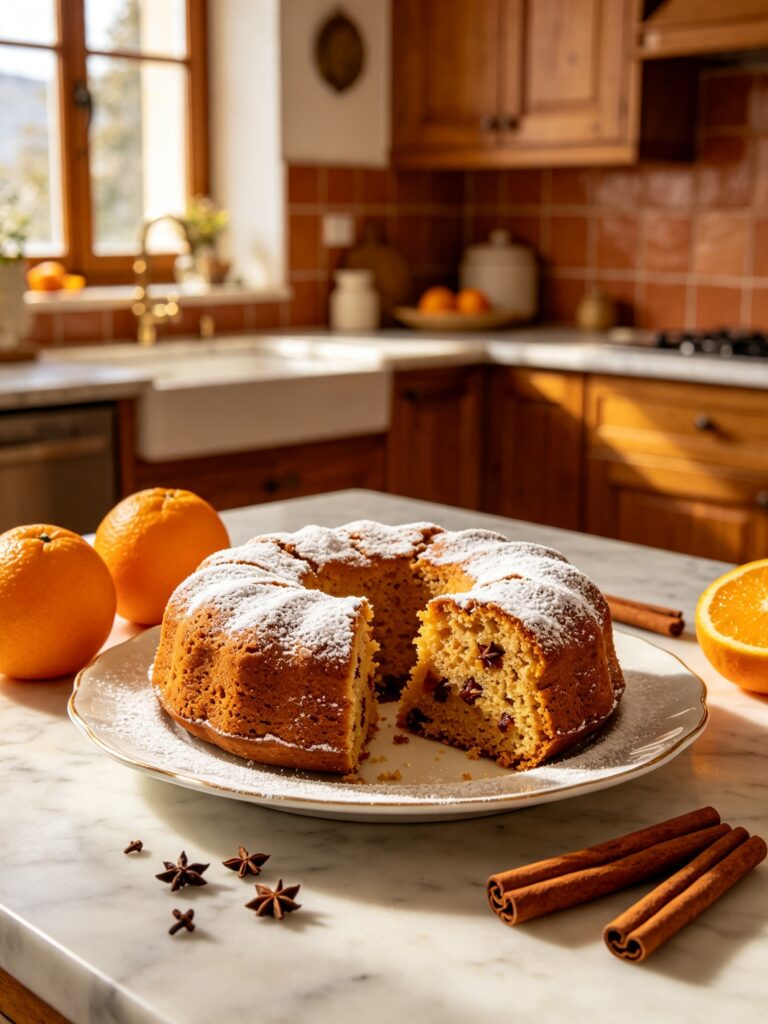
Ingredients
- 400 g (3 1/3 cups) all-purpose flour
- 200 g (1 cup) sugar
- 240 ml (1 cup) orange juice, freshly squeezed
- 180 ml (3/4 cup) vegetable oil
- 2 tsp baking powder
- 1 tsp baking soda
- 2 tsp ground cinnamon
- 1/2 tsp ground cloves
- 100 g (3/4 cup) walnuts, chopped
- 80 g (1/2 cup) raisins
- Powdered sugar for dusting (optional)
Method
- Preheat the oven to 180°C (350°F) and lightly oil a round or bundt cake tin.
- In a large bowl, whisk together the flour, sugar, baking powder, baking soda, cinnamon, and cloves.
- In a separate bowl or jug, whisk together the orange juice and vegetable oil.
- Pour the wet ingredients into the dry ingredients and stir gently until just combined — do not overmix.
- Fold in the chopped walnuts and raisins.
- Pour the batter into the prepared tin and smooth the top.
- Bake for 40-45 minutes, until a skewer inserted into the center comes out clean and the top springs back when lightly pressed.
- Let cool in the tin for 10 minutes, then turn out onto a wire rack to cool completely.
- Dust with powdered sugar before serving, if desired.
Introduction: Fanouropita is baked in honor of Saint Phanourios, the patron saint of lost things, traditionally prepared with exactly
seven or nine ingredients and always kept vegan — a practical requirement since the cake is baked to be shared
freely with neighbors, friends, and even strangers regardless of what fast they may be observing at the time. Bakers
traditionally include a small prayer or intention while making it, most often asking the saint's help in finding something
lost, whether an object, a person, or one's way in life, and the cake is then distributed with a blessing.
Cultural Background: Fanouropita is baked in honor of Saint Phanourios, the patron saint of lost things, traditionally prepared with exactly
seven or nine ingredients and always kept vegan — a practical requirement since the cake is baked to be shared
freely with neighbors, friends, and even strangers regardless of what fast they may be observing at the time. Bakers
traditionally include a small prayer or intention while making it, most often asking the saint's help in finding something
lost, whether an object, a person, or one's way in life, and the cake is then distributed with a blessing.
Tips: Tradition calls for exactly seven or nine ingredients in the batter (not counting the oil or liquid used to grease the tin) — this recipe can be adjusted to meet either count depending on family custom. Do not overmix the batter once the wet and dry ingredients are combined, to keep the cake light rather than dense. This cake is traditionally shared, not kept for oneself — many bake it specifically to give away to others as an offering.
Variations: Swap the walnuts for almonds or omit nuts entirely for a nut-free version, common in some households. Add orange zest to the batter for a more pronounced citrus flavor. Some versions add a splash of brandy or Metaxa (outside of strict fasting) for extra depth, though the classic Lenten version omits alcohol.
Storage: Store covered at room temperature for up to 4 days, or freeze whole or sliced for up to 2 months.
Reheating: Best served at room temperature; no reheating necessary.
Please log in to leave a comment.